

If a small furry alarm clock wakes you at 4:58 every morning, or your work schedule keeps stretching past dinner time, a feeder solves a real problem — but the market is a maze of hoppers, apps, cameras, and RFID tags. This guide to the best automatic cat feeder covers our tested picks for every budget and situation: dry food, wet food, multi-cat homes, and the diet-control cases where a feeder earns its keep twice over.
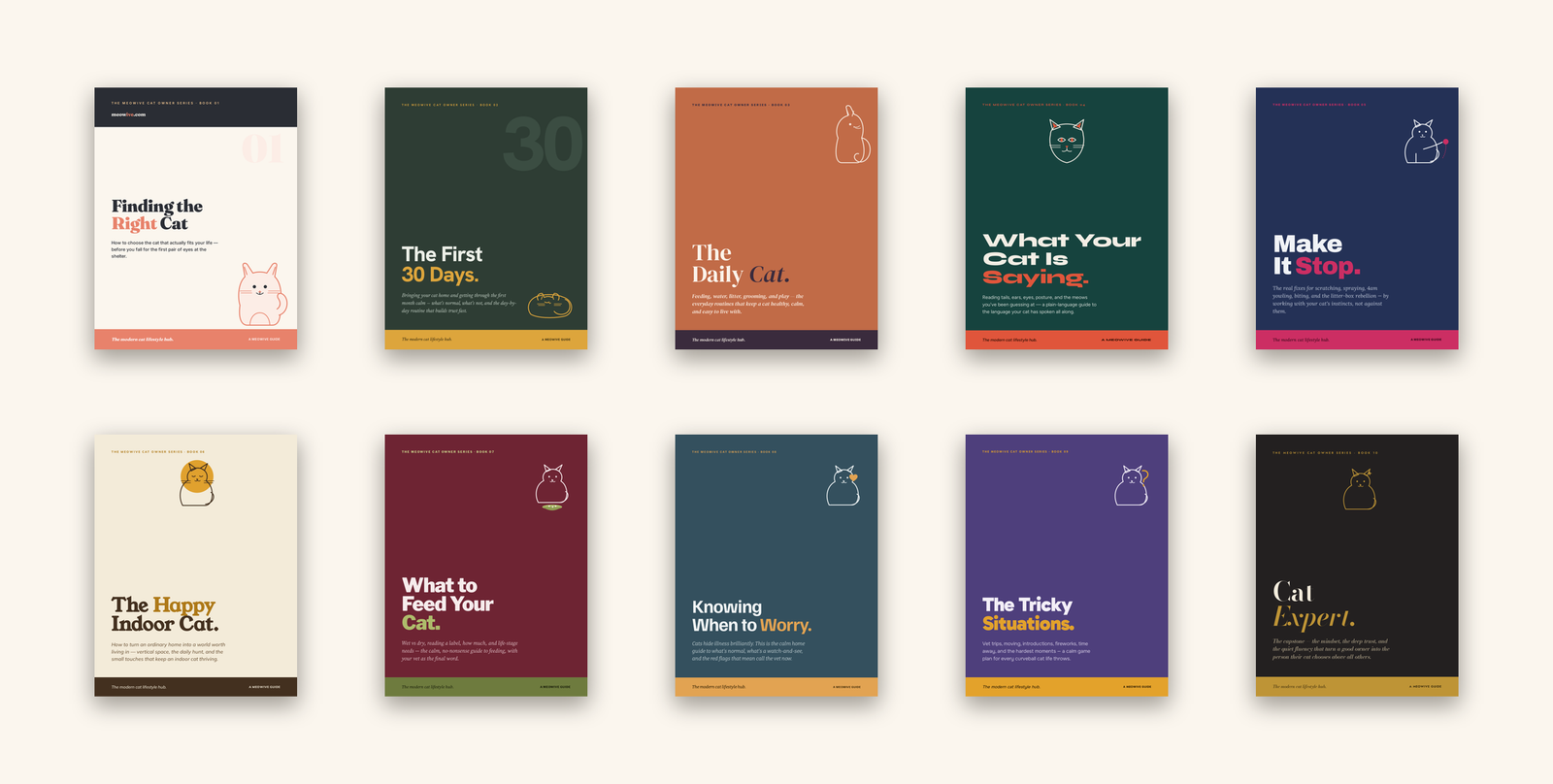
The complete cat-care shelf — from choosing your cat to lifelong mastery.
See What's Inside →The best automatic cat feeder for most homes is the PetLibro Granary WiFi — reliable anti-jam dispensing, battery backup, a sealed 5-liter hopper, app scheduling, and no subscription, typically around $100. For wet food, the cooled PetLibro Polar; for multi-cat homes where one cat steals food, the PetLibro One RFID; on a tight budget, the Cat Mate C500. Whatever you buy, portion accuracy and power backup matter more than any smart feature.
Key takeaways
- A feeder’s most valuable trick is psychological: it breaks the “human = food” link, which is half the cure for dawn wake-up calls.
- Judge feeders on four boring things — portion accuracy, anti-jam mechanism, battery backup, and a sealed hopper — before any smart feature.
- The PetLibro Granary WiFi is the tested best-overall; budget pick is the Cat Mate C500; wet-food homes need a cooled feeder.
- Multi-cat households with a food thief need RFID or microchip access control — a normal feeder just feeds the fastest cat.
- Feeders portion meals; they don’t replace you. Calorie amounts still come from your vet, and calibrate portions with a kitchen scale.
- Never rely on a feeder alone during multi-day absences — machines jam, Wi-Fi drops, and cats need a human check-in.
Why buy an automatic cat feeder (beyond convenience)
The obvious use case is schedule coverage: long workdays, shift work, a weekend away with a sitter checking in. But the two best reasons are behavioral and medical. Behaviorally, a feeder set for 5:30 a.m. performs a small miracle — it makes the machine the food source instead of your face, so meowing at you stops paying. That disconnect is one of the core fixes in our guide to cat meowing at night, and it works within a couple of weeks for most food-motivated dawn singers.
Medically, feeders enforce the portion discipline humans are bad at. Cats do best on multiple small meals — Cornell’s feeding guidance notes label portions overfeed many cats, and overweight cats face several times the diabetes risk. A feeder dispensing four measured mini-meals a day beats a heaping hand-poured bowl every time, and for cats on weight-loss plans it removes the negotiation entirely. The cat can yell at the machine all they want; the machine doesn’t feel guilty.
The best automatic cat feeder: our picks
Best overall: PetLibro Granary WiFi
The feeder that keeps winning independent tests — including Wirecutter- and CNET-corroborated 2026 rankings — for the most boring, most important reasons. Its rotating-drum, twist-lock dispensing mechanism jams dramatically less than the open augers in budget feeders; it runs on wall power with battery backup so an outage doesn’t skip breakfast; the 5-liter hopper seals with a desiccant compartment to keep kibble fresh; and the app schedules up to 10 meals a day in fine-grained portions, with a low-food alert and no subscription. Around $100. Weakness: dry food only, like every hopper feeder. Check the current price on Amazon.
Best slim/small-space: PetLibro Air WiFi
CNN Underscored’s 2026 top pick after testing 13 feeders on three cats — a slimmer, space-saving take on the Granary formula with the same app scheduling and outage protection at a friendlier price. The narrower hopper suits one-cat apartments; big multi-cat homes will refill it more often. Check the current price on Amazon.
Best for wet food: PetLibro Polar
The rare wet-food feeder that genuinely works: semiconductor cooling keeps up to three days of wet meals fresh, dispensing on schedule with quiet operation. Two honest caveats from testing: cooling performance degrades in rooms hotter than about 85°F, and it’s not suitable for raw food. Around $149, and the answer for cats on wet-heavy diets — the format our wet vs dry cat food guide recommends leaning toward for hydration. Check the current price on Amazon.
You are not looking for symptoms.
You are looking for departures.
What Your Cat Won’t Tell You is the 68-page system behind that sentence — four home measurements, eleven early signals, and exactly when to call.
See the book — $29Best for multi-cat homes: PetLibro One RFID
If one cat inhales the other’s food — or one cat eats a prescription diet — a normal feeder just feeds the fastest mouth. The One RFID opens only for the cat wearing its collar tag (up to four profiles), reliably stopping cross-feeding without Wi-Fi or a subscription. Plan on one unit per cat, around $149 each. It’s the only mainstream design that truly solves the food-thief problem short of feeding in separate rooms — the low-tech alternative we cover in the multi-cat introduction guide. Check the current price on Amazon.
Best budget: Cat Mate C500
No app, no hopper, no Wi-Fi — a rotating five-compartment carousel with a timer and ice packs underneath, around $46. Load five meals (wet or dry), set the times, done. It’s the dependable choice for simple schedules, short absences, and anyone who distrusts app-dependent hardware. Limits: five meals per load and no remote control. Check the current price on Amazon.
What actually matters when choosing (ignore the gadget list)
Feeder marketing sells cameras and voice recordings; feeder reliability lives in four unglamorous specs. Portion accuracy first — a feeder that dispenses “about” a portion defeats the point for weight management, so calibrate any new feeder by weighing five consecutive dispenses on a kitchen scale and adjusting. Anti-jam mechanism second: rotating-drum and paddle designs handle odd kibble shapes far better than cheap open augers, which clog with small or irregular kibble — the single most common feeder failure. Power redundancy third: wall power with battery backup, so neither an outage nor dead batteries skips a meal. And a sealed hopper fourth, ideally with a desiccant slot — stale kibble is the quiet reason cats “go off” their feeder after a month.
The smart features sort into useful and decorative. Genuinely useful: app scheduling you’ll actually adjust, low-food alerts, and feeding logs (an early-warning system, since appetite change is often the first sign of illness). Nice but optional: cameras and two-way audio — fun, occasionally reassuring, never load-bearing. Skip entirely: anything requiring a subscription for core scheduling. One placement tip from hard experience: put the feeder where you can hear it dispense for the first week, and away from walls the cat can use for leverage — determined paws have opinions about hoppers.
Setting up a feeder the right way
Transition gently. For the first few days, run the feeder alongside the old bowl in the same spot so the new machine becomes background furniture before it becomes the waiter. Trigger a manual dispense while your cat watches a few times — most cats connect the sound to food within a day. Then move meals fully onto the schedule: several small dispenses beat two big ones, both for digestion and for boredom (a mid-day mini-meal gives a home-alone cat an event to anticipate — it pairs beautifully with the puzzle-feeding ideas in our indoor enrichment guide).
Then maintain the boring parts: wash the bowl and chute weekly (kibble oils go rancid), refresh the desiccant, replace backup batteries on a calendar rather than on failure, and re-check portions monthly — kibble shape changes between bags and drift is real. Total daily calories still come from your vet, exactly as our feeding guide lays out; the feeder is the enforcement arm, not the nutritionist.
Common mistakes with automatic feeders
1. Trusting the portion label instead of a scale
“1/12 cup per dispense” is a target, not a promise — kibble size changes the throw. Weigh five dispenses on a kitchen scale when the feeder is new and after every food change, and adjust. For a dieting cat, drift of a few grams per meal quietly erases the whole plan.
2. Buying one feeder for a food-stealing duo
A standard feeder feeds whichever cat arrives first — usually the one who least needs seconds. If one cat guards, gulps, or eats a prescription diet, you need RFID/microchip access control or physically separated feeding rooms. Everything else is a buffet with extra steps.
3. Filling the hopper with the wrong kibble shape
Very small, very large, or oddly shaped kibble is the classic jam recipe, especially in auger feeders. Check the maker’s kibble-size range before switching foods, and after any food change, watch the first day’s dispenses. A jam you discover at 11 p.m. beats one your cat discovers alone at 6 a.m.
Ten focused guides, vet-reviewed, zero fluff. Loved this article? See what's inside.
See What's Inside →4. Keeping the hand-fed breakfast “just sometimes”
The 4am fix only works if the machine becomes the only breakfast source. Feed by hand “just this once” at dawn and you’ve taught your cat that yelling at humans still works occasionally — which, to a cat, means it works. Intermittent rewards train harder than consistent ones. Hold the line.
5. Skipping the cleaning schedule
Bowls, chutes, and hopper walls collect kibble oil that turns rancid within weeks — the top reason cats mysteriously “go off” a feeder. Weekly bowl-and-chute washes, monthly hopper wipe-downs, and fresh desiccant keep the food appealing and the mechanism smooth.
FAQ: best automatic cat feeder
Are automatic cat feeders a good idea?
For most households, yes — they enforce measured portions, keep meal times consistent (which cats deeply prefer), cover long workdays, and break the human-equals-food link behind dawn wake-ups. They’re a bad idea only as a substitute for human care during multi-day absences, or when a multi-cat food thief goes unmanaged. Choose for reliability first, gadgets second.
Do automatic feeders work for wet food?
Only two designs do: cooled dispensers like the PetLibro Polar, which refrigerates up to about three days of wet meals, and rotating carousels like the Cat Mate C500 with ice packs for shorter windows. Standard hopper feeders are dry-only. For wet-heavy diets, budget for the cooled option — and skip raw food in any feeder.
How many times a day should an automatic feeder dispense?
Split your vet-confirmed daily calories across three to five small meals — for example, early morning, midday, late afternoon, and a final portion near your bedtime. Multiple mini-meals suit feline digestion, give home-alone cats events to anticipate, and make the early dispense that protects your sleep an easy scheduling line rather than a sacrifice.
Will an automatic feeder stop my cat waking me at 4am?
Usually, yes — if you set the first dispense just before their habitual wake-up time and completely stop hand-feeding breakfast. The cat’s dawn petition transfers from your face to the machine within one to two weeks. Expect a few louder mornings first as the old strategy fails; consistency through that window is the whole treatment.
Can I leave my cat alone for a weekend with an automatic feeder?
One overnight, generally yes with a reliable feeder, ample water, and a clean litter box. Beyond that, no — feeders jam, water fouls, and health emergencies happen fast in cats. For a weekend or longer, book a sitter or a daily check-in; the feeder then becomes helpful backup rather than a single point of failure.
Are Wi-Fi feeders worth it over simple timer feeders?
If you’ll use the flexibility — adjusting meals remotely, feeding logs, low-food alerts — yes, and the price gap has shrunk to $20–40. If you want set-and-forget simplicity, a timer feeder like the Cat Mate C500 is dependable and immune to app outages. Either way, insist on battery backup and skip anything that locks scheduling behind a subscription.
The bottom line on automatic feeders
The best automatic cat feeder is the one that never misses: for most homes that’s the PetLibro Granary WiFi, with the Polar for wet diets, the One RFID for food thieves, and the Cat Mate C500 when budget rules. Calibrate portions with a scale, schedule several small meals, set the dawn dispense — and enjoy the strange luxury of sleeping past your cat. For what goes in the feeder, start with our wet vs dry cat food guide, then browse the rest of our feeders, bowls, and fountains guides.
Get Decode Your Cat — free.
20 everyday behaviors translated, so you finally know what your cat is actually saying. Pop in your name and email and it's yours instantly.