

You can love your cat completely and still hate walking past the litter box. The smell problem isn’t your cat — it’s the litter, the box, or the routine, and all three are fixable this week. This guide to the best cat litter for odor control covers our tested picks for every budget and household, plus the maintenance math that matters more than any brand name on the bag.

The complete cat-care shelf — from choosing your cat to lifelong mastery.
See What's Inside →The best cat litter for odor control for most homes is an unscented, hard-clumping clay like Dr. Elsey’s Ultra — tight clumps seal odor at the source and scoop out clean. For maximum odor technology, Arm & Hammer Clump & Seal Platinum leads; for a natural option, World’s Best; for the lowest maintenance, a crystal litter like PrettyLitter. Whatever you choose, daily scooping and a large uncovered box do half the work.
Key takeaways
- Hard clumping is the real odor technology: the faster and tighter a litter clumps, the less surface area smell has to escape from.
- Unscented beats scented — perfumes mask odor for you and repel the cat, which risks litter box avoidance.
- Dr. Elsey’s Ultra is the tested best-overall pick; Arm & Hammer Clump & Seal Platinum wins on pure odor tech.
- No litter survives a neglected box: scoop daily, refresh to 2–3 inches, and deep-clean the box monthly.
- Multi-cat homes need the box math — one box per cat plus one — as much as they need better litter.
- A sudden change in urine or stool smell is a health signal; mention it to your vet before blaming the litter.
Why litter boxes smell (and what “odor control” really means)
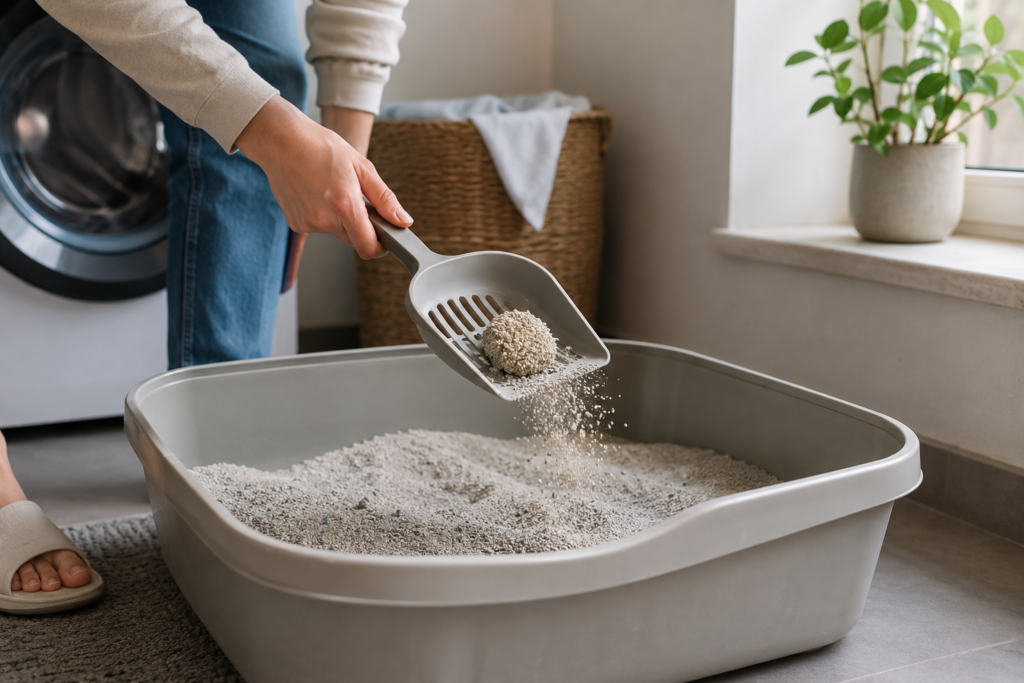
Litter box odor is mostly chemistry with a schedule. Urine breaks down into ammonia — the sharp smell that hits the back of your throat — and the longer waste sits exposed, the more it releases. “Odor control” on a bag can mean three different mechanisms: clumping (sealing waste into a scoopable lump with minimal exposed surface), absorption (activated carbon, baking soda, or silica trapping odor molecules), and fragrance (perfume layered over the problem). The first two work. The third mostly works on you, not the air — and it can backfire, because a cat’s nose is many times more sensitive than yours, and veterinary behaviorists consistently name litter scent and texture as top drivers of litter box avoidance. A litter that smells like a candle store to you can smell like a chemical spill to your cat.
That’s why every pick below is unscented or lightly scented at most, and why clumping performance was our first test. The best odor control is waste that leaves the box quickly and completely — everything else is supporting cast.
The best cat litter for odor control: our picks
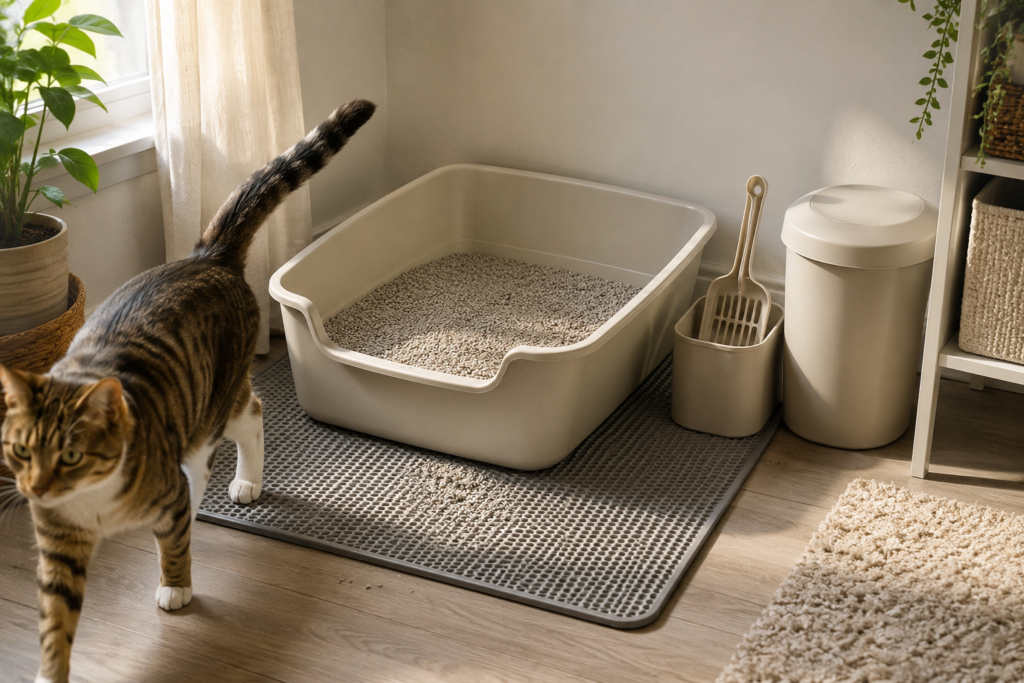
Best overall: Dr. Elsey’s Ultra Unscented Clumping Clay
The litter that tops nearly every independent test, including CNN Underscored’s 2026 lab-and-home testing, and ours. It’s 100% bentonite clay with medium grains that clump fast and rock-hard — clumps you can lift whole, leaving nothing behind to smell. It’s 99.9% dust-free, unscented, low-tracking, and — the quiet miracle — priced like a mid-range litter at roughly $0.50 per pound. In our three-cat test month, this was the litter where guests stopped being able to locate the box by nose. Weaknesses: it’s heavy to carry, and clay isn’t biodegradable. Check the current price on Amazon.
Best pure odor technology: Arm & Hammer Clump & Seal Platinum
If odor is your only metric, this is the specialist: baking soda plus a moisture-activated sealing layer that forms a crust around waste and holds ammonia in for days between full changes. Clumps are slightly softer than Dr. Elsey’s, and it’s lightly scented — acceptable to most cats, but watch a sensitive cat’s reaction the first week. Ideal for small apartments where the box lives near living space. Check the current price on Amazon.
Best budget for multi-cat homes: Purina Tidy Cats Multi-Cat Clumping
The workhorse. Solid clumping, respectable ammonia control, and a price that makes the one-box-per-cat-plus-one rule affordable when you’re filling four boxes. It’s dustier than the premium picks and the clumps occasionally crumble at the edges, but scooped twice daily it keeps a multi-cat home civilized for a fraction of the cost. Check the current price on Amazon.
Knowing which one you’re looking at is the whole skill.
- Call now — six signs that mean tonight, not tomorrow.
- Call today — two or more of the eleven signals, together.
- Record and watch — one change, with an ordinary explanation.
Best natural litter: World’s Best Cat Litter (corn-based)
Made from whole-kernel corn, it clumps genuinely well for a natural litter, controls odor respectably, is lightweight to carry, and is flushable in small amounts where local rules allow. The trade-offs: a faint natural grain smell some owners notice, a higher price per pound, and — for a small number of cats — a texture adjustment period. The best pick if you want performance without clay. Check the current price on Amazon.
Best low-maintenance: PrettyLitter (silica crystal)
Crystal litter plays a different game: silica absorbs urine and dehydrates solids, so you scoop poop daily but change the whole batch only monthly — with almost no ammonia smell in between. PrettyLitter adds color-changing health monitoring that can flag urinary pH changes; treat it as an early-warning nudge to call your vet, not a diagnosis. Crystals cost more monthly and a minority of cats dislike the texture underfoot. Check the current price on Amazon.
The maintenance math that beats any litter upgrade
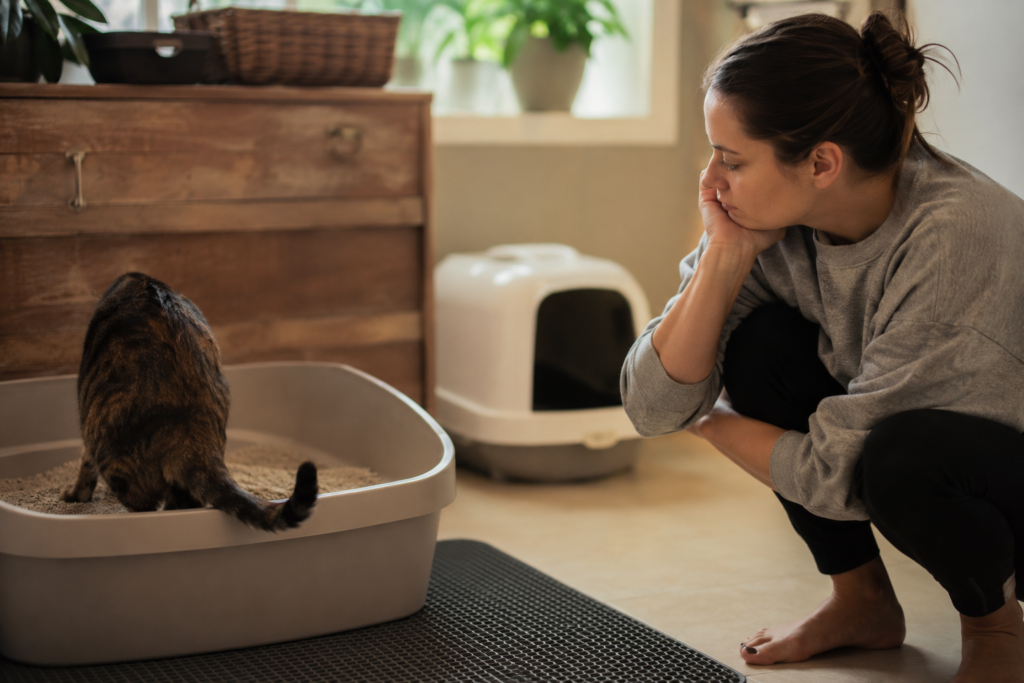
Here’s the truth the litter aisle won’t tell you: a $40 premium litter in a neglected box smells worse than a budget litter scooped twice a day. The routine does more than the product. Scoop at least once daily — twice is transformative. Keep depth at 2–3 inches; too shallow and urine hits the pan bottom (the smell that never leaves plastic), too deep and clumps break apart on scooping. Top up after scooping, and do a full empty-wash-refill monthly with unscented soap — never ammonia-based cleaners, which smell like a rival cat’s urine and can trigger avoidance. Replace the box itself yearly or two; scratched plastic holds odor permanently.
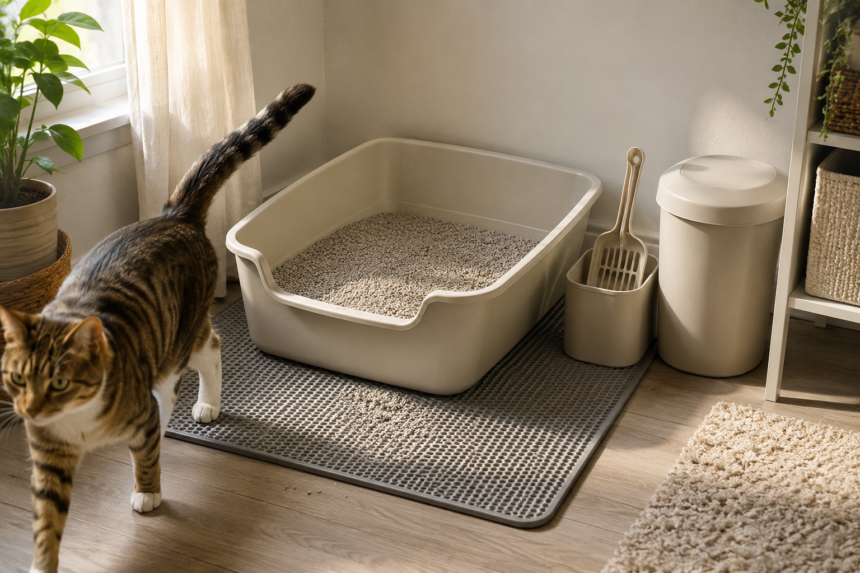
Box choice and placement carry the rest. Large and uncovered wins: covered boxes trap odor inside at cat-nose level — pleasant for your hallway, miserable for the animal standing in it — and one-exit spaces make anxious cats avoid the box entirely. Put boxes in ventilated, low-traffic spots, never beside food, and never all in one room if you have multiple cats: the rule is one box per cat plus one, in separate locations, exactly as we lay out in our second-cat introduction guide. New owners setting up a first box will find sizing and placement details in the first-time cat owner checklist.
When the smell is a symptom, not a litter problem
Before you blame the bag, run one check: is this smell new? A litter box that gradually smells stronger as scooping slips is a routine problem. A sudden change — urine that smells dramatically stronger or sweeter, stool that turns foul overnight, or a cat urinating far more volume than usual — can signal urinary tract infection, kidney issues, diabetes, or digestive trouble. The box is one of the best health monitors you own, which is one more argument for scooping daily: you notice changes the same day they happen. Sudden odor changes, straining, blood, or a male cat producing little urine are vet calls, not shopping trips — the last one is an emergency.
Common mistakes that keep the box smelly
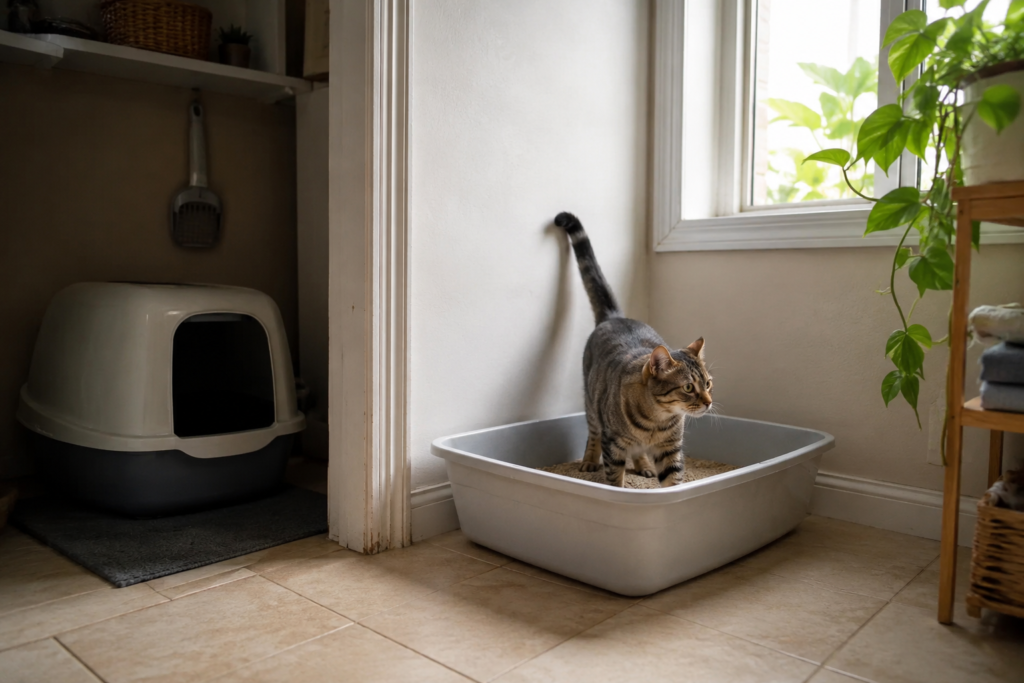
1. Buying scented litter to fix an under-scooped box
Perfume over ammonia produces perfumed ammonia — and often a cat who starts eliminating elsewhere. Fix the schedule first; choose unscented second. Odor control is a verb before it’s a product.
2. Using a covered box for your nose’s sake
The lid doesn’t remove odor; it concentrates it where the cat stands. Many “my cat suddenly hates the box” stories start with a new hooded box. If aesthetics matter, use a large open box inside a ventilated furniture enclosure with two exits.
3. Skimping on depth to stretch the bag
Under two inches of litter, urine pools on the pan floor and soaks into the plastic — creating the permanent base-note smell no scooping removes. Keep 2–3 inches and top up after each scoop; you’ll use slightly more litter and smell dramatically less.
4. Washing the box with bleach or ammonia cleaners
Ammonia-based cleaners smell like another cat’s urine to your cat, and harsh chemical residue repels sensitive noses. Monthly deep cleans should use hot water and unscented dish soap, dried fully before refilling.
Ten focused guides, vet-reviewed, zero fluff. Loved this article? See what's inside.
See What's Inside →5. One giant box for multiple cats
Twice the litter in one box is still one box — one location, one queue, one cat able to guard it. Multi-cat odor problems are usually volume problems: apply the boxes-equals-cats-plus-one rule in separate rooms and each box carries half the load.
FAQ: best cat litter for odor control
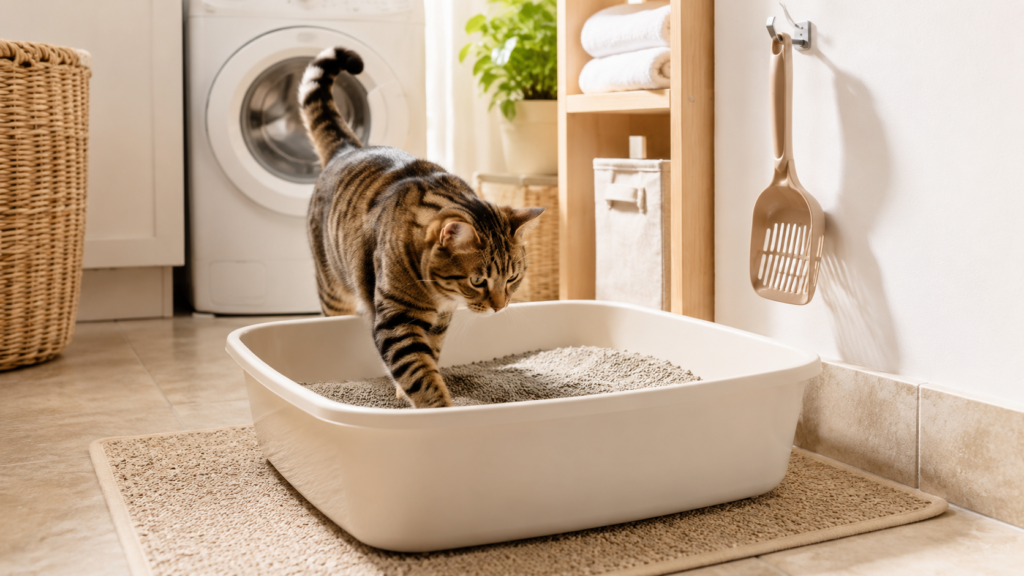
What cat litter is best for smell?
For most homes, an unscented hard-clumping clay — Dr. Elsey’s Ultra is the consistent test winner — because tight clumps seal odor and scoop out completely. If you want maximum odor technology, Arm & Hammer Clump & Seal Platinum adds a moisture-activated sealing layer. Pair either with daily scooping; no litter out-performs the routine.
Is scented or unscented litter better?
Unscented, almost always. Fragrance masks smell for humans but sits at nose level for a cat whose sense of smell vastly outperforms yours — and strong scent is a leading trigger for litter box avoidance. Good unscented litter controls odor through clumping and absorption instead of perfume, which solves the problem rather than decorating it.
How often should I change cat litter completely?
With daily scooping: clumping clay every 3–4 weeks, natural clumping litters every 2–3 weeks, and crystal litters roughly monthly per the maker’s guidance. Empty the box fully, wash with hot water and unscented soap, dry, and refill to 2–3 inches. If odor returns within days of a full change, the plastic itself has absorbed smell — replace the box.
Why does my litter box smell even after cleaning?
Usually one of four culprits: scratched pan plastic that’s absorbed urine (replace the box), litter kept too shallow so urine reached the pan floor, a covered box concentrating odor, or a spot outside the box you haven’t found — check walls and nearby carpet with an enzyme cleaner. If the smell itself changed suddenly, rule out a health cause with your vet.
Is crystal litter better than clay for odor?
For ammonia specifically, silica crystals absorb urine odor exceptionally well and stretch full changes to about a month — great for busy owners. Clay clumping wins on solid-waste sealing, cost, and near-universal cat acceptance; some cats dislike crystal texture. Both beat any scented litter. Try crystals if scooping frequency is your pain point; stay with premium clay if budget or a picky cat rules.
Do litter deodorizers and baking soda work?
A light sprinkle of plain baking soda under fresh litter is cat-safe and mildly helpful. Perfumed deodorizer powders are the ones to skip — they add exactly the fragrance load that drives cats away. If you’re reaching for additives weekly, the real fix is upstream: harder-clumping litter, more depth, more frequent scooping, or one more box.
The bottom line on odor-free litter boxes
The best cat litter for odor control is an unscented hard-clumper backed by a daily scoop — start with Dr. Elsey’s Ultra, upgrade the routine before the price tag, and keep the box big, open, and shallow-cleaned monthly. Get the setup right once and the box disappears from your nose’s map of the house. For the rest of the bathroom setup — box sizing, placement, and multi-cat math — browse our litter and litter box guides, and if a new cat is the reason you’re shopping, the first-time owner checklist has the full kit.
Get Decode Your Cat — free.
20 everyday behaviors translated, so you finally know what your cat is actually saying. Pop in your name and email and it's yours instantly.