


Last verified: August 2026 · Edited by the Meowive editorial team · Sources cited below
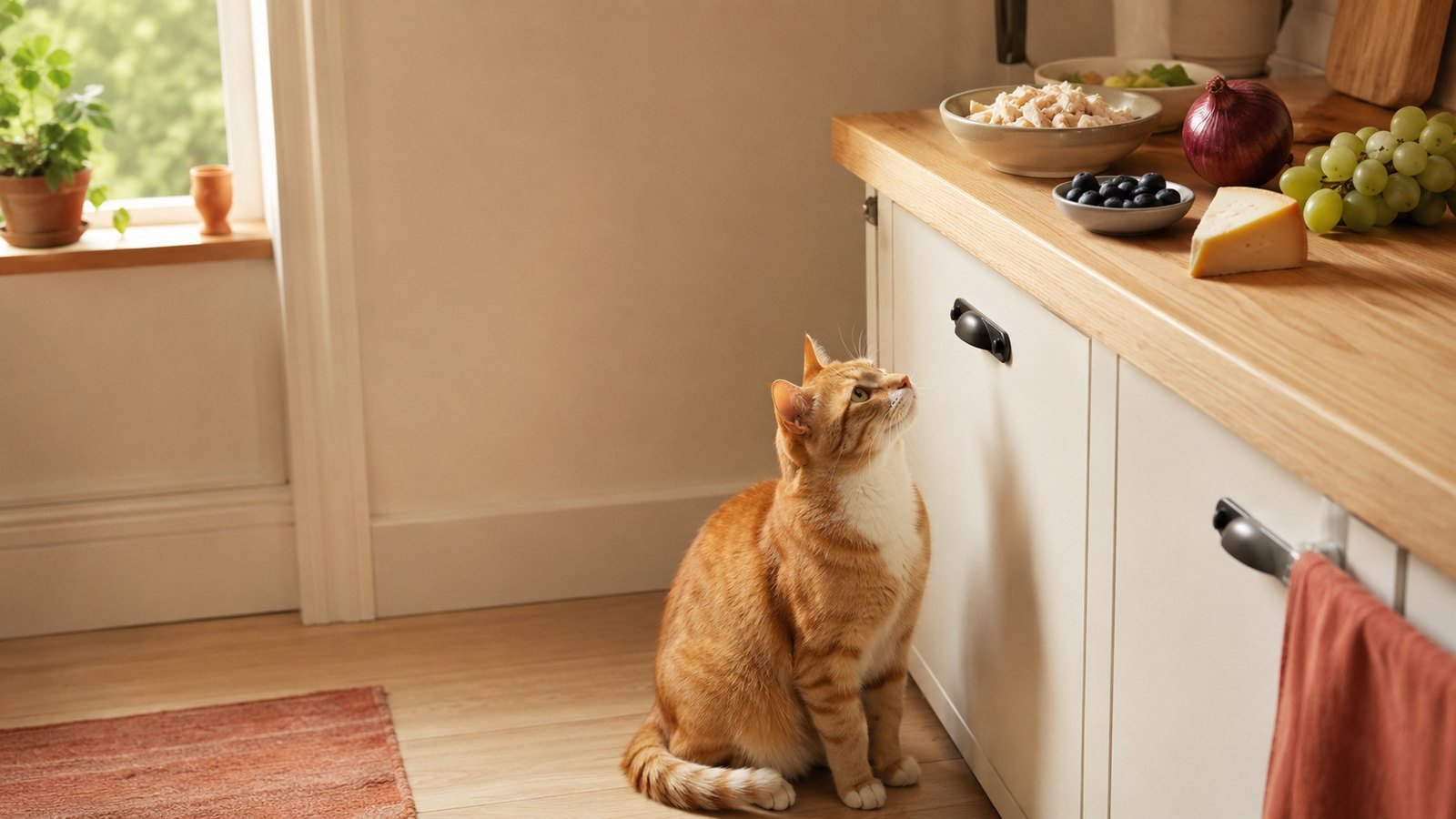
Thank you for reading this post, don't forget to subscribe!There is a moment every cat owner has: something hits the floor, the cat gets to it first, and you have about four seconds to decide whether this is a shrug or a phone call. This page exists for that moment. It is a complete reference to safe and toxic foods for cats — 183 individual items across nine categories, each with the reason it matters, the signs to watch for, and what to actually do.
If your cat has eaten something right now
Do not wait for symptoms, and do not try to make your cat vomit. Call one of these lines or your own vet immediately. Both services charge a consultation fee and both are staffed around the clock.
ASPCA Animal Poison Control (US)
(888) 426-4435
24 hours, every day
Pet Poison Helpline (US & Canada)
(855) 764-7661
24 hours, every day
Animal PoisonLine (UK)
01202 509000
24 hours, every day
Outside these regions, contact your nearest emergency veterinary hospital. Have ready: what was eaten, roughly how much, when, and your cat's weight.
The short answer
The foods that send cats to emergency vets most often are onion and garlic in any form, chocolate, grapes and raisins, alcohol, caffeine, xylitol, raw bread dough, and human painkillers — especially paracetamol, which can kill a cat at a single tablet. Plain cooked meat, fish and egg are the safest human foods you can offer. Everything else sits somewhere in between, and the table below tells you where.
What to take away from this page
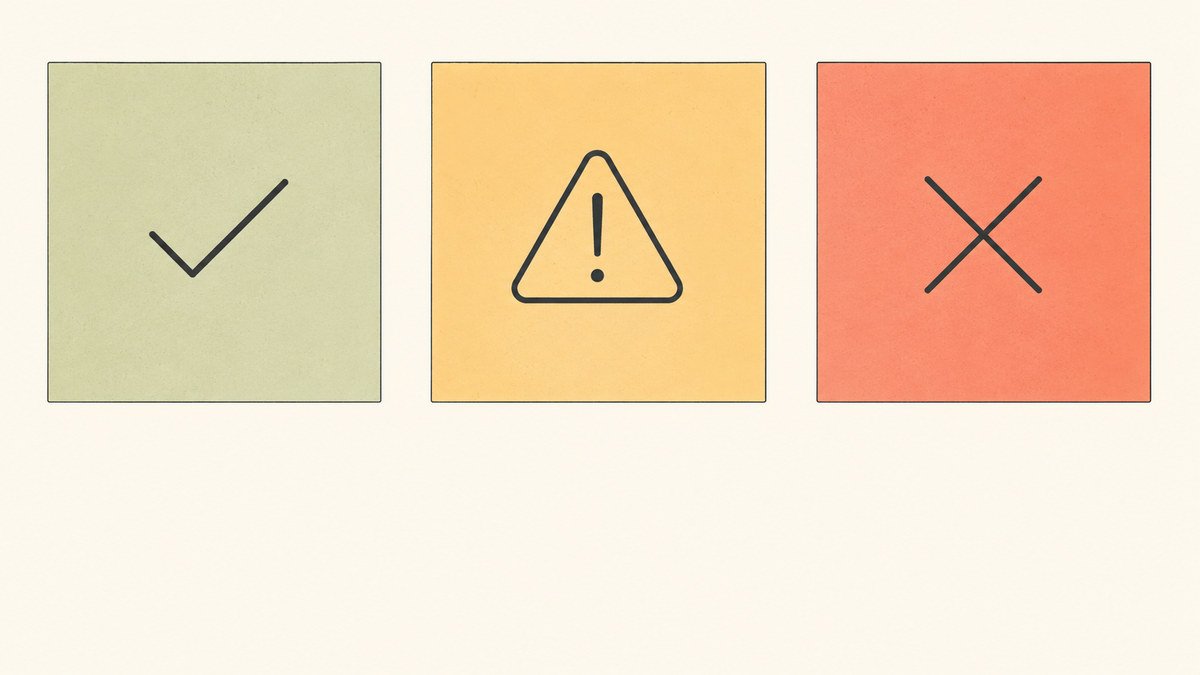
Every item is graded on a three-tier scale. The grades describe risk to a healthy adult cat of roughly four kilograms. Kittens, seniors, and cats with kidney, liver, heart or urinary conditions have less margin, so treat every "caution" entry as stricter in those cases.
SAFE
Not toxic. Fine as an occasional treat in small, plain, unseasoned portions.
CAUTION
Not acutely poisonous, but carries real risk — fat, salt, sugar, choking, or harm with repeated feeding.
TOXIC
Actively dangerous. Contact a vet or poison line, in some cases before symptoms appear.
Important
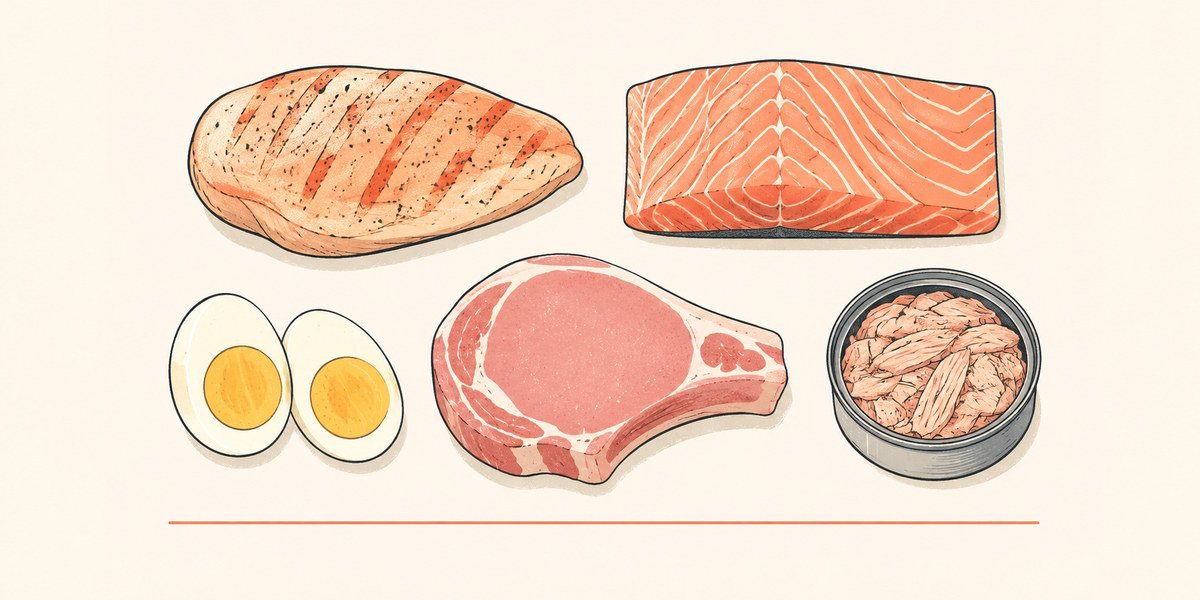
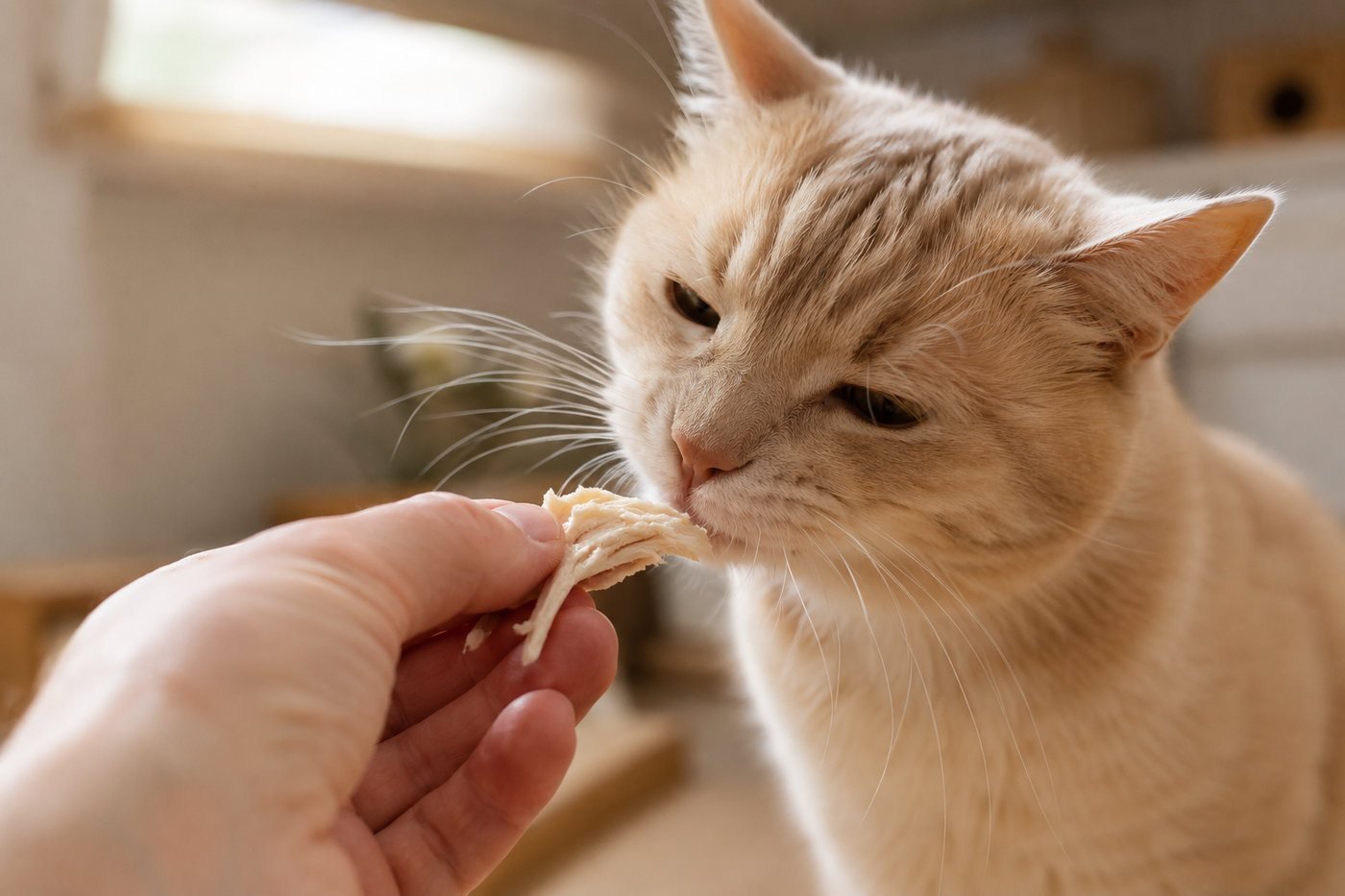
This is where most safe treats live. The rule is simple: plain, cooked, boneless, unseasoned. Nearly every problem in this category comes from what was added to the meat rather than the meat itself.
| Food or item | Verdict | Why it matters | Signs to watch for | What to do |
|---|---|---|---|---|
| Chicken — cooked, plain, boneless | SAFE | Lean complete protein; the single best human-food treat for cats. | None expected. | Serve unseasoned and shredded. Keep to treat-sized portions. |
| Turkey — cooked, plain, skinless | SAFE | Same profile as chicken; highly digestible. | None expected. | Avoid the seasoned skin and any stuffing residue. |
| Beef — cooked, lean, plain | SAFE | Good protein; slightly richer than poultry. | Loose stool if the cut is fatty. | Trim fat. Small pieces only. |
| Lamb — cooked, lean, plain | SAFE | Digestible protein, useful for chicken-sensitive cats. | None expected. | Trim fat before serving. |
| Pork — cooked, lean, plain | CAUTION | Not toxic, but fattier and often heavily salted. | Vomiting, loose stool. | Only plain unseasoned cuts, rarely. |
| Bacon, ham, cured pork | CAUTION | Extreme sodium and fat load for a 4kg animal. | Excessive thirst, vomiting, pancreatitis. | Avoid. A single lick is not an emergency. |
| Processed deli meat, sausage, salami | CAUTION | Salt, nitrates, and very often onion or garlic powder. | Vomiting, lethargy, pale gums if allium-containing. | Avoid entirely — the seasoning is the real risk. |
| Liver — cooked, occasional | CAUTION | Vitamin A accumulates; chronic feeding causes bone disease. | Stiffness, lameness, poor coat over months. | No more than a thumbnail-sized piece weekly. |
| Raw meat | CAUTION | Salmonella, Listeria, Toxoplasma and E. coli risk to cat and household. | Vomiting, diarrhoea, fever. | Cook it. If raw-feeding, work with your vet on sourcing. |
| Cooked bones (any species) | TOXIC | Cooked bone splinters into sharp shards. | Gagging, drooling, bloody stool, abdominal pain. | Emergency. Never offer cooked bone of any kind. |
| Salmon — cooked, plain, boneless | SAFE | Omega-3s and complete protein. | None expected. | Fully cooked, no bones, no seasoning. |
| White fish — cod, haddock, cooked plain | SAFE | Lean and gentle on the stomach. | None expected. | Check meticulously for bones. |
| Raw fish | CAUTION | Contains thiaminase, which destroys vitamin B1. | Wobbliness, dilated pupils, seizures in chronic cases. | Cook it. Thiaminase is destroyed by heat. |
| Canned tuna in spring water | CAUTION | Not nutritionally complete; mercury accumulates; highly addictive to cats. | Fussiness, refusal of complete food. | A teaspoon occasionally at most. Never a meal. |
| Tuna in oil or brine | CAUTION | Added salt and oil compound the underlying problem. | Thirst, loose stool. | Choose spring water if offering tuna at all. |
| Sardines in spring water, no salt | CAUTION | Good omega-3s but salty and calorie-dense. | Loose stool if overfed. | Rinse. Quarter of a sardine, occasionally. |
| Shrimp and prawns — cooked, plain, deveined | SAFE | Lean protein most cats enjoy. | None expected. | Fully cooked, shell and vein removed. |
| Egg — cooked whole, plain | SAFE | Complete protein with good amino acid balance. | None expected. | Scrambled or boiled, no butter, oil or salt. |
| Raw egg white | CAUTION | Avidin binds biotin; salmonella risk on top. | Poor coat and skin over time; acute GI upset. | Cook eggs fully. Cooking destroys avidin. |
| Fish bones | TOXIC | Fine bones perforate the throat and gut. | Gagging, pawing at mouth, drooling, blood. | Emergency if swallowed. Debone all fish. |
Scroll the table sideways on mobile to see every column. 20 entries in this section.
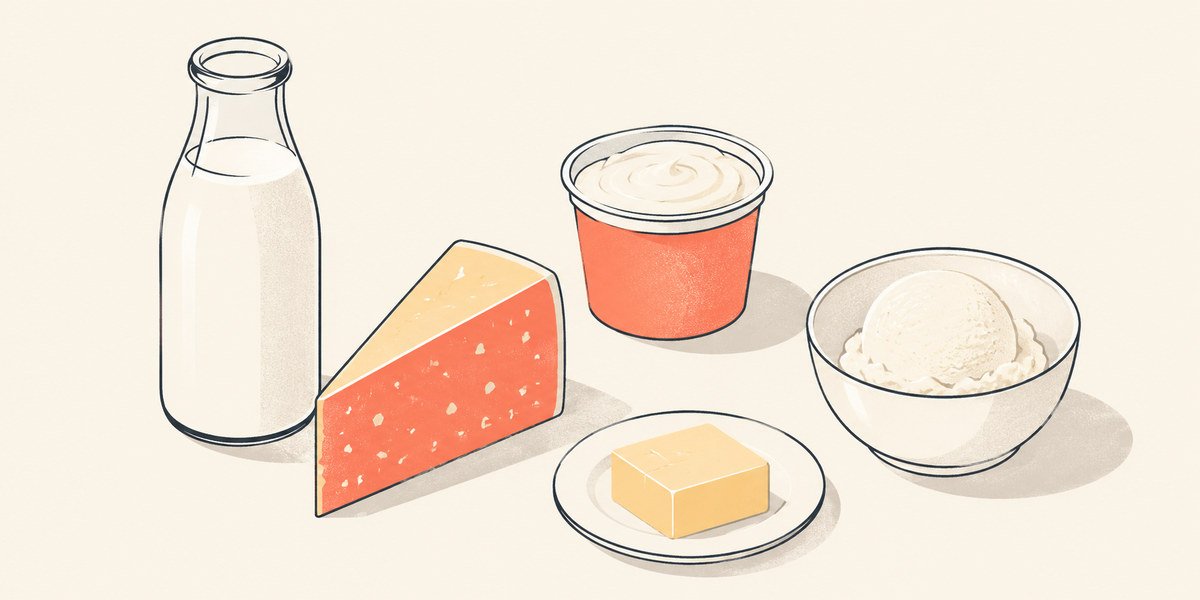
The saucer of milk is the most persistent myth in cat ownership. Kittens produce lactase to digest their mother's milk and then stop. An adult cat given cow's milk is being handed a sugar it can no longer break down.
| Food or item | Verdict | Why it matters | Signs to watch for | What to do |
|---|---|---|---|---|
| Cow's milk | CAUTION | Most adult cats lose lactase after weaning and cannot digest lactose. | Diarrhoea, gas, cramping within 12 hours. | Skip it. Water is what your cat actually needs. |
| Lactose-free cat milk | SAFE | Lactose removed, so the underlying problem is gone. | None expected in most cats. | Still calories — treat it as a treat, not a drink. |
| Goat's milk | CAUTION | Lower in lactose than cow's milk, but not lactose-free. | Milder version of the same GI upset. | Small amounts only, and only if tolerated. |
| Hard cheese — cheddar, parmesan | CAUTION | Low lactose, but very high in fat and salt. | Loose stool, thirst. | Pea-sized piece, useful for hiding tablets. |
| Soft cheese — brie, cream cheese | CAUTION | Higher lactose and fat than hard cheese. | Diarrhoea. | Avoid. Hard cheese is the better pill vehicle. |
| Blue cheese — stilton, roquefort, gorgonzola | TOXIC | The Penicillium mould produces roquefortine C, a neurotoxin. | Tremors, twitching, vomiting, seizures. | Call your vet. Do not treat as ordinary cheese. |
| Plain unsweetened yogurt | CAUTION | Live cultures pre-digest some lactose, so better tolerated. | Mild loose stool. | Half a teaspoon. Never sweetened or flavoured. |
| Greek yogurt, plain | CAUTION | Thicker and lower in lactose than standard yogurt. | Mild loose stool. | Same rule — plain only, tiny amount. |
| Cottage cheese | CAUTION | Moderate lactose, high salt in most commercial versions. | Loose stool, thirst. | Occasional teaspoon of the low-salt kind. |
| Butter | CAUTION | Almost pure fat; no nutritional case for it. | Vomiting, loose stool, pancreatitis risk. | Not worth offering. A lick is harmless. |
| Cream and whipped cream | CAUTION | Very high fat, plus lactose, plus sugar in whipped versions. | Diarrhoea, weight gain. | The classic saucer of cream is a myth. Skip it. |
| Ice cream | TOXIC | Combines lactose, sugar and fat — and often chocolate or xylitol. | Depends entirely on flavour; chocolate and sugar-free versions are emergencies. | Check the flavour. If chocolate or sugar-free, call your vet now. |
Scroll the table sideways on mobile to see every column. 12 entries in this section.
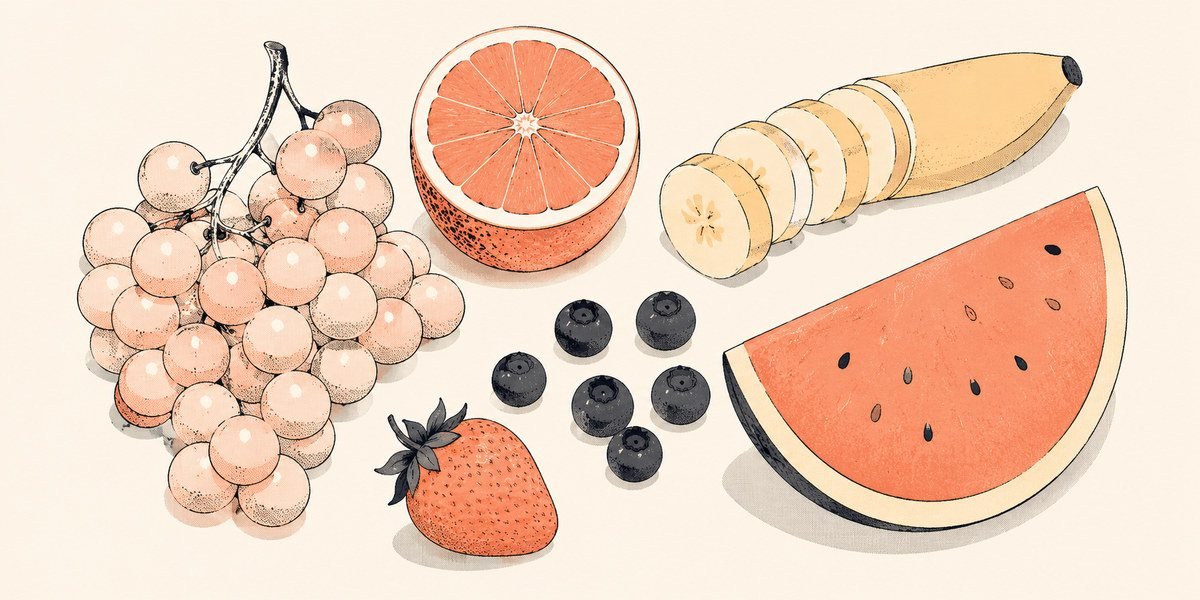
Cats are obligate carnivores and get nothing nutritionally essential from fruit. Most will ignore it. The category matters because of what is dangerous in it — grapes and raisins above all.
| Food or item | Verdict | Why it matters | Signs to watch for | What to do |
|---|---|---|---|---|
| Grapes | TOXIC | Cause acute kidney injury by an unidentified mechanism. No safe dose is known. | Vomiting within hours, then lethargy and reduced urination. | Emergency. Call poison control immediately, even for one grape. |
| Raisins, sultanas, currants | TOXIC | Dried grapes — the toxin is concentrated, so the risk per gram is higher. | Same as grapes, often faster onset. | Emergency. Common in cereal, flapjacks and hot cross buns. |
| Blueberries | SAFE | Antioxidant-rich, low sugar, correctly sized for a cat's mouth. | None expected. | Two or three berries. Many cats simply ignore them. |
| Strawberries | SAFE | Non-toxic; high water content. | None expected. | Remove the leafy top. Small slice only. |
| Raspberries and blackberries | SAFE | Non-toxic in the quantities a cat would eat. | Loose stool if overfed. | One or two berries maximum. |
| Watermelon flesh, seedless | SAFE | Mostly water; useful in hot weather. | None expected. | Flesh only. Rind and seeds are a blockage risk. |
| Cantaloupe and honeydew melon | SAFE | Non-toxic. Some cats are strongly drawn to melon. | None expected. | Small cubes, rind removed. |
| Banana | SAFE | Non-toxic but high in sugar for an obligate carnivore. | Loose stool if overfed. | A slice the size of a fingernail. |
| Apple flesh, peeled, deseeded | SAFE | The flesh itself is harmless. | None expected. | Remove every seed and the core first. |
| Apple, pear and cherry seeds; peach and plum pits | TOXIC | Contain cyanogenic glycosides that release cyanide when crushed. | Rapid breathing, bright red gums, collapse. | Emergency. Whole swallowed pits are also a blockage risk. |
| Pear flesh, deseeded | SAFE | Non-toxic. | None expected. | Small piece, no seeds. |
| Peach and plum flesh | CAUTION | Flesh is safe; the pit is both toxic and obstructive. | None from flesh alone. | Cut the flesh away from the stone completely. |
| Cherry flesh | CAUTION | Flesh is safe; stems, leaves and pits are not. | None from flesh alone. | Not worth the handling risk. Choose berries instead. |
| Orange, lemon, lime, grapefruit | TOXIC | Citric acid and the essential oils limonene and linalool irritate and depress the nervous system. | Drooling, vomiting, diarrhoea, tremors, skin irritation from peel oil. | Keep peel and juice away. Most cats avoid citrus by smell. |
| Mango flesh | SAFE | Non-toxic; high sugar. | Loose stool if overfed. | Small cube, skin and stone removed. |
| Fresh pineapple flesh | SAFE | Non-toxic; high sugar and acidity. | Mild GI upset. | Fresh only. Canned pineapple is packed in syrup. |
| Avocado | CAUTION | Persin is a genuine risk to birds; cats are far less sensitive. The real hazards are fat content and the pit. | Vomiting, loose stool. Choking or obstruction from the pit. | Not recommended. Keep pits and skin out of reach. |
| Cranberries, fresh | SAFE | Non-toxic; sometimes used in urinary supplements. | None expected. | Fresh only — dried cranberries are sugar-loaded. |
| Coconut flesh and coconut milk | CAUTION | Not toxic but very high in fat and can contain added sugar. | Diarrhoea, vomiting. | Avoid. There is no benefit here. |
| Figs, fresh or as a plant | TOXIC | Ficin and ficusin cause irritation and photosensitivity. | Drooling, vomiting, mouth irritation. | Avoid the fruit and keep fig plants out of the house. |
| Dried fruit generally | CAUTION | Sugar is concentrated, and raisins hide in most mixes. | Depends on which fruit. | Check the ingredient list for raisins or sultanas before panicking. |
| Tomato, ripe red flesh | CAUTION | Ripe flesh is low risk; everything else on the plant is not. | Mild GI upset from ripe flesh. | Not recommended, but a nibble of ripe tomato is not an emergency. |
Scroll the table sideways on mobile to see every column. 22 entries in this section.
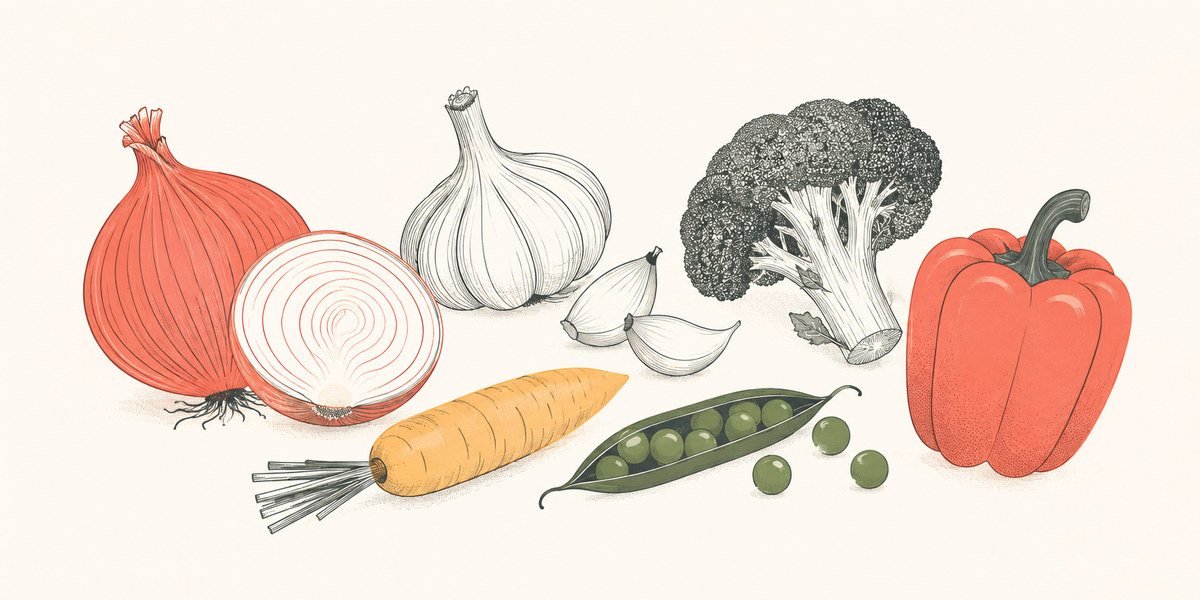
The allium family — onion, garlic, leek, shallot, chive, spring onion — is the single most important group on this page. It appears in almost every savoury human dish, and the damage it causes is often not visible for several days.
| Food or item | Verdict | Why it matters | Signs to watch for | What to do |
|---|---|---|---|---|
| Onion — raw, cooked, dried, powdered | TOXIC | Organosulfur compounds destroy red blood cells, causing Heinz body anaemia. | Pale or yellow gums, weakness, rapid breathing, red-brown urine — often 2 to 5 days later. | Call your vet. Delayed onset means a normal-looking cat can still be in trouble. |
| Onion powder | TOXIC | Dehydrated, so far more potent by weight than fresh onion. | As above, from a much smaller quantity. | Check baby food, gravy, stock cubes, crisps and pizza before sharing anything. |
| Garlic | TOXIC | Roughly five times more potent than onion by weight. | As above, from a very small amount. | Emergency. Ignore any online advice about garlic for fleas. |
| Leeks, shallots, spring onions, scallions | TOXIC | Same allium family, same mechanism. | As above. | Treat every allium as off-limits, cooked or raw. |
| Chives | TOXIC | Allium; commonly grown on kitchen windowsills within reach. | As above, plus drooling. | Move the pot. Grow cat grass instead. |
| Carrot — cooked, plain | SAFE | Non-toxic, fibrous, low calorie. | None expected. | Cook until soft and dice small. Raw carrot is a choking risk. |
| Green beans — cooked, plain | SAFE | Non-toxic; often used as a low-calorie filler. | None expected. | Plain and unsalted, chopped. |
| Peas — cooked or frozen-thawed | SAFE | Non-toxic; appears in many commercial cat foods. | None expected. | A few peas. Plain only. |
| Broccoli — cooked, plain | SAFE | Non-toxic; some cats enjoy the texture. | Gas if overfed. | Steam until soft. Small floret. |
| Pumpkin — plain, cooked or tinned | SAFE | Fibre can help both constipation and loose stool. | None expected. | Plain purée only. Pie filling contains nutmeg and sugar. |
| Butternut squash — cooked, plain | SAFE | Non-toxic, high fibre. | None expected. | Cooked, mashed, unseasoned. |
| Sweet potato — cooked, plain | SAFE | Non-toxic when fully cooked. | Loose stool if overfed. | Never raw. No butter or marshmallow topping. |
| Zucchini and courgette — cooked | SAFE | Non-toxic, very low calorie. | None expected. | Steamed and diced. |
| Cucumber | SAFE | Almost entirely water. | None expected. | Peeled, thin slices. |
| Bell pepper | SAFE | Non-toxic. Most cats show no interest. | None expected. | Small piece, deseeded. |
| Celery | SAFE | Non-toxic; some cats chew the stringy texture. | None expected. | Chop finely — the strings can catch. |
| Lettuce and leafy salad greens | SAFE | Non-toxic and high water content. | None expected. | Rinse well. No dressing. |
| Asparagus — cooked | SAFE | Non-toxic but tough. | None expected. | Cook until soft, chop small. |
| Sweetcorn kernels — plain | SAFE | Non-toxic; a common ingredient in commercial food. | None expected. | Off the cob. Cobs cause obstructions. |
| Potato — cooked, plain, peeled | CAUTION | Cooked potato is safe but nutritionally pointless for a carnivore. | None expected in small amounts. | No butter, salt, oil or garlic. There is no reason to offer it. |
| Potato — raw, green, or sprouted; potato leaves | TOXIC | Solanine, a glycoalkaloid that affects the nervous system and gut. | Drooling, vomiting, diarrhoea, weakness, slow heart rate. | Call your vet. Store potatoes out of reach and discard green ones. |
| Tomato plant — leaves, stems, unripe green fruit | TOXIC | Tomatine and solanine, concentrated in the green parts. | Drooling, vomiting, lethargy, weakness. | Call your vet. Keep tomato plants away from cats. |
| Spinach | CAUTION | High in oxalates, which contribute to calcium oxalate stones. | None acutely; a problem for cats with urinary or kidney history. | Avoid entirely if your cat has ever had crystals or stones. |
| Rhubarb — stalks and especially leaves | TOXIC | Soluble oxalates bind calcium and damage the kidneys. | Drooling, vomiting, tremors, kidney failure. | Emergency. Leaves are far more dangerous than stalks. |
| Mushrooms — store-bought, plain, cooked | CAUTION | Cultivated species are not toxic, but offer nothing nutritionally. | Mild GI upset. | Not recommended, but not an emergency. |
| Mushrooms — wild or unidentified | TOXIC | Several species cause liver failure or neurological collapse. | Vomiting, drooling, jaundice, seizures, collapse. | Emergency. Photograph the mushroom and go to the vet immediately. |
| Garlic or onion in baby food, stock, gravy, sauce | TOXIC | The most common route of accidental allium poisoning in cats. | As with onion — often delayed by days. | Read every label before sharing human food. |
| Beetroot — cooked, plain | CAUTION | Non-toxic but high in oxalates and sugar. | Red urine that mimics blood and causes needless panic. | Skip it. Not worth the false alarm. |
Scroll the table sideways on mobile to see every column. 28 entries in this section.
⚠ Warning
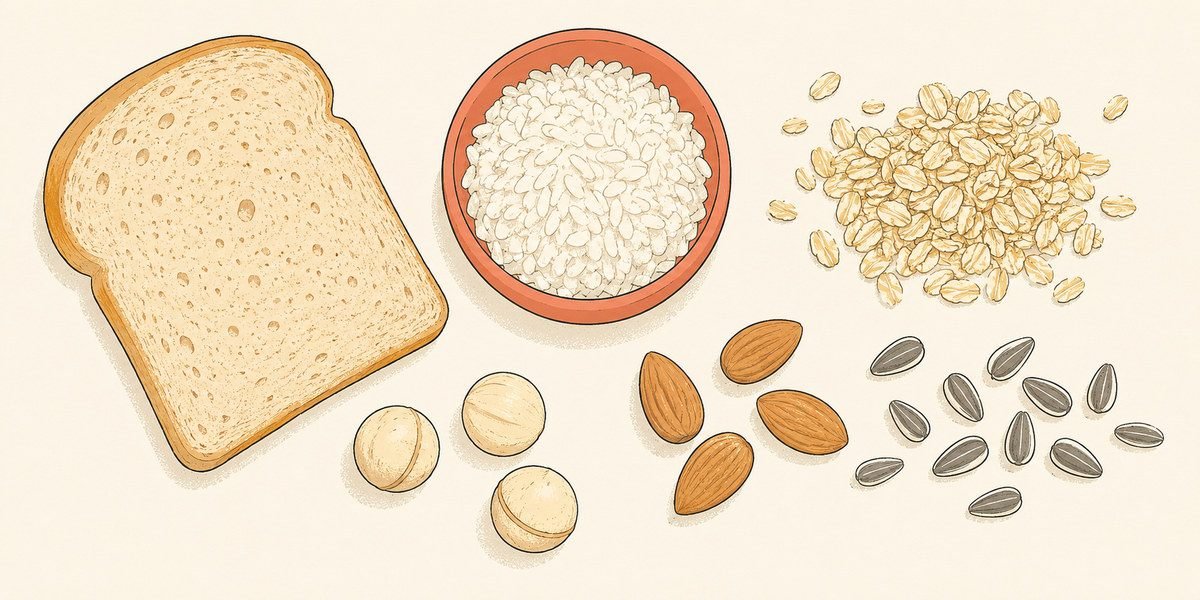
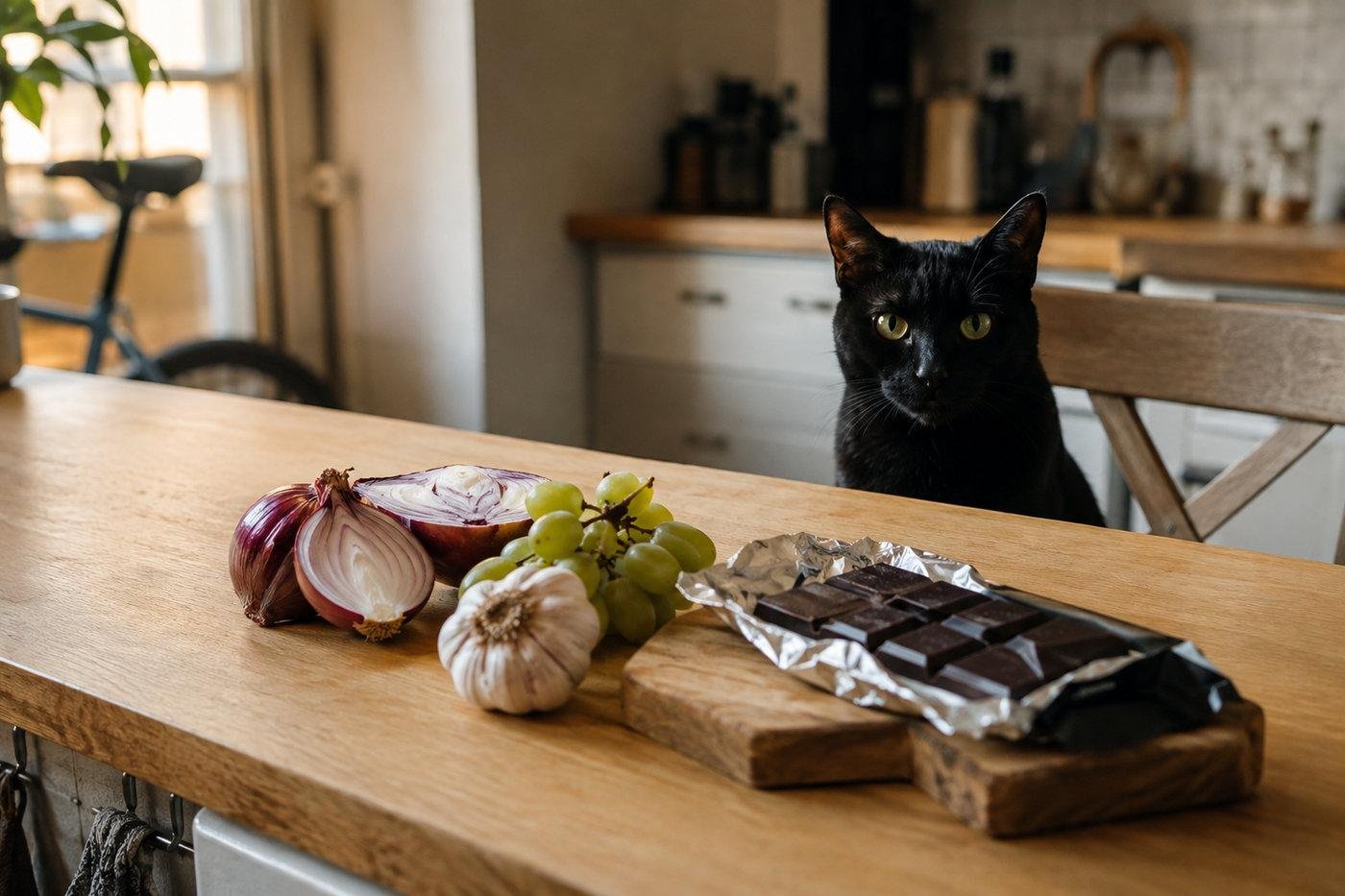
Plain cooked grains are harmless but pointless. Nuts are the real concern: high fat, choking-sized, sometimes mouldy, and in the case of peanut butter, a common hiding place for xylitol.
| Food or item | Verdict | Why it matters | Signs to watch for | What to do |
|---|---|---|---|---|
| White rice — cooked, plain | SAFE | Bland and binding; often recommended after GI upset. | None expected. | Plain boiled only. Small spoonful mixed with protein. |
| Oatmeal — cooked in water, plain | SAFE | Non-toxic, digestible fibre. | None expected. | Water only, never milk, never sweetened. |
| Pasta — cooked, plain | SAFE | Non-toxic but nutritionally empty for a carnivore. | None expected. | No sauce. Almost every pasta sauce contains garlic or onion. |
| Quinoa — cooked, plain | SAFE | Non-toxic, complete plant protein. | None expected. | Rinse before cooking. Plain only. |
| Bread — plain, fully baked | CAUTION | Not toxic, but pure carbohydrate with added salt. | None in small amounts. | A corner is harmless. There is no reason to make it a habit. |
| Bread dough — raw, unbaked | TOXIC | Yeast ferments in the stomach, producing ethanol and expanding gas. | Bloated painful abdomen, retching, disorientation, collapse. | Emergency. This is one of the fastest-moving kitchen poisonings. |
| Macadamia nuts | TOXIC | Mechanism unknown. Well documented in dogs; treated as toxic to cats. | Weakness, tremors, vomiting, hind-limb difficulty. | Call your vet. Also a serious choking hazard. |
| Walnuts | TOXIC | Prone to Aspergillus mould producing tremorgenic mycotoxins. | Tremors, seizures, vomiting. | Call your vet, especially if the nuts were old or black. |
| Pecans | CAUTION | Same mould risk as walnuts, plus very high fat. | Vomiting, tremors if mouldy. | Avoid. Store nuts in closed containers. |
| Almonds | CAUTION | Not acutely toxic but hard, fatty and difficult to digest. | Vomiting, choking, obstruction. | Avoid. Bitter almonds additionally contain cyanogenic compounds. |
| Cashews, pistachios, hazelnuts | CAUTION | High fat, salt, and choking size. | Vomiting, loose stool, pancreatitis risk. | Avoid. Remove shells from reach — pistachio shells obstruct. |
| Peanuts — plain, unsalted, shelled | CAUTION | Technically a legume and not toxic, but fatty and a choking risk. | Vomiting, choking. | One crushed nut at most. There is no benefit. |
| Peanut butter | TOXIC | Many brands now contain xylitol, which is dangerous even in trace amounts. | If xylitol-containing: vomiting, weakness, collapse, seizures. | Read the label. If it lists xylitol or birch sugar, treat as an emergency. |
| Sunflower seeds — plain, shelled | CAUTION | Not toxic but high in fat; shells are indigestible. | Vomiting, loose stool. | Avoid. Shells are the bigger hazard. |
| Pumpkin seeds — plain, shelled | SAFE | Non-toxic; sometimes ground into supplements. | None expected. | Plain and unsalted, ground or whole in tiny amounts. |
| Sesame seeds | SAFE | Non-toxic in the trace amounts a cat encounters. | None expected. | Fine as an incidental ingredient. |
| Popcorn — plain, air-popped | CAUTION | Plain popcorn is not toxic; unpopped kernels break teeth. | Choking, dental fracture. | Avoid. Buttered and salted versions are worse. |
| Cereal and granola | CAUTION | Sugar, salt, and very often raisins or chocolate. | Depends on the mix-ins. | Check for raisins and chocolate before you worry about the cereal. |
Scroll the table sideways on mobile to see every column. 18 entries in this section.
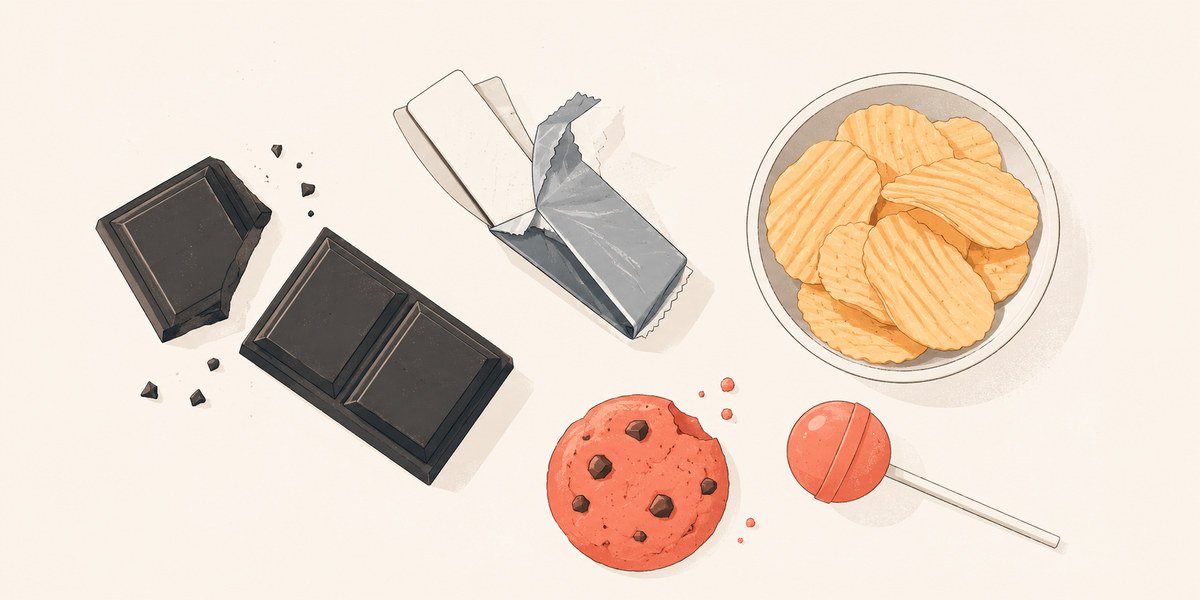
Two substances dominate this section: theobromine in chocolate and xylitol in sugar-free products. Xylitol is the one most owners have never heard of, and it now appears in gum, mints, peanut butter, baked goods and some medications.
| Food or item | Verdict | Why it matters | Signs to watch for | What to do |
|---|---|---|---|---|
| Dark chocolate and baking chocolate | TOXIC | Highest theobromine concentration of any chocolate. Cats cannot clear it. | Vomiting, racing heart, tremors, seizures. | Emergency. Note the cocoa percentage and weight eaten before you call. |
| Milk chocolate | TOXIC | Less theobromine per gram, but a cat is small enough for it to matter. | Vomiting, restlessness, rapid heart rate. | Call poison control with the weight eaten. |
| White chocolate | CAUTION | Minimal theobromine, but heavy fat and sugar. | Vomiting, diarrhoea. | Still not a treat. Confirm it was genuinely white chocolate. |
| Cocoa powder and cacao nibs | TOXIC | More concentrated than most solid chocolate. | As with dark chocolate, often faster. | Emergency. Store baking supplies in closed cupboards. |
| Xylitol and birch sugar | TOXIC | Triggers a dangerous insulin release and can cause liver damage. | Weakness, wobbliness, collapse, seizures within an hour. | Emergency. Found in gum, mints, peanut butter, baked goods and some medicines. |
| Chewing gum and sugar-free mints | TOXIC | The most common household source of xylitol. | As above. | Emergency. Keep handbags and coat pockets closed. |
| Sugar-free sweets and protein bars | TOXIC | Frequently sweetened with xylitol. | As above. | Read the ingredient panel, then call your vet. |
| Hard candy and boiled sweets | CAUTION | Choking and dental risk; sugar has no place in a cat's diet. | Choking, gagging. | Keep out of reach. Check for xylitol. |
| Crisps, potato chips, salted snacks | CAUTION | High salt and fat; many are seasoned with onion or garlic powder. | Thirst, vomiting. Allium seasoning is the real concern. | Check the flavour. Cheese-and-onion is a different problem to ready salted. |
| Salted pretzels and crackers | CAUTION | Sodium load is significant for a small animal. | Excessive thirst, vomiting. | Avoid. Fresh water should be freely available. |
| Cookies, biscuits, cake, frosting | CAUTION | Sugar, butter, and often chocolate, raisins or nutmeg. | Depends on the ingredients. | Identify the mix-ins first — those decide whether this is urgent. |
| Marshmallows | CAUTION | Pure sugar and gelatine; significant choking risk. | Choking, GI upset. | Avoid entirely. |
| Fried and fast food | CAUTION | Fat load can trigger pancreatitis; heavily salted and seasoned. | Vomiting, abdominal pain, lethargy. | Avoid. Pancreatitis is painful and expensive. |
| Table salt in quantity | TOXIC | Causes hypernatremia — sodium poisoning. | Vomiting, extreme thirst, tremors, seizures. | Call your vet. Never use salt to induce vomiting. |
| Playdough and salt dough ornaments | TOXIC | Extremely high salt concentration. | As with salt poisoning. | Emergency. A seasonal hazard worth knowing about. |
| Nutmeg-containing baked goods | TOXIC | Myristicin affects the nervous system. | Disorientation, rapid heart rate, high blood pressure, seizures. | Call your vet. Common in pumpkin pie and eggnog. |
| Raw cookie dough | TOXIC | Combines raw egg, raw flour and often chocolate; yeast doughs ferment. | Bloating, vomiting, disorientation. | Emergency if it was a yeast dough. |
| Chocolate-covered raisins | TOXIC | Two separate serious toxins in one item. | Vomiting, then kidney signs over 24 to 72 hours. | Emergency. Mention both components when you call. |
Scroll the table sideways on mobile to see every column. 18 entries in this section.
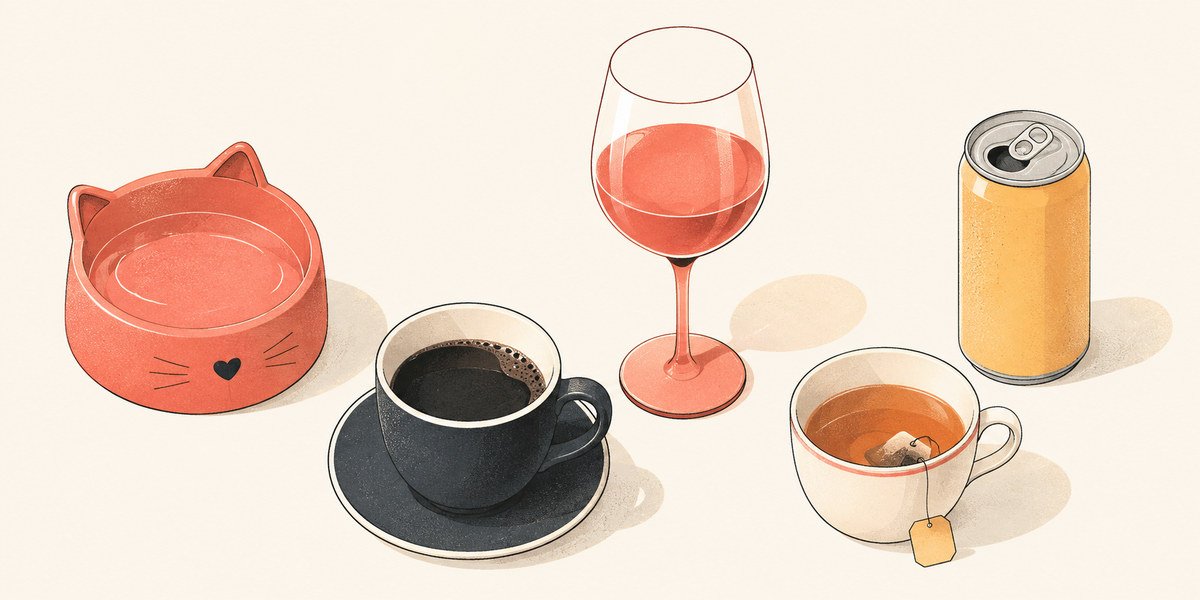
Water is the only drink a cat needs. Everything else in this section is either unnecessary or dangerous, and caffeine and alcohol are dangerous at volumes a cat could easily reach on a coffee table.
| Food or item | Verdict | Why it matters | Signs to watch for | What to do |
|---|---|---|---|---|
| Fresh clean water | SAFE | The only drink a cat genuinely needs. | None. | Multiple bowls away from food. Refresh daily. |
| Bone broth — no onion, garlic or salt | SAFE | Encourages fluid intake in cats that dislike drinking. | None expected. | Home-made or a cat-specific product. Almost all supermarket stock contains onion. |
| Lactose-free cat milk | SAFE | Formulated so the lactose problem does not apply. | None expected in most cats. | Counts toward daily calories. Treat only. |
| Cow's milk | CAUTION | Adult cats are generally lactose intolerant. | Diarrhoea and cramping within hours. | Offer water instead. |
| Almond, oat and soy milk | CAUTION | Not toxic, but sweetened versions may contain xylitol. | Loose stool; xylitol emergency if present. | Check the label. There is no benefit to offering it. |
| Coconut water | CAUTION | High in potassium, which matters for cats with kidney or heart disease. | GI upset. | Avoid. |
| Fruit juice | CAUTION | Concentrated sugar and acid; citrus juice is actively irritating. | Vomiting, diarrhoea. | Avoid. Citrus juice is worse than others. |
| Coffee, espresso and coffee grounds | TOXIC | Caffeine is a methylxanthine, like theobromine but faster acting. | Restlessness, racing heart, tremors, seizures. | Emergency. Used grounds in the bin still contain caffeine. |
| Tea — black, green, or any caffeinated | TOXIC | Same caffeine mechanism. | Restlessness, rapid heart rate, vomiting. | Call your vet. Do not leave brewed cups unattended. |
| Herbal tea — caffeine-free, plain | CAUTION | Depends entirely on the herbs; many are unsafe. | Varies by ingredient. | Avoid unless you have checked every herb in the blend. |
| Energy drinks | TOXIC | Very high caffeine plus taurine and sugar in unbalanced amounts. | Severe agitation, racing heart, tremors, collapse. | Emergency. The most concentrated caffeine source in most homes. |
| Cola and caffeinated soft drinks | TOXIC | Caffeine plus sugar plus carbonation. | Restlessness, rapid heart rate, vomiting. | Call your vet. Keep open cans off low tables. |
| Alcohol — beer, wine, spirits, liqueurs | TOXIC | Cats have almost no capacity to metabolise ethanol. | Wobbliness, vomiting, low body temperature, slowed breathing, coma. | Emergency. Even a small spill matters at cat body weight. |
| Sports and electrolyte drinks | CAUTION | Sodium and sugar formulated for humans, not cats. | Vomiting, thirst. | Avoid. Use vet-prescribed rehydration if needed. |
| Water from a tuna can | CAUTION | Spring water is harmless; brine is very salty. | Thirst; fussiness afterwards. | Occasional splash of spring water only. |
| Melted ice cream, milkshakes, hot chocolate | TOXIC | Chocolate content plus lactose plus sugar. | Depends on chocolate content. | Treat any chocolate drink as an emergency. |
| Diet drinks | TOXIC | Some contain xylitol rather than aspartame. | Weakness, collapse if xylitol-containing. | Check the sweetener on the label immediately. |
| Tap water in a shared dog bowl | SAFE | Perfectly fine and often preferred. | None. | Ensure your cat has a bowl a dog cannot guard. |
Scroll the table sideways on mobile to see every column. 18 entries in this section.
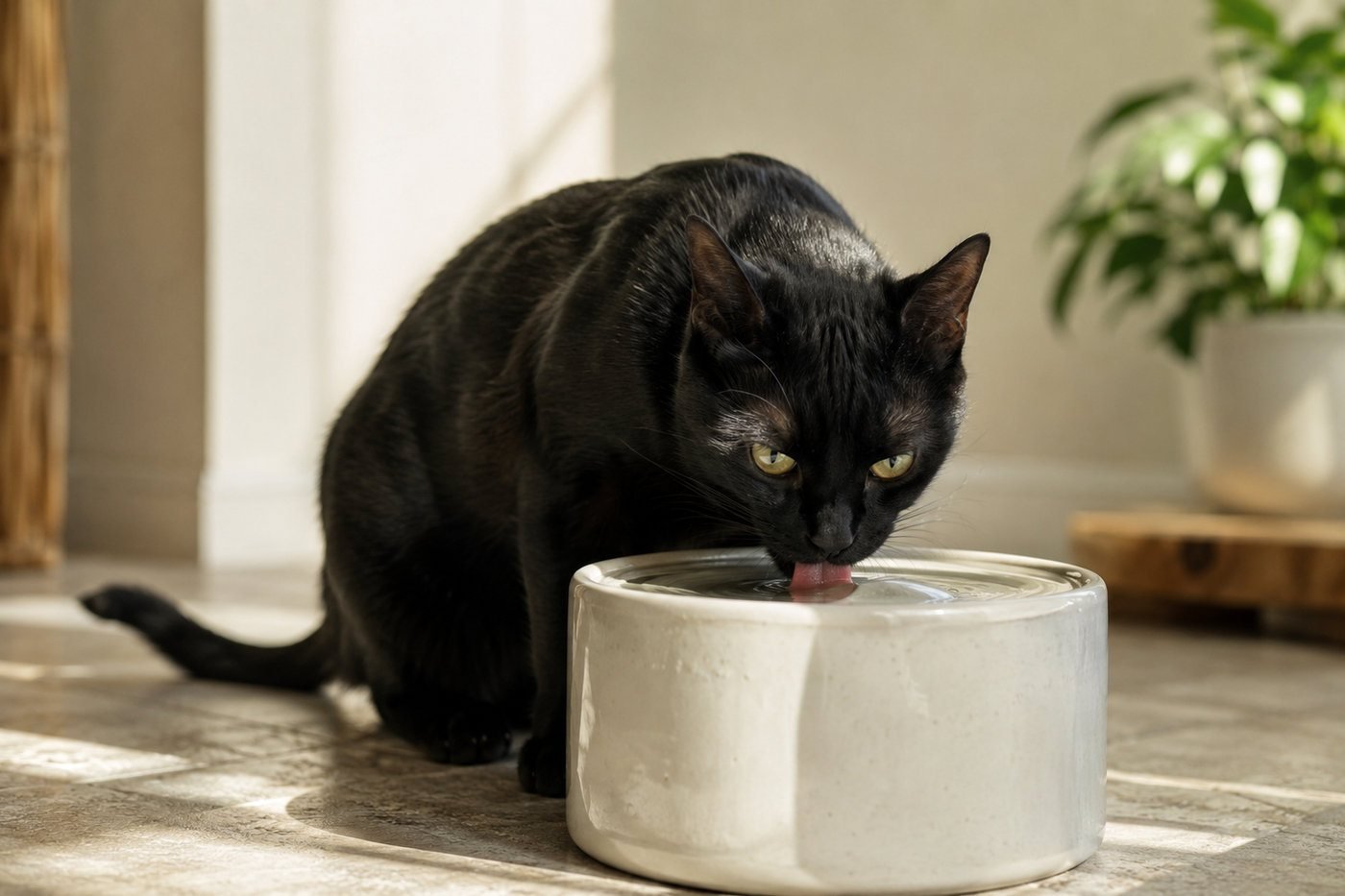
Low water intake is a genuine health issue in cats, and it is one of the arguments made for wet food. If you are weighing that decision, our breakdown of wet versus dry cat food covers the moisture question in detail.
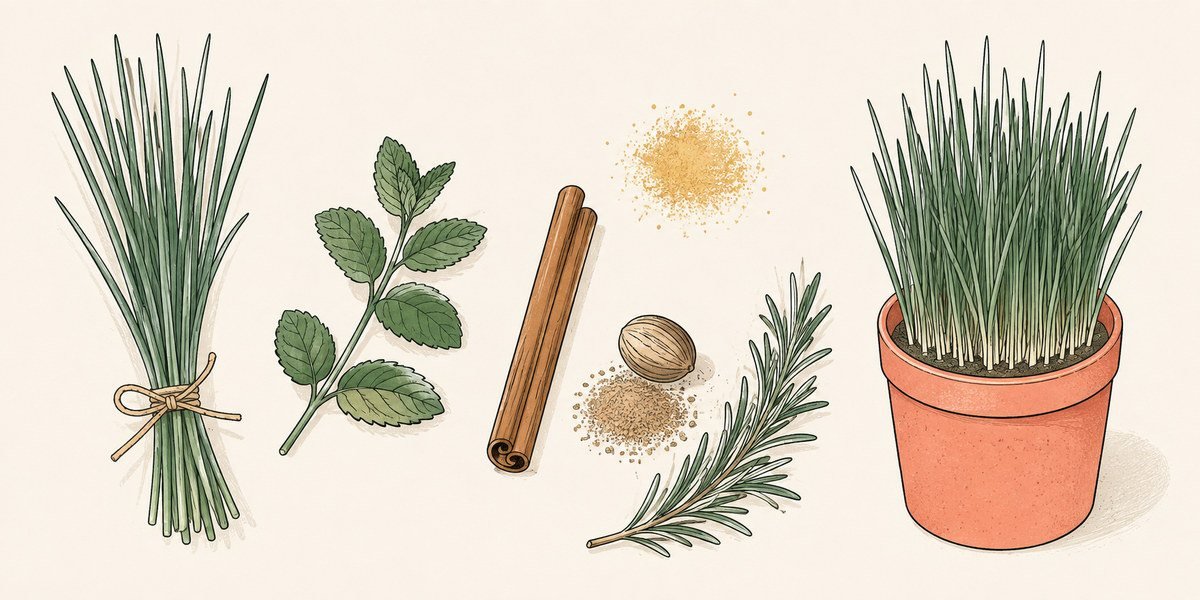
Essential oils deserve their own warning. Cats lack the liver enzyme that processes phenols and terpenes, and exposure does not require eating anything — a running diffuser is enough.
| Food or item | Verdict | Why it matters | Signs to watch for | What to do |
|---|---|---|---|---|
| Chives | TOXIC | Allium family — the same red blood cell damage as onion. | Pale gums, weakness, red-brown urine, often days later. | Emergency. Remove pots from windowsills. |
| Garlic powder and granules | TOXIC | The most concentrated allium form in a kitchen. | As with garlic. | Check every seasoning blend, stock cube and rub. |
| Onion powder | TOXIC | Hidden in an enormous range of savoury products. | As with onion, typically delayed. | Read labels on anything you share. |
| Nutmeg | TOXIC | Myristicin is neurotoxic and cardiotoxic. | Disorientation, rapid heart rate, high blood pressure, seizures. | Call your vet. Peaks as a hazard around the holidays. |
| Bay leaf | TOXIC | Eugenol content plus a rigid leaf that can perforate the gut. | Drooling, vomiting, abdominal pain. | Count bay leaves in and out of the pot. |
| Marjoram | TOXIC | Causes GI upset and, with repeated exposure, heart effects. | Vomiting, diarrhoea. | Keep off the herb shelf your cat can reach. |
| Cinnamon — powder, sticks, or oil | CAUTION | Powder is low risk in traces; cinnamon oil is a genuine irritant. | Mouth irritation, vomiting, low blood sugar with large doses. | Keep the oil away entirely. A dusting of powder is not an emergency. |
| Black pepper | CAUTION | Irritant rather than toxic. | Sneezing, mild GI upset. | Season your own food after serving your cat's. |
| Chilli, cayenne, paprika | CAUTION | Capsaicin irritates the mouth, gut and eyes. | Drooling, pawing at the mouth, vomiting. | Avoid. Never use chilli as a deterrent spray. |
| Turmeric | CAUTION | Not toxic in traces but can interact with medication and stain everything. | Mild GI upset. | Only under veterinary direction. |
| Ginger — fresh, tiny amount | CAUTION | Sometimes used for nausea, but dosing in cats is not established. | GI upset in larger amounts. | Only if your vet has recommended a dose. |
| Rosemary, thyme, oregano, sage | CAUTION | Not acutely toxic as garnish, but the concentrated oils are. | Vomiting, diarrhoea; oils cause tremors and drooling. | Fresh sprigs are low risk. Essential oils are not. |
| Basil | CAUTION | Non-toxic in small amounts. Some cats chew the leaves. | Mild GI upset if a lot is eaten. | A leaf is fine. Keep the plant intact. |
| Parsley — curly, small amount | CAUTION | Curly parsley is low risk; spring parsley causes photosensitivity. | Sun sensitivity, skin and eye irritation from spring parsley. | Know which variety you grow before assuming it is safe. |
| Mint — garden mint, small amount | CAUTION | Garden mint in traces is tolerated; concentrated oils are not. | Vomiting, diarrhoea. | Fine as a plant, dangerous as an oil. |
| Pennyroyal | TOXIC | Pulegone causes liver failure. | Vomiting, lethargy, jaundice, collapse. | Emergency. Sometimes marketed as a natural flea remedy — it is not safe. |
| Essential oils — tea tree, eucalyptus, citrus, pine, peppermint, wintergreen, ylang ylang, cinnamon, clove | TOXIC | Cats lack the liver enzyme needed to process phenols and terpenes. Absorbed through skin and lungs as well as ingestion. | Drooling, wobbliness, tremors, difficulty breathing, liver failure. | Emergency. Stop any diffuser immediately and ventilate the room. |
| Diffused essential oils in the air | TOXIC | Airborne exposure is enough — the cat does not need to lick anything. | Coughing, wheezing, drooling, wobbliness. | Turn it off, open windows, move the cat to fresh air, call your vet. |
| Aloe vera | TOXIC | Saponins and anthraquinones cause GI and kidney effects. | Vomiting, diarrhoea, lethargy, tremors. | Call your vet. A very common houseplant. |
| Lemongrass — plant | CAUTION | The plant is mildly irritating; lemongrass oil is toxic. | Vomiting, diarrhoea; oil causes severe signs. | Plant is low risk in small nibbles. Oil is not. |
| Catnip | SAFE | Nepetalactone acts on scent receptors, not as a poison. | Overexcitement or drooling if a lot is eaten. | Safe. Non-addictive. Roughly a third of cats do not respond. |
| Silver vine and valerian root | SAFE | Alternative attractants for cats that do not respond to catnip. | Mild overexcitement. | Safe in normal toy quantities. |
| Cat grass — wheat, oat or barley grass | SAFE | Grown specifically for cats; aids hairball passage. | Occasional vomiting, which is often the point. | Keep a fresh pot available. It reduces interest in toxic houseplants. |
| Wheatgrass | SAFE | Same family as cat grass and equally safe. | None expected. | Rinse before offering if shop-bought. |
| Fresh coriander and dill, small amounts | CAUTION | Not toxic in garnish quantities. | Mild GI upset. | No benefit, but no cause for alarm. |
| Curry, chilli and spice blends | TOXIC | Almost universally contain garlic and onion powder. | Allium signs plus GI irritation. | Assume any savoury blend contains allium unless proven otherwise. |
| Stock cubes and bouillon | TOXIC | Onion, garlic and an enormous salt load. | Allium signs plus excessive thirst. | Never use to flavour a cat's food. Use plain bone broth instead. |
Scroll the table sideways on mobile to see every column. 27 entries in this section.
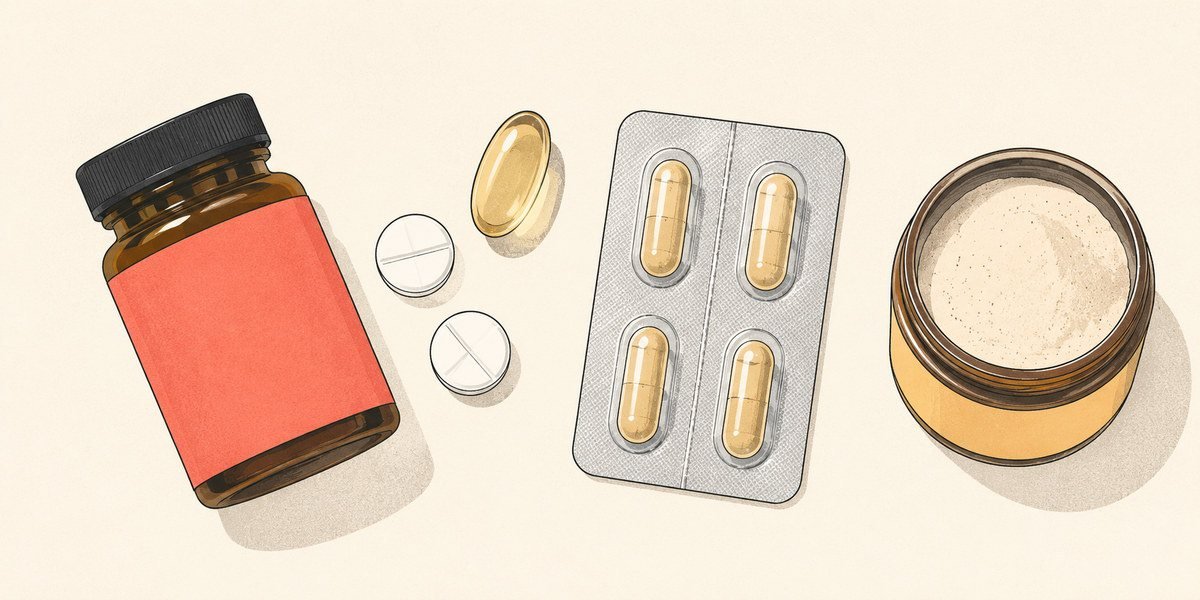
Human medication is the most lethal category on this page. Paracetamol in particular kills cats at doses a person would consider trivial, and the damage begins before any symptom appears.
| Food or item | Verdict | Why it matters | Signs to watch for | What to do |
|---|---|---|---|---|
| Paracetamol and acetaminophen | TOXIC | Cats lack the enzyme to detoxify it. A single standard tablet can be fatal. | Brown or blue-grey gums, facial and paw swelling, laboured breathing, dark urine. | Emergency — go straight to a vet. Do not wait for symptoms. |
| Ibuprofen | TOXIC | Causes stomach ulceration and acute kidney failure at very low doses. | Vomiting, black tarry stool, reduced urination, lethargy. | Emergency. Never give human painkillers to a cat. |
| Aspirin | TOXIC | Cats clear salicylates extremely slowly, so doses accumulate. | Vomiting, appetite loss, rapid breathing, bleeding. | Emergency unless prescribed by your vet at a specific feline dose. |
| Naproxen and other human NSAIDs | TOXIC | Same ulceration and kidney injury pathway, longer acting. | Vomiting, blood in stool, lethargy. | Emergency. |
| Human multivitamins | TOXIC | Iron and vitamin D content are the primary dangers. | Vomiting, weakness, tremors, kidney signs. | Call poison control with the exact product name. |
| Vitamin D and cholecalciferol supplements | TOXIC | Causes calcium to rise and mineralise the kidneys. | Excessive thirst and urination, vomiting, weakness, kidney failure. | Emergency. Also present in some rodent baits. |
| Iron supplements | TOXIC | Corrosive to the gut, then damaging to the liver. | Vomiting, bloody diarrhoea, shock. | Emergency. |
| Zinc supplements and swallowed coins | TOXIC | Zinc destroys red blood cells. | Pale gums, vomiting, jaundice, red-brown urine. | Emergency. X-ray may be needed. |
| Vitamin A supplements | TOXIC | Accumulates in bone and joints over time. | Stiffness, reluctance to move, poor coat. | Only supplement under veterinary direction. |
| Antidepressants — SSRIs, SNRIs, tricyclics | TOXIC | Cause serotonin syndrome in cats. | Agitation, dilated pupils, tremors, high temperature, seizures. | Emergency. Store medication in a closed cabinet, not a bedside table. |
| ADHD medication — amphetamines, methylphenidate | TOXIC | Powerful stimulants at cat body weight. | Hyperactivity, racing heart, high temperature, seizures. | Emergency. |
| Decongestants — pseudoephedrine, phenylephrine | TOXIC | Stimulant effect on the heart and nervous system. | Agitation, racing heart, high blood pressure, tremors. | Emergency. |
| Sleep aids and benzodiazepines | TOXIC | Cats can react paradoxically, and diazepam has caused liver failure. | Sedation or agitation, wobbliness, jaundice. | Emergency. |
| Dog flea treatment containing permethrin | TOXIC | Cats cannot metabolise permethrin. One of the most common serious feline poisonings. | Muscle tremors, twitching, drooling, seizures within hours. | Emergency. Never apply dog spot-on to a cat, and separate treated dogs. |
| Cannabis, THC edibles and vapes | TOXIC | THC affects cats strongly; edibles often also contain chocolate or xylitol. | Wobbliness, dilated pupils, dribbling urine, low temperature, agitation. | Call your vet and be honest — it changes the treatment. |
| Nicotine — cigarettes, patches, vape liquid | TOXIC | Vape liquid is highly concentrated and often flavoured attractively. | Drooling, vomiting, agitation, tremors, collapse. | Emergency. Store refills like you would a medicine. |
| CBD products marketed for pets | CAUTION | Feline dosing and long-term safety are not well established; product quality varies. | Sedation, GI upset, raised liver enzymes. | Only under veterinary supervision, never a human product. |
| Melatonin | CAUTION | Sometimes prescribed, but many human formulations contain xylitol. | Sedation; xylitol emergency if present. | Check the inactive ingredients before anything else. |
| Fish oil and omega-3 supplements | CAUTION | Beneficial at correct doses, but excess affects clotting and adds calories. | Loose stool, fishy breath, weight gain. | Use a feline product at a vet-advised dose. |
| Probiotics formulated for cats | SAFE | Species-appropriate strains at appropriate doses. | Mild transient loose stool. | Choose a feline-specific product and follow the label. |
Scroll the table sideways on mobile to see every column. 20 entries in this section.
The instinct is to search for symptoms and wait. That is the wrong order. For several of the substances on this page — paracetamol, grapes, alliums, xylitol — treatment is far more effective before signs appear, and by the time a cat looks unwell, the window has narrowed considerably.
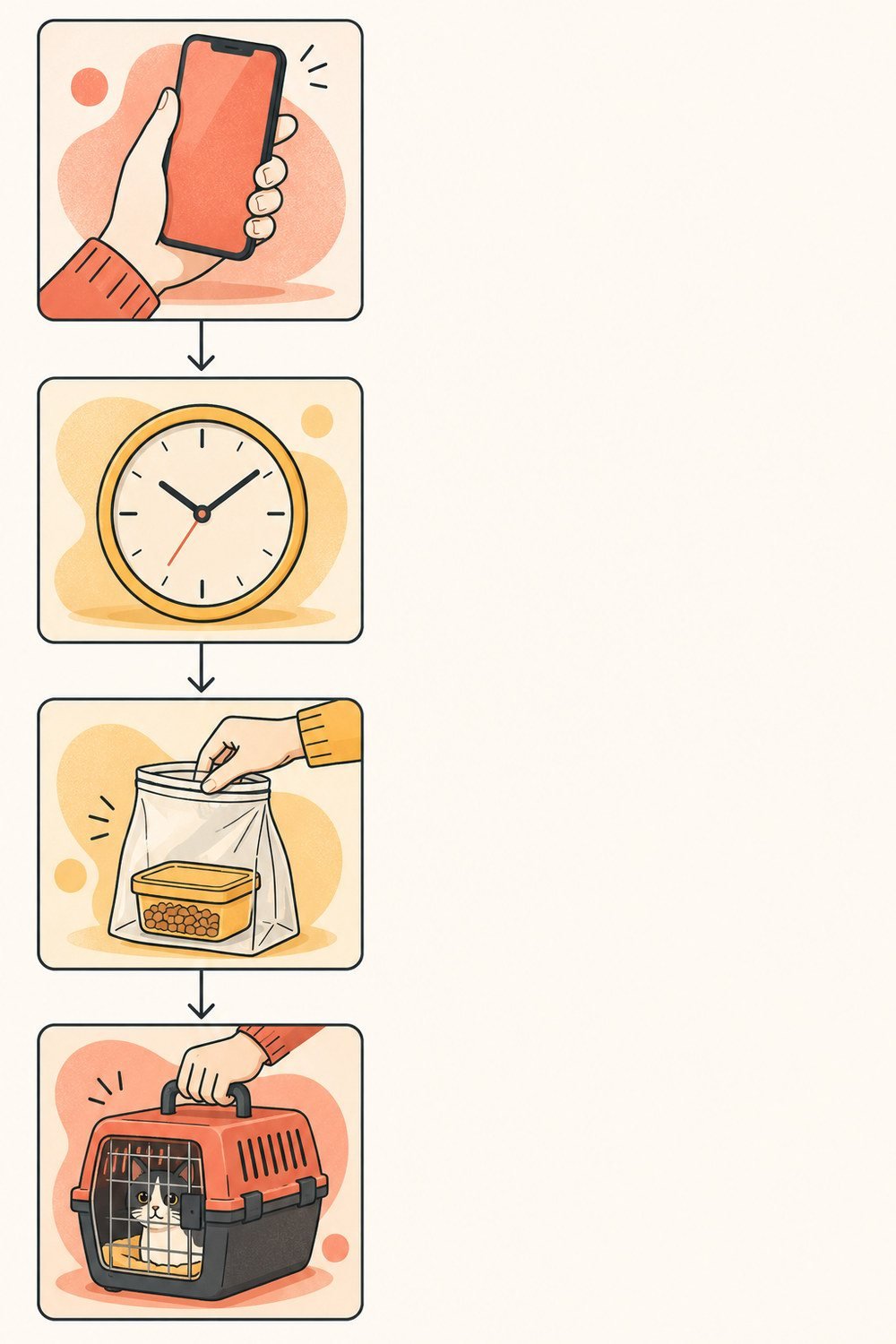
01
Call before you do anything else
Contact a poison line or your vet immediately. Do not wait to see whether symptoms develop, and do not attempt to induce vomiting — salt, hydrogen peroxide and other home methods cause serious additional harm in cats.
02
Note the time and the amount
Write down when it happened and estimate how much was eaten. Treatment decisions depend heavily on both. Your cat's weight matters too, so have that ready.
03
Bag the packaging or the food
Keep the wrapper, the plant cutting, the pill bottle, or whatever is left. Ingredient lists and concentrations change what the vet does next — particularly with chocolate percentages and xylitol.
04
Get the carrier out early
If you are told to come in, you want the carrier ready rather than chasing a stressed cat around the house. Bring the packaging with you.
⚠ Warning
Symptoms vary enormously by substance, and cats are famously good at masking illness. The signs below are the ones that most often bring a poisoning case to a vet. Any one of them, appearing suddenly and without explanation, is worth a phone call.
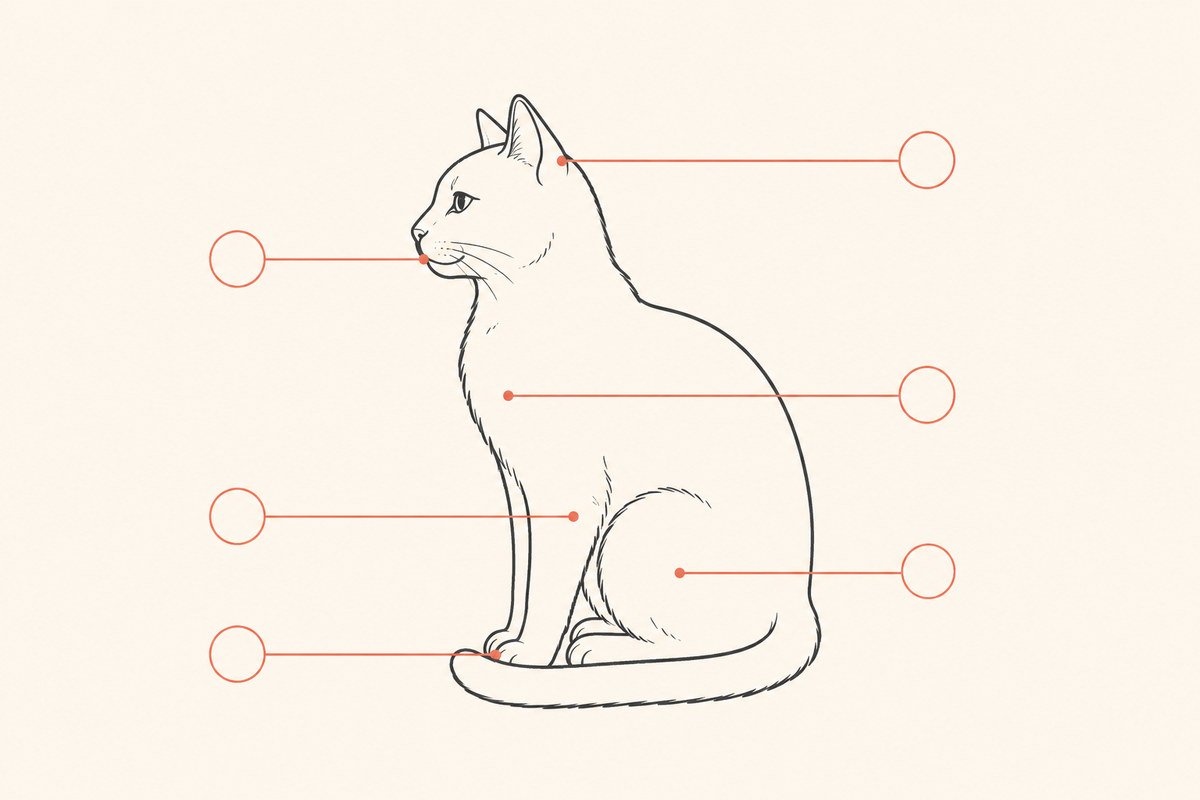
Mouth and face
Drooling, foaming, pawing at the mouth, swelling around the face or paws, blue-grey or brown gums.
Breathing and chest
Rapid or laboured breathing, open-mouth breathing, coughing, wheezing.
Stomach and gut
Repeated vomiting, diarrhoea, blood in either, refusing food, a tense or painful abdomen.
Movement
Wobbliness, tremors, twitching, weakness in the hind legs, collapse, seizures.
Behaviour and alertness
Sudden lethargy, hiding, disorientation, unusual agitation, dilated pupils.
Drinking and urination
Excessive thirst, straining, producing very little urine, or urine that looks dark red-brown.
Hiding and sudden lethargy are easy to dismiss, particularly in a cat that sleeps a great deal anyway. If you are unsure what is normal for your cat, our guide to how much cats sleep covers where the line sits between normal rest and a warning sign.
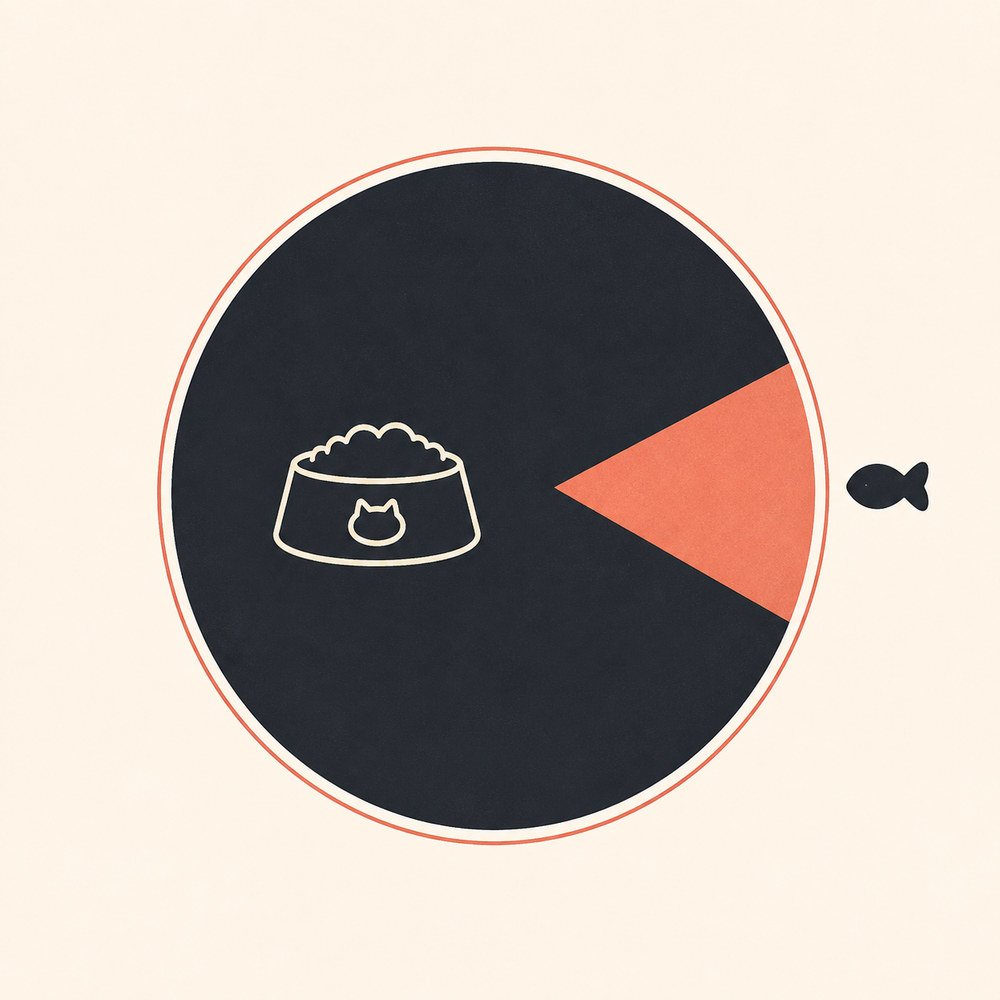
A typical indoor adult cat needs somewhere around 200 to 250 calories a day. Ten percent of that is roughly 20 to 25 calories — about the size of two or three small cubes of cooked chicken. That is the entire treat budget, and it includes everything: commercial treats, dental sticks, the milk in the saucer, and whatever fell off the counter.
The other 90% has to come from complete, balanced food, because that is where taurine, arachidonic acid, vitamin A and the other nutrients cats cannot synthesise actually come from. A cat filled up on chicken has been fed generously and nourished badly.
For the portion side of that equation — how much to feed, how often, and how to tell whether your cat is at a healthy weight — start with Cat Nutrition 101.
It is for chicken. It is not for grapes, xylitol or paracetamol, where no safe threshold has been established for cats. Dose-dependence varies by substance, and the substances with no known safe dose are exactly the ones people tend to shrug off.
A plain roast chicken breast is one of the safest treats available. The same breast cooked with garlic, onion, stock or a rub is not. Most allium poisonings do not come from a cat eating an onion — they come from a cat eating something an onion was cooked into.
With alliums the signs can be days away. With paracetamol the liver damage is already underway before anything is visible. Treatment before symptoms is faster, cheaper and far more likely to work.
Essential oils, garlic-based flea remedies, aloe vera and pennyroyal are all natural and all dangerous to cats. Some of the most severe poisonings this page covers come from products marketed as gentle alternatives.
Cats and dogs metabolise substances very differently. Permethrin is a routine dog flea treatment and a life-threatening emergency in a cat. Paracetamol has a cautious canine dose and no safe feline one.
Gum, mints, medication blister packs and vape refills all live in bags, and bags get left on floors and low chairs. It is one of the most common routes of accidental poisoning in a tidy home.
Small amounts of hard cheese are tolerated by most cats because it is low in lactose, and it is genuinely useful for hiding tablets. It is still high in fat and salt, so a pea-sized piece is the sensible ceiling. Blue cheese is a different matter entirely — the Penicillium mould produces roquefortine C, which is neurotoxic, and it should be treated as a call to your vet.
Not toxic, but not a food. Canned tuna is not nutritionally complete, mercury accumulates over time, and it is palatable enough that cats regularly start refusing their balanced food after a run of it. A teaspoon occasionally is fine. A tuna-based diet causes real deficiencies.
It depends on the type and your cat's weight, which is exactly why poison lines want both pieces of information. Dark and baking chocolate carry the most theobromine per gram, milk chocolate less, white chocolate very little. Rather than guessing the threshold, weigh what is missing, check the cocoa percentage on the wrapper, and call.
Most adult cats cannot digest lactose, so cow's milk tends to cause diarrhoea and cramping rather than any benefit. Lactose-free cat milk avoids that problem but still adds calories. Water remains the only drink your cat actually needs.
Yes. Allium damage to red blood cells is not immediately visible, and cats commonly look normal for two to five days before pale gums, weakness and dark urine appear. Your vet may simply want to run a blood test in a few days, but that decision should be theirs.
The kidney injury is best documented in dogs, but cases in cats are reported and no safe dose has been established for either species. Because the mechanism is still unidentified, poison control centres treat grape and raisin ingestion in cats as an emergency. There is no benefit to feeding them, so the safe course is straightforward.
No. Paracetamol is the clearest example — cats lack the enzyme needed to detoxify it, and a single standard tablet can be fatal. Ibuprofen, aspirin and naproxen all cause stomach ulceration and kidney injury at low doses. If your cat is in pain, that is a call to your vet, not a trip to the medicine cabinet.
No. Cats lack the liver enzyme that processes phenols and terpenes, and exposure through the air and through grooming oil off their coat is enough to cause harm. Tea tree, eucalyptus, citrus, pine, peppermint, wintergreen and cinnamon oils are the most frequently implicated. If a diffuser has been running, turn it off, open the windows, move your cat to fresh air and call your vet.
Plain cooked chicken, turkey, white fish, salmon and egg are the reliable options. They are complete proteins, well tolerated, and most cats find them highly motivating for training or medication. Everything else on the safe list is harmless rather than beneficial.
Often, yes. Lilies are the most serious — every part of a true lily, including pollen, can cause acute kidney failure in cats. Aloe vera, pothos, philodendron and sago palm are also common household hazards. Keeping a pot of cat grass available reduces the appeal of everything else considerably.
Most of what keeps cats out of emergency clinics is not knowledge of exotic toxins. It is a set of ordinary habits: reading the label before sharing, keeping handbags off the floor, counting bay leaves out of the pot, storing medication in a closed cupboard, and calling early rather than waiting to see.
Bookmark this page. The moment you need it, you will not want to be searching, and you will not want to be reading opinions on a forum. The three numbers at the top of this page are the ones that matter.
If you want to go deeper on the feeding side of things, start with Cat Nutrition 101 and our comparison of wet versus dry cat food. New owners setting up a household from scratch should read the new cat owner starter guide, and for the wider picture across every life stage there is The Ultimate Cat Care Guide. Everything else lives in our nutrition and feeding and cat care and health sections.
Meowive also publishes a set of illustrated cat care guides, including What to Feed Your Cat on nutrition and portioning, and The Feline Mind on behaviour and communication. The full set is at The Complete Cat Owner Library.
Disclaimer. This page is general educational information and is not veterinary advice. It cannot account for your cat's age, weight, medical history or the quantity involved. For any suspected poisoning or medical concern, contact a licensed veterinarian or a poison control line immediately. Meowive participates in affiliate programmes and may earn from qualifying purchases.
Sources