


Meowive Reference · Health & Lifestyle
Thank you for reading this post, don't forget to subscribe!Convert your cat’s age to human years, find their life stage, and see exactly what changes at each one — vet visits, diet, mobility, and the checks that matter most as they get older.
0–25
Years covered
4
Life stages
AAHA
Formula basis
2026
Last verified
Last verified: August 2026 · Edited by the Meowive editorial team · Sources cited below
A cat is not simply "young" or "old." It moves through four distinct life stages, each with its own nutritional needs, its own vet visit schedule, and its own warning signs worth knowing before they matter. This page has two parts: an age calculator that converts your cat’s age into the human-years equivalent, and a complete life stage chart covering what actually changes at each one.
Enter your cat’s age below. Under a year, switch to months — kitten development is not linear, so the calculator uses commonly cited developmental milestones rather than a flat rate for the first twelve months.
This calculator runs entirely in your browser after the page loads. The full reference tables below work with JavaScript off.
Kitten development front-loads almost all of a cat’s aging into twelve months, which is why a flat yearly rate does not work before age one. The table below uses the milestones most commonly cited by veterinary sources.
| Kitten age | Human years (approx.) |
|---|---|
| 1 month | ~1 |
| 2 months | ~2.5 |
| 3 months | ~4 |
| 4 months | ~6 |
| 5 months | ~8 |
| 6 months | ~10 |
| 7 months | ~11.5 |
| 8 months | ~13 |
| 9 months | ~13.5 |
| 10 months | ~14 |
| 11 months | ~14.5 |
| 12 months | ~15 |
Figures are widely cited estimates, not a clinical measurement. Individual kittens vary.
| Cat’s age | Human years | Life stage |
|---|---|---|
| 1 year | 15 | Kitten |
| 2 years | 24 | Young Adult |
| 3 years | 28 | Young Adult |
| 4 years | 32 | Young Adult |
| 5 years | 36 | Young Adult |
| 6 years | 40 | Young Adult |
| 7 years | 44 | Mature Adult |
| 8 years | 48 | Mature Adult |
| 9 years | 52 | Mature Adult |
| 10 years | 56 | Mature Adult |
| 11 years | 60 | Senior |
| 12 years | 64 | Senior |
| 13 years | 68 | Senior |
| 14 years | 72 | Senior |
| 15 years | 76 | Senior |
| 16 years | 80 | Senior |
| 17 years | 84 | Senior |
| 18 years | 88 | Senior |
| 19 years | 92 | Senior |
| 20 years | 96 | Senior |
| 21 years | 100 | Senior |
| 22 years | 104 | Senior |
| 23 years | 108 | Senior |
| 24 years | 112 | Senior |
| 25 years | 116 | Senior |
Based on the commonly used rule: 15 human years at age one, 24 at age two, then roughly four human years for every year after. Individual breed, size and health history all shift this.
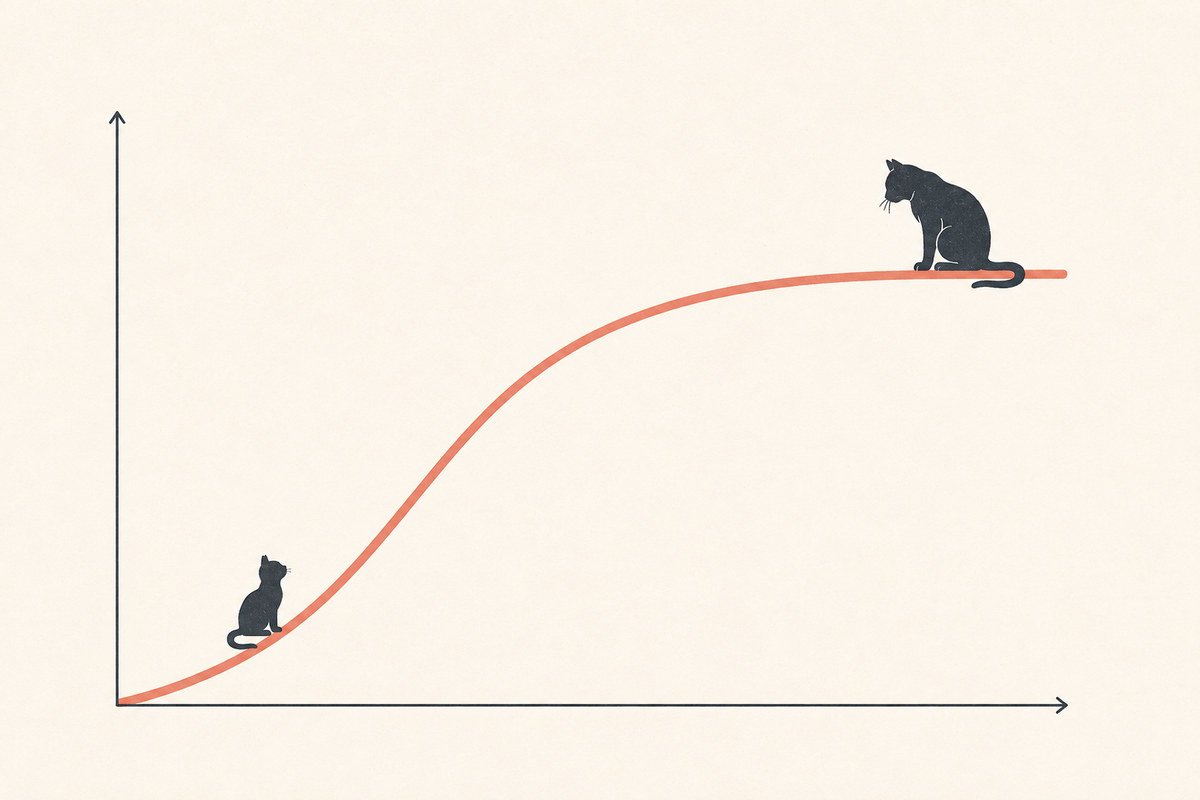
The curve explains the rule at a glance. A kitten’s first twelve months cover more physical development than the next several years combined — birth to sexual maturity, full-grown teeth, adult body size. After that the rate flattens: each additional year adds real time but comparatively less change, which is why the back half of the curve nearly levels out.
Important
What to take away from this page

This is the busiest year of a cat’s life. Eyes open around ten days, weaning happens between four and six weeks, adult teeth come in by around six months, and sexual maturity arrives at five to six months — which is also the usual window for spay or neuter.
Kittens need a first exam at six to eight weeks, then booster vaccinations roughly every three to four weeks until sixteen weeks old, when the immune system is mature enough to hold a vaccine properly. Spay or neuter is typically scheduled between four and six months, followed by a one-year wellness exam.
Kitten-formula food is not optional marketing — it carries meaningfully more protein and calories than adult food to support the growth happening this year. Free access to food is common early on, tapering to three or four scheduled meals a day by a few months old, and to two by the end of the first year.
Parasites are common in kittens and worth ruling out with your vet even without visible symptoms. Persistent diarrhoea, a kitten that is not gaining weight week to week, or unusual lethargy all warrant a call rather than a wait-and-see approach — kittens have very little reserve if something goes wrong.

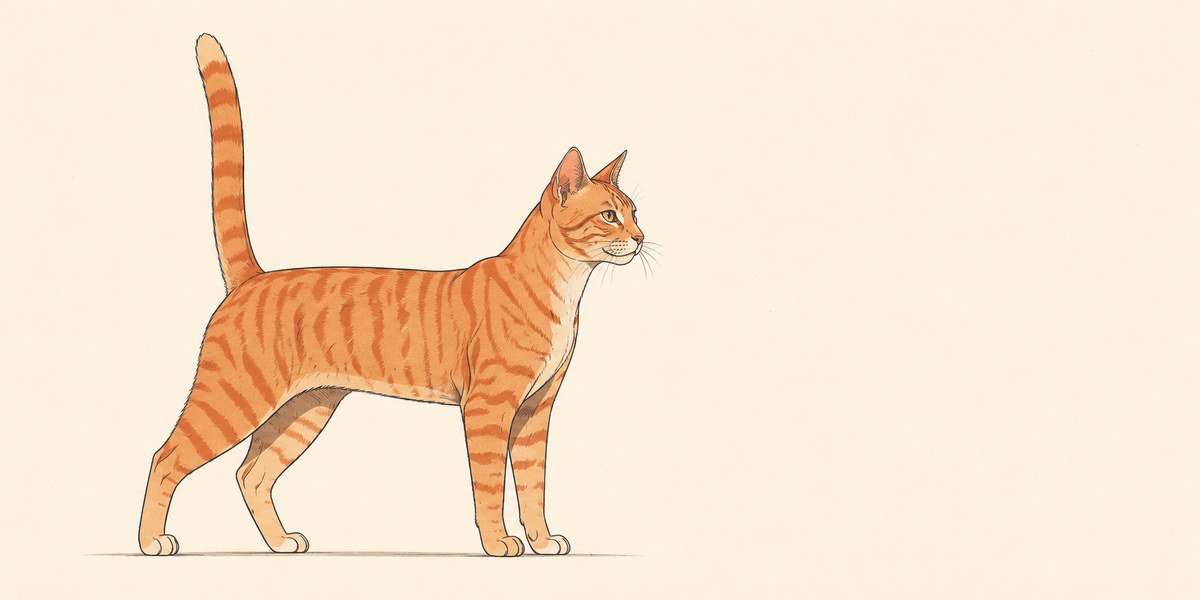
Physically, this is peak condition. Growth is complete, energy is high, and most cats in this stage carry no chronic health issues at all. It is also the stage where habits set in that matter a great deal later — weight, dental care, and activity level chief among them.
One annual wellness exam covers most young, healthy adults, including a dental check and core vaccine boosters on schedule. There is rarely a need for bloodwork at this stage unless a specific concern comes up.
A complete adult maintenance food is appropriate now, and portion control starts to matter more than it did as a kitten — metabolism has settled, and indoor cats in particular can gain weight quietly over a couple of years without an obvious cause. Measuring food rather than free-feeding is worth starting here if it has not already.
This is the easiest window to build good habits: regular play to keep weight and joints in good shape, tooth brushing or dental treats before tartar becomes a real problem, and getting a cat comfortable with handling and carriers while it is relaxed and confident.
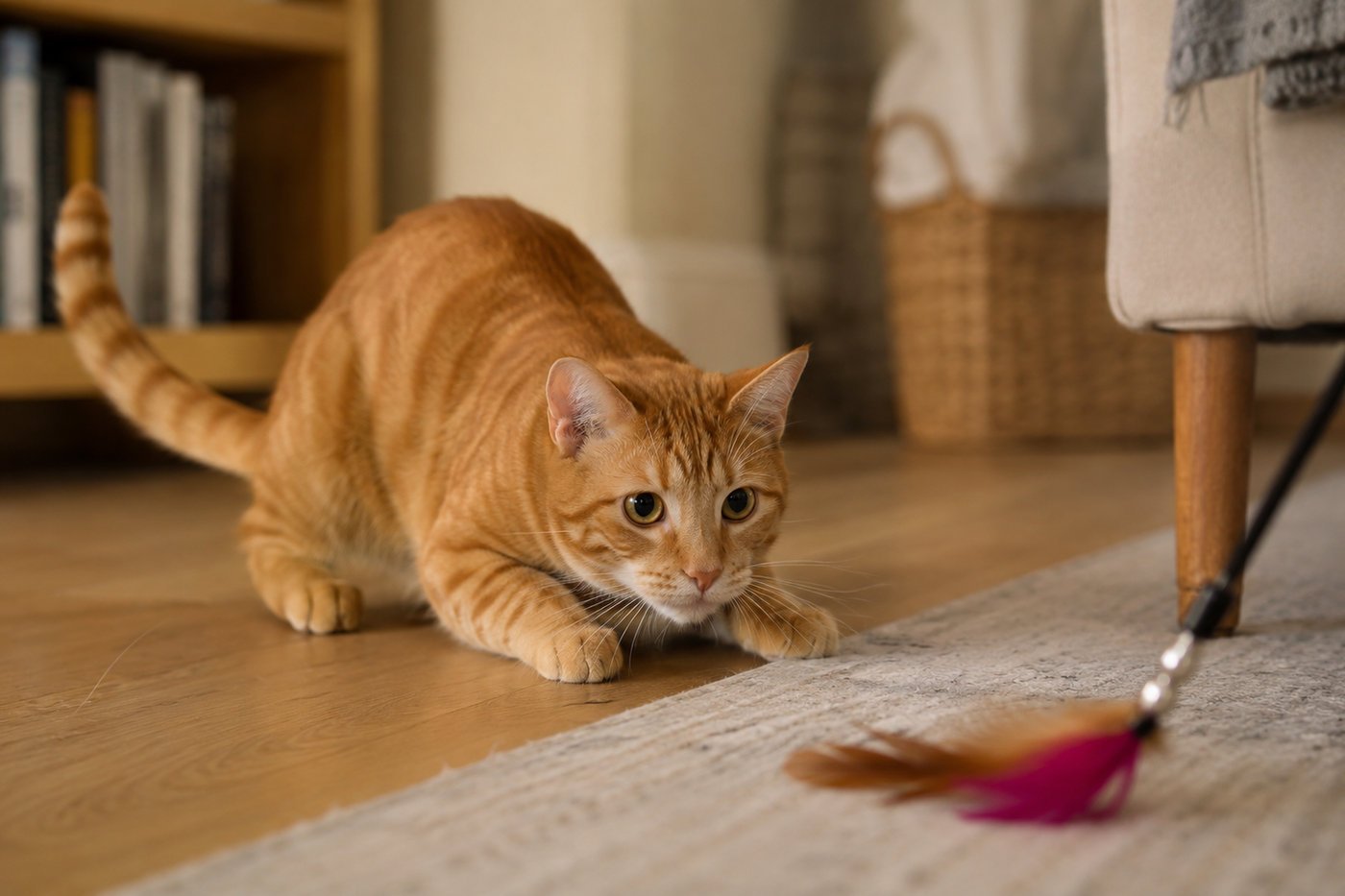


Nothing dramatic usually happens at seven, which is exactly the problem — changes in this stage are gradual enough to miss without knowing to look. This is the window where preventive screening starts paying off, well before any of it is visible day to day.
An annual exam is still the baseline, but many vets now recommend starting baseline bloodwork around age seven, even with no symptoms. The value is comparative: a healthy baseline at seven makes it far easier to spot a meaningful change at eleven, rather than discovering a problem only once it is advanced.
Weight tends to drift in this stage, in either direction, and both matter. Watch portions against actual body condition rather than the amount on the bag, and pay closer attention to dental health — this is the age range where dental disease becomes genuinely common rather than occasional.
A little less enthusiasm for jumping, a slight shift in coat quality, marginally reduced play drive — none of these are alarming individually, but they are worth mentioning at the annual exam rather than dismissing as "just getting older." They are also the reason baseline bloodwork at this stage is worth doing before something is obviously wrong.
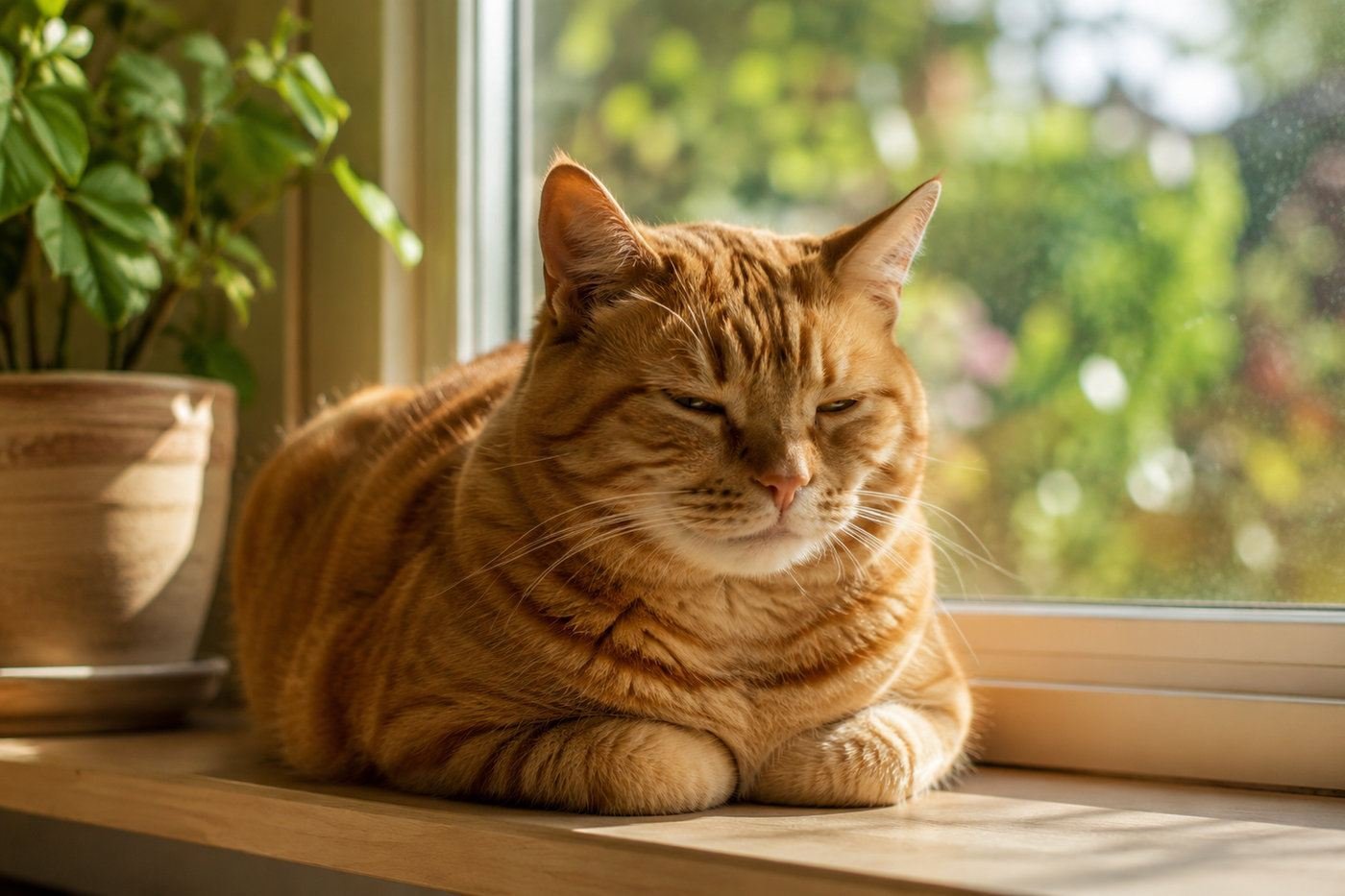
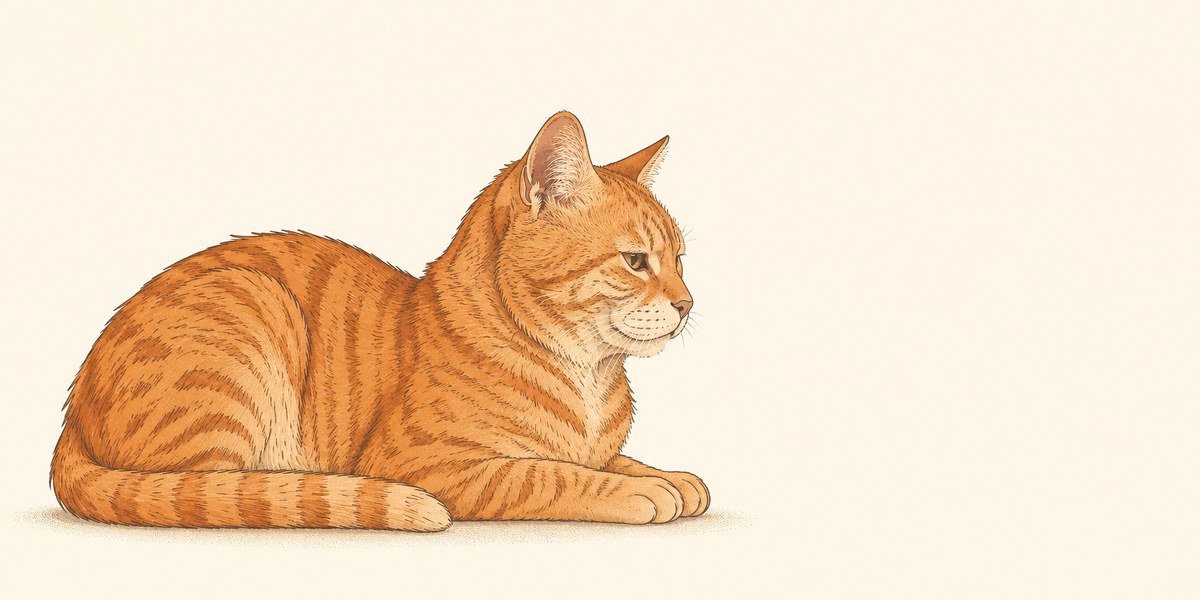
Cats are exceptionally good at masking illness, and that skill becomes a real liability in the senior years, when several of the most common conditions — kidney disease, hyperthyroidism, diabetes — are far more treatable caught early than caught late. This section covers what changes, and what to actually do about it.
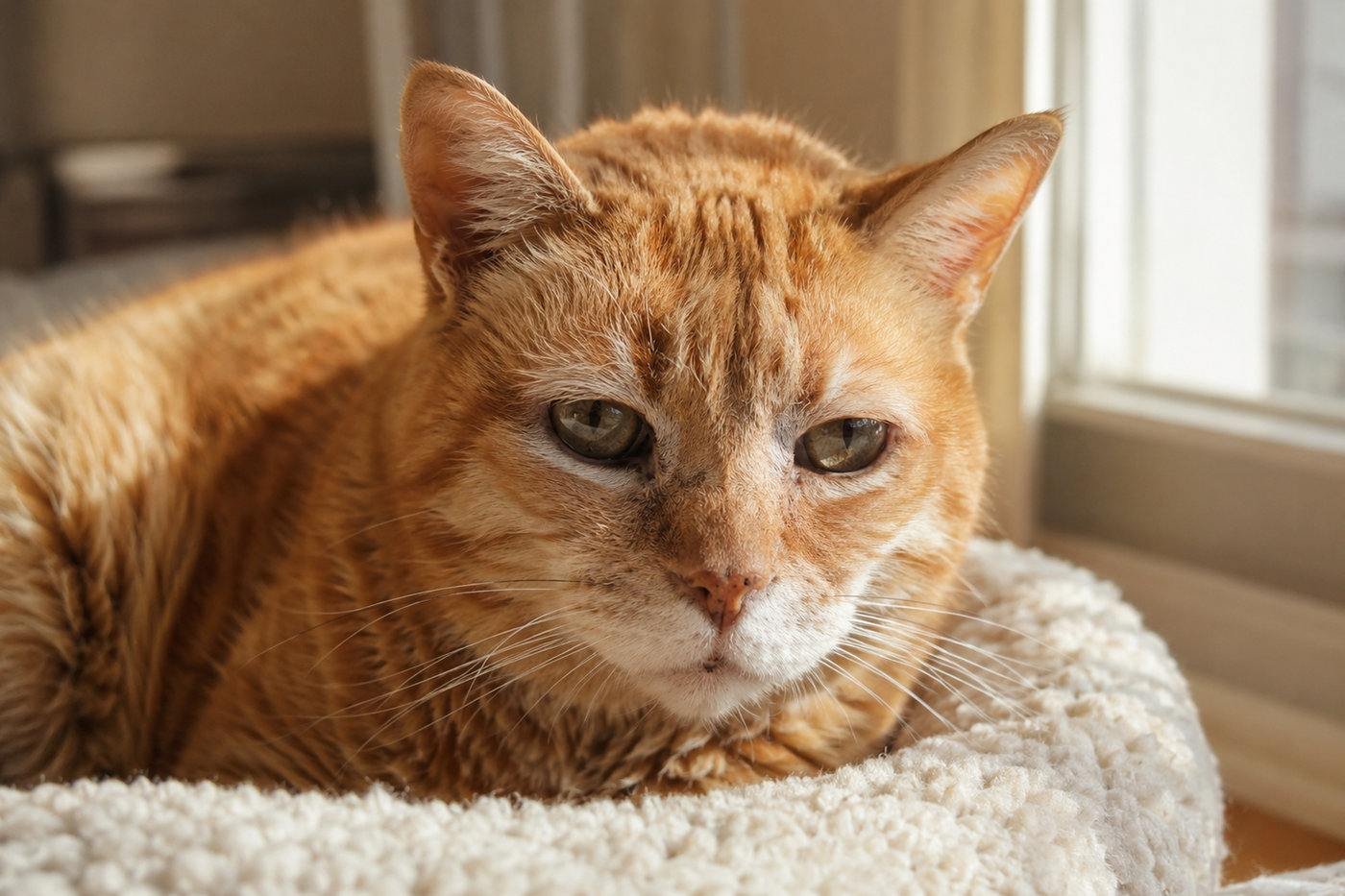
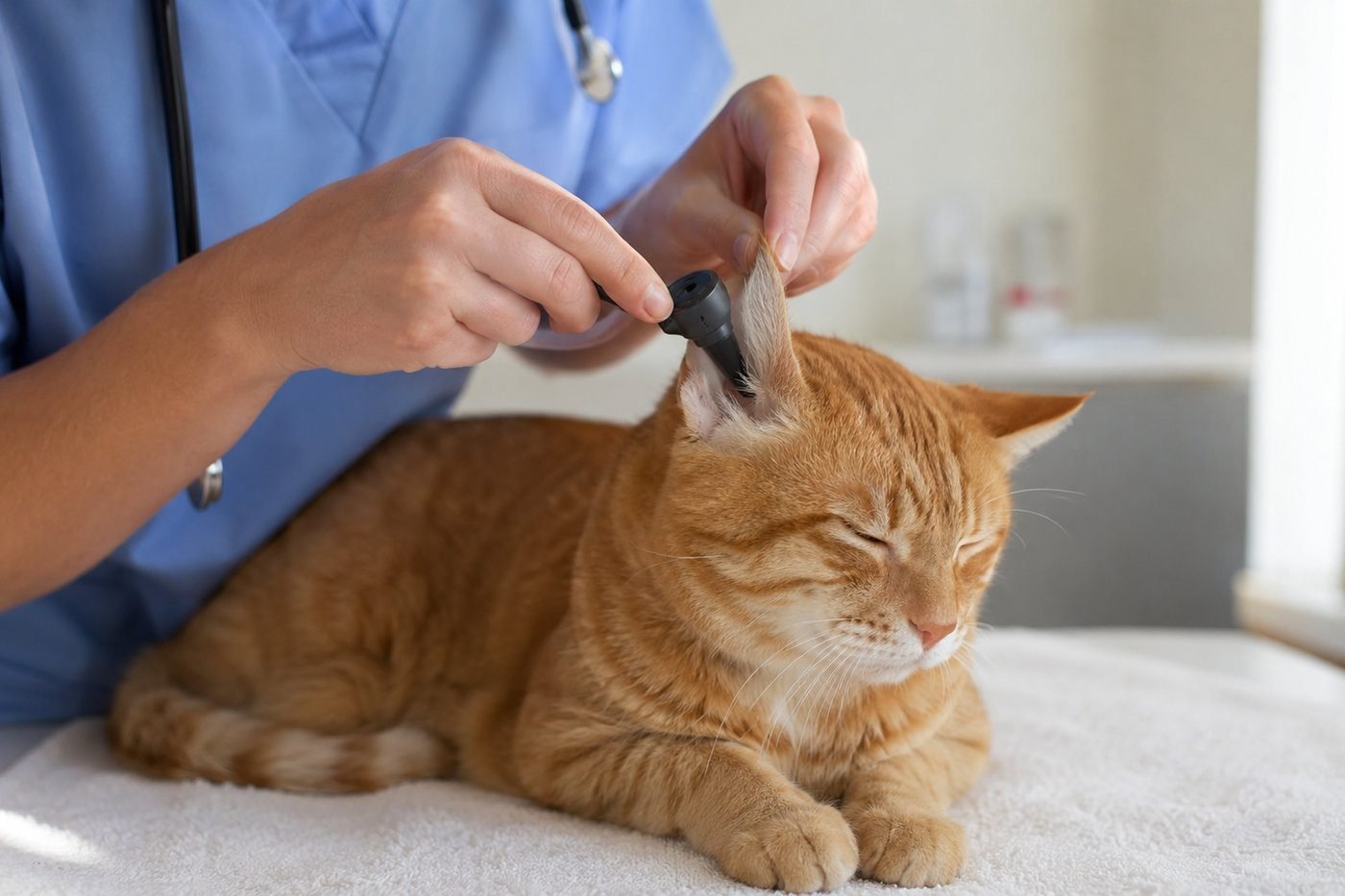
Twice a year, not once. That single change — from an annual to a biannual exam — is one of the highest-value things an owner can do for a senior cat, because it roughly doubles the chances of catching a developing problem while it is still manageable.

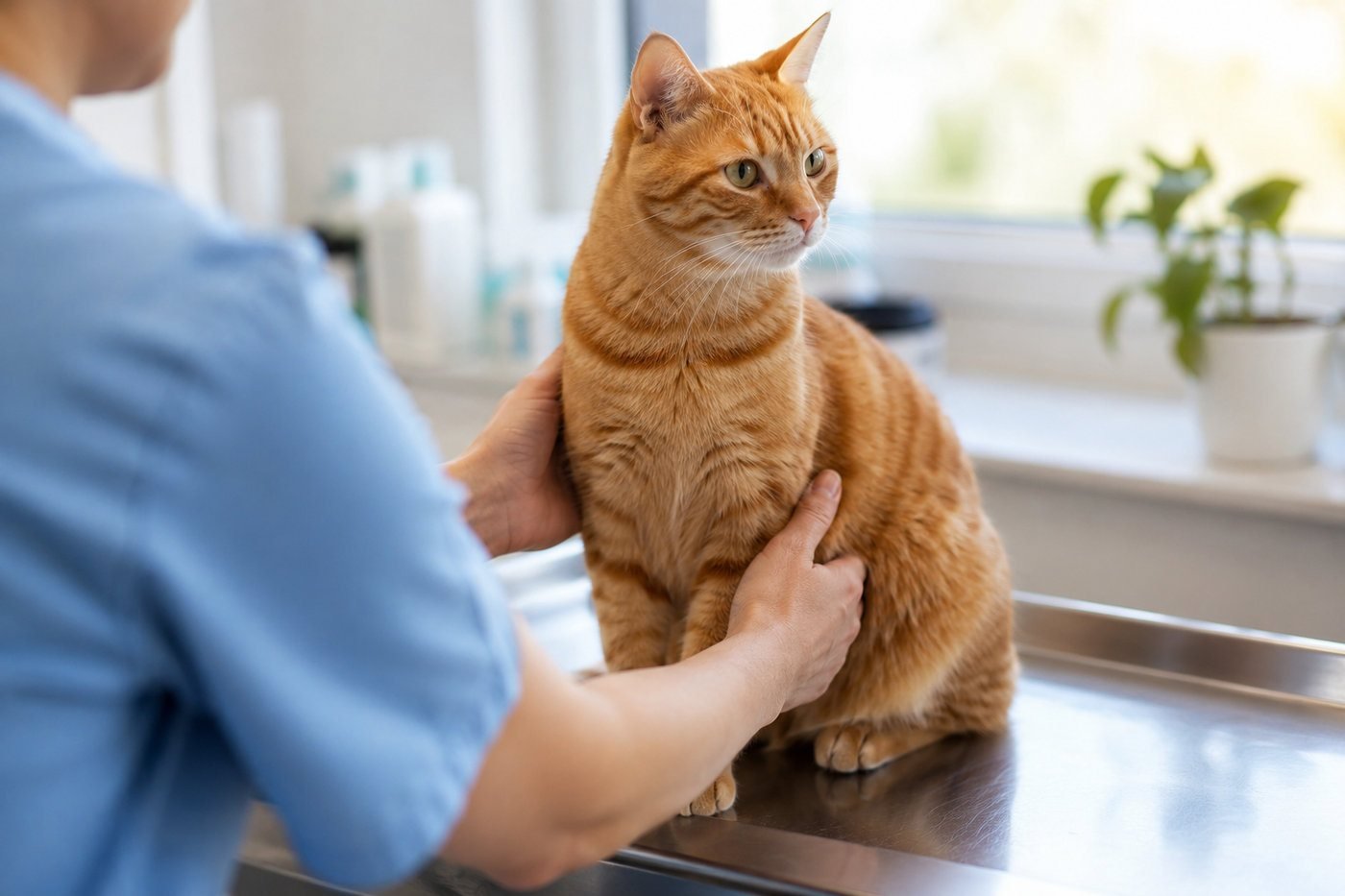
A senior wellness panel typically includes a complete blood count, a chemistry panel covering kidney and liver values, a total T4 test for thyroid function, a urinalysis, and a blood pressure check. None of this requires a symptom to justify it — the entire point is catching disease before symptoms exist, when treatment options are widest.

Important
Arthritis is extremely common in senior cats and routinely under-diagnosed, partly because cats rarely limp the way dogs do. The signs are quieter: hesitating before a jump that used to be automatic, taking a run-up it did not need before, or choosing a lower resting spot over a favourite high one.
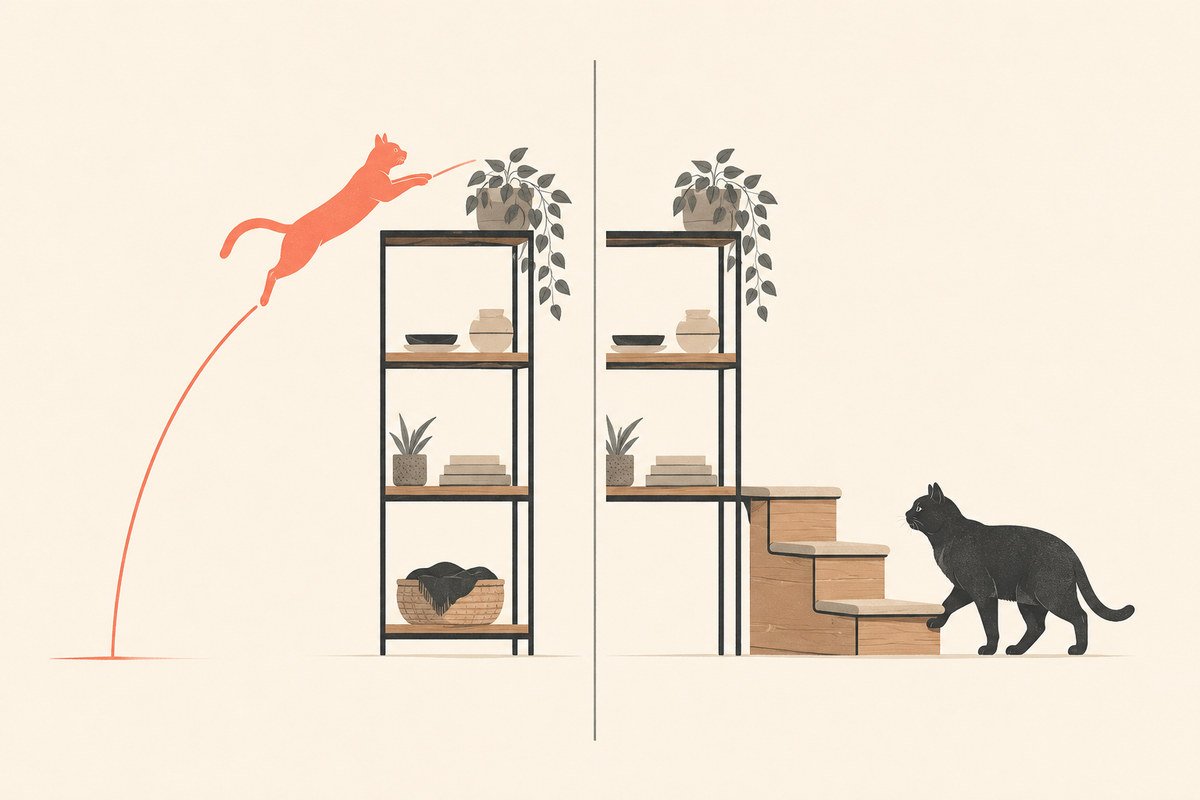
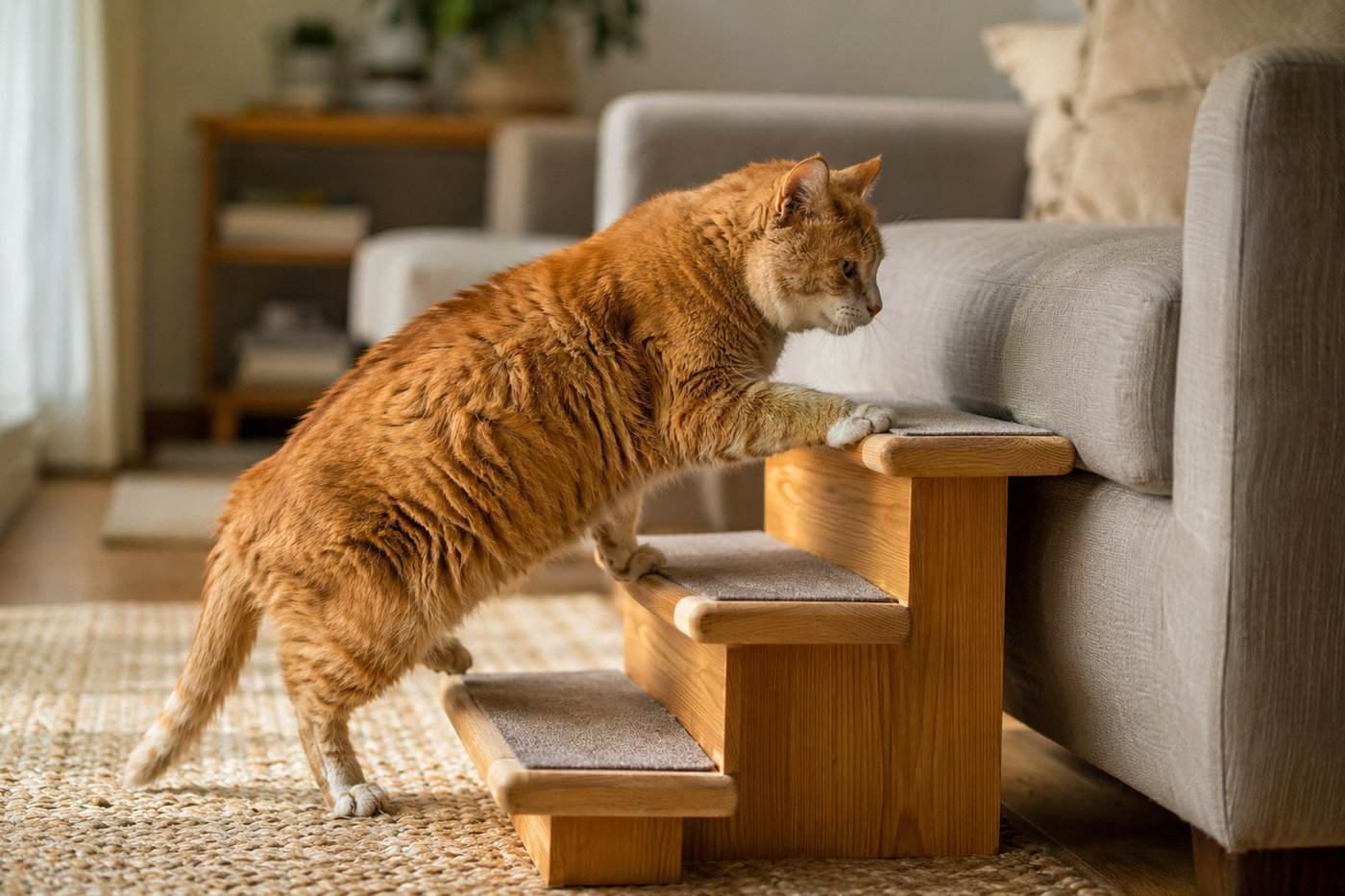
Small environmental changes help a great deal: steps or ramps to a favourite windowsill or bed, a heated bed for stiff joints in cold weather, and rugs on slippery floors for a cat whose grip is not what it was. None of it requires giving up the vertical space cats value — it just requires making it reachable again.
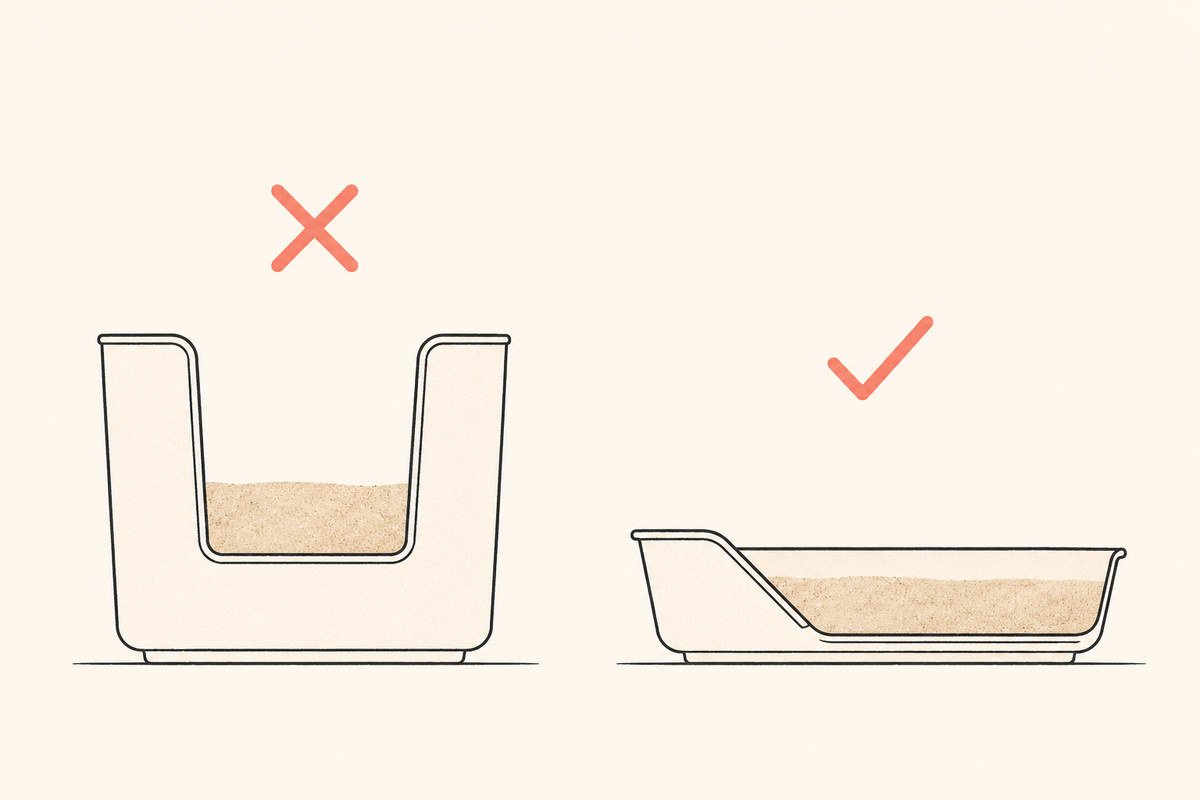
A litter box with high sides is a genuine obstacle for a cat with sore hips or knees, and a senior cat that starts avoiding the box is often dealing with a physical barrier rather than a behavioural one. Switch to a box with at least one low, sloped entry side, and consider adding a second box on a different floor of the house if stairs have become a factor.
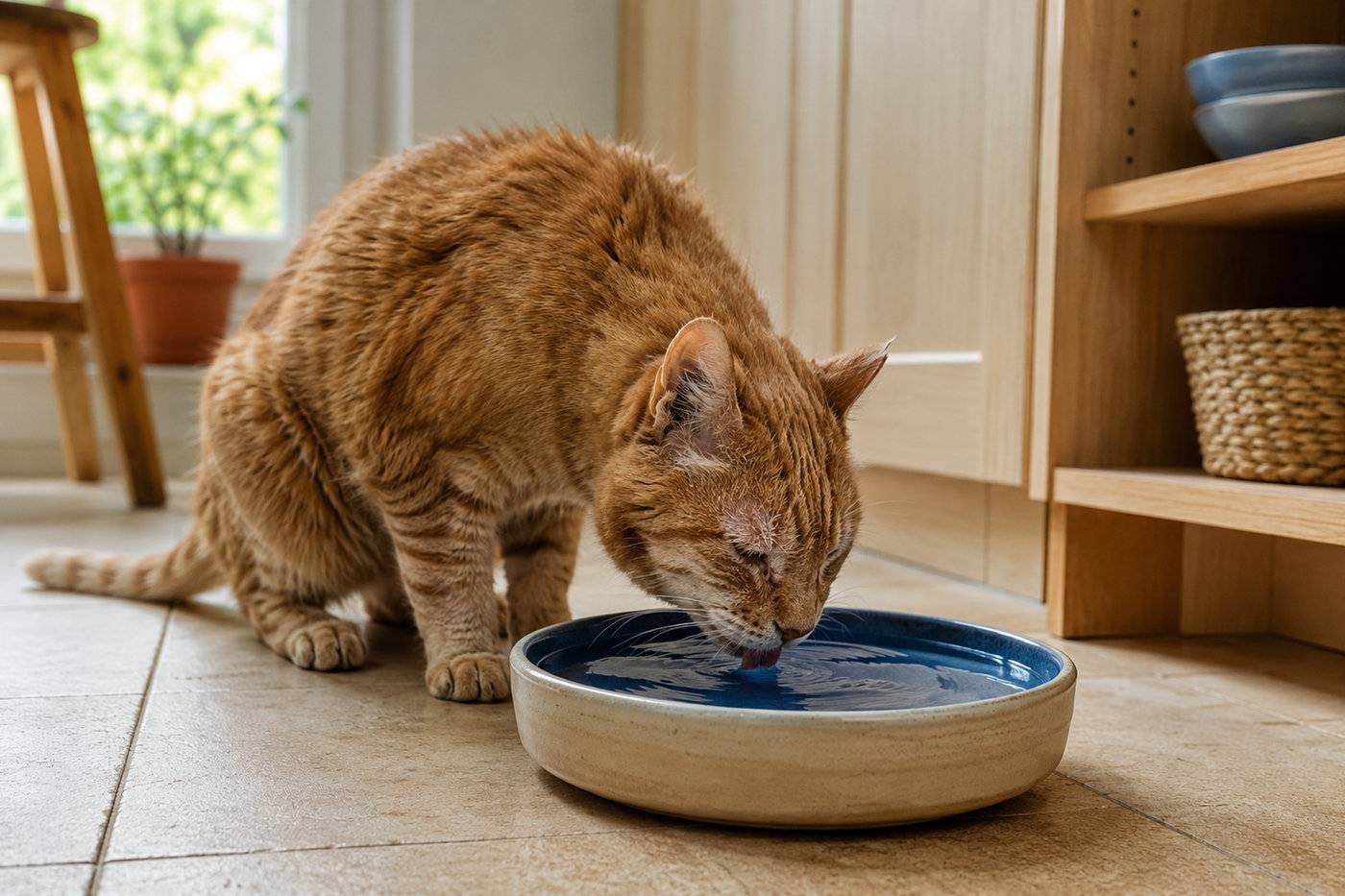
Cats are famously poor drinkers under the best circumstances, and a senior cat with kidney values trending in the wrong direction needs water intake more than most. Wide, shallow bowls are easier on sensitive whiskers than deep narrow ones, and placing a few bowls around the house — rather than just one by the food — measurably increases how much a senior cat drinks.
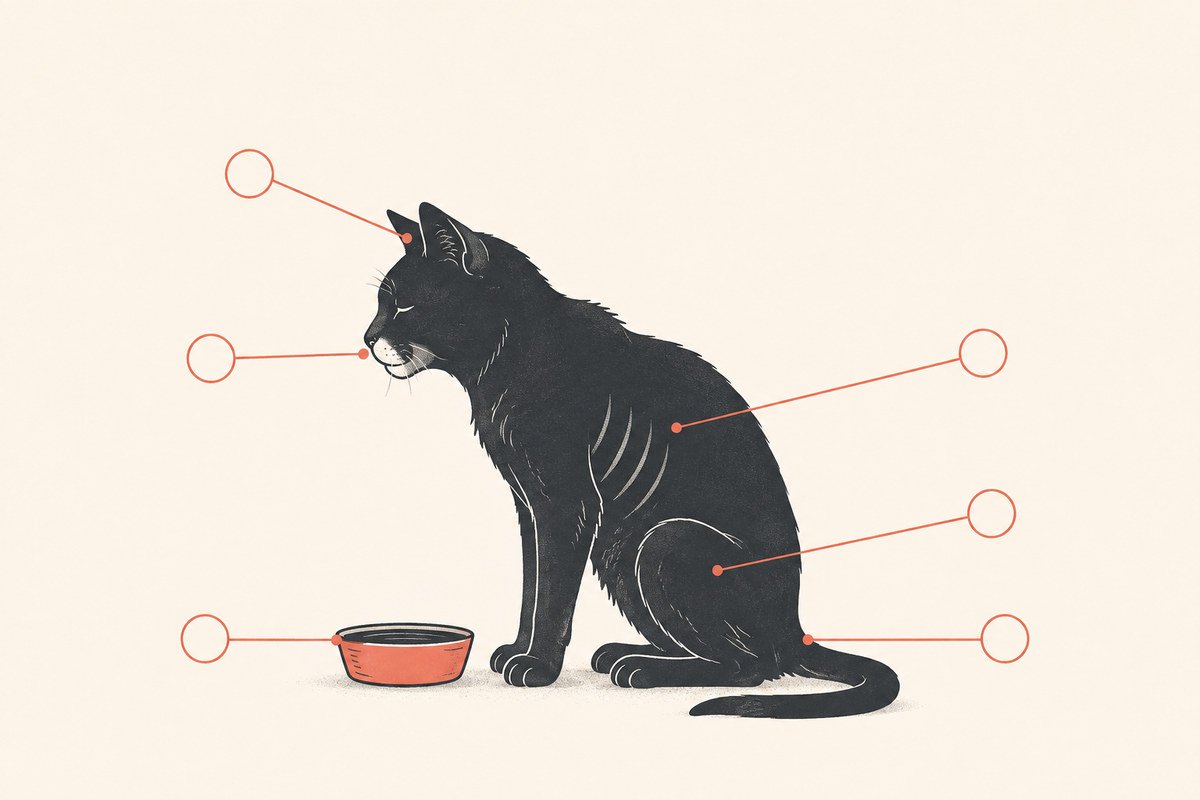
Any one of the following, on its own, is worth a vet visit rather than a wait-and-see approach. Several together are worth an urgent one.
Food needs shift meaningfully at each life stage — not just in quantity, but in what the food is actually formulated to do. A kitten-formula food left in the bowl into adulthood contributes to weight gain; an adult food fed to a kitten under-supports growth; and a senior cat on a standard adult formula may be getting more phosphorus and protein than compromised kidneys can comfortably process.
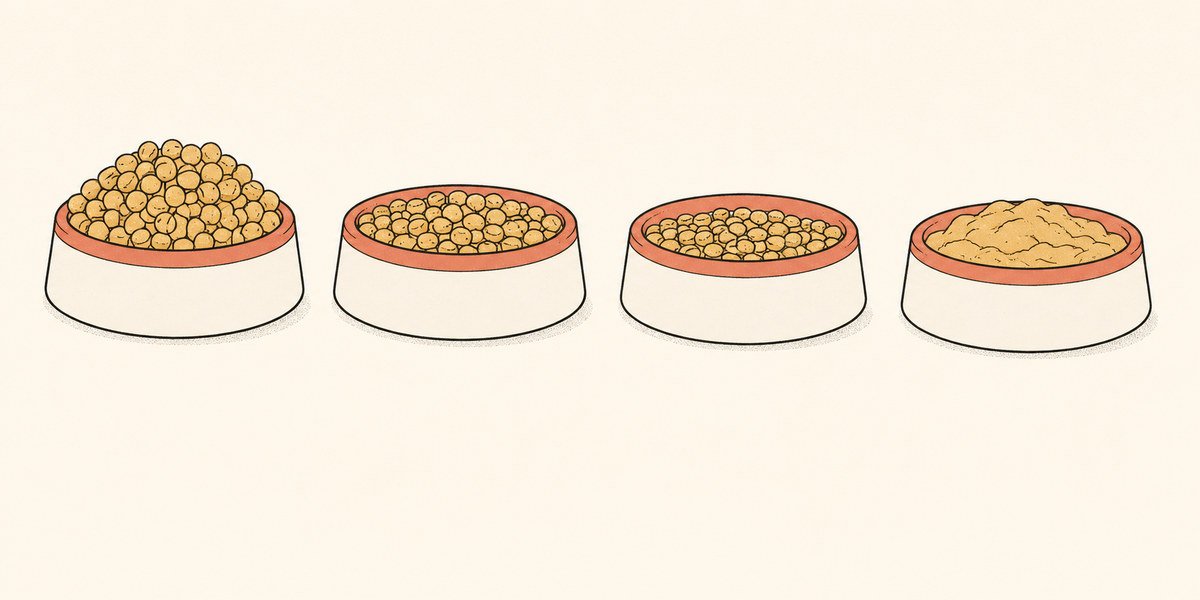
| Life stage | Formula | Feeding pattern | Priority |
|---|---|---|---|
| Kitten (0–1yr) | High-calorie kitten formula | 3–4 meals/day, tapering to 2 | Support rapid growth |
| Young Adult (1–6yr) | Adult maintenance | 2 measured meals/day | Weight control, dental habits |
| Mature Adult (7–10yr) | Adult or mature-formula | 2 measured meals/day | Monitor weight drift either direction |
| Senior (10+yr) | Senior formula, vet-guided if kidney values are elevated | 2–3 smaller meals/day | Kidney-conscious protein, palatability, hydration |
For portioning specifics and the calorie maths behind these recommendations, see Cat Nutrition 101.
Use the calculator at the top of this page, or the reference tables beneath it. The short version: a cat is roughly 15 human years old at one year, 24 at two, and gains about four more human years for every year after that.
It is a widely used approximation rather than a precise measurement. It captures the real pattern — kittens age extremely fast, then the rate levels off — but breed, size and individual health all shift the real number. A large-breed cat and a small one at the same age are not biologically identical, even though the chart treats them the same.
Most veterinary sources put the senior threshold at 10 years, with 7 to 10 sometimes labelled "mature adult" as a transitional stage. The more useful marker than the number itself is behaviour: biannual vet visits and screening bloodwork are worth starting at 7, whatever label is attached to that age.
Yes, substantially. Indoor cats commonly live into their mid-teens or later, while outdoor cats face traffic, predators, disease and fighting that meaningfully shorten average lifespan. It is one of the more consistent findings in feline lifespan research.
Twice a year rather than once. The extra visit roughly doubles the chance of catching a developing condition — kidney disease, hyperthyroidism, diabetes — while it is still in an early, more treatable stage.
A standard senior panel covers a complete blood count, a chemistry panel for kidney and liver values, a total T4 thyroid test, a urinalysis, and blood pressure. None of it requires a symptom to justify running it — catching problems before symptoms appear is the entire point.
Yes, and "seems fine" is exactly why. Cats mask illness well, and several common senior conditions are silent in their early stages. A baseline panel at seven or eight, while your cat is healthy, gives your vet something concrete to compare against later — which is often what actually catches a problem early.
Some increase in sleep is normal with age, similarly to most mammals. A large or sudden increase, especially paired with reduced appetite or interaction, is different and worth a vet visit rather than an assumption. See our guide on how much cats sleep for where that line typically sits.
Some gradual change is common, but noticeable weight loss — especially alongside a normal or increased appetite — is a classic sign of hyperthyroidism or diabetes rather than simple aging, and warrants bloodwork rather than a shrug.
A handful of changes go a long way: a low-entry litter box, pet steps or a ramp to a favourite high spot, a heated bed for stiff joints, non-slip rugs on hard floors, and a few extra water bowls placed around the house rather than just one.
Age is not a single number that means the same thing at every point in a cat’s life. What changes at each stage is concrete and mostly predictable: how often to see the vet, what to feed, what mobility and litter box changes to expect, and which warning signs deserve a same-week call rather than a shrug.
If your cat just crossed into mature adulthood or senior territory, the single highest-value change you can make today is moving from an annual to a biannual vet visit with baseline screening. Everything else on this page supports that one shift.
For more on the stages this page covers, see our Cat Body Language Dictionary for reading how your cat is really feeling, Safe and Toxic Foods for Cats for what belongs nowhere near any life stage, and The Ultimate Cat Care Guide for the complete picture. Everything else lives in Cat Care & Health.
Meowive also publishes a set of illustrated cat care guides, including The Feline Mind on behaviour and communication. The full set is at The Complete Cat Owner Library.
Disclaimer. This page is general educational information and is not veterinary advice. The age calculator provides a commonly cited approximation, not a medical assessment. For any health concern or before changing your cat’s diet or care routine, consult a licensed veterinarian. Meowive participates in affiliate programmes and may earn from qualifying purchases.
Sources