

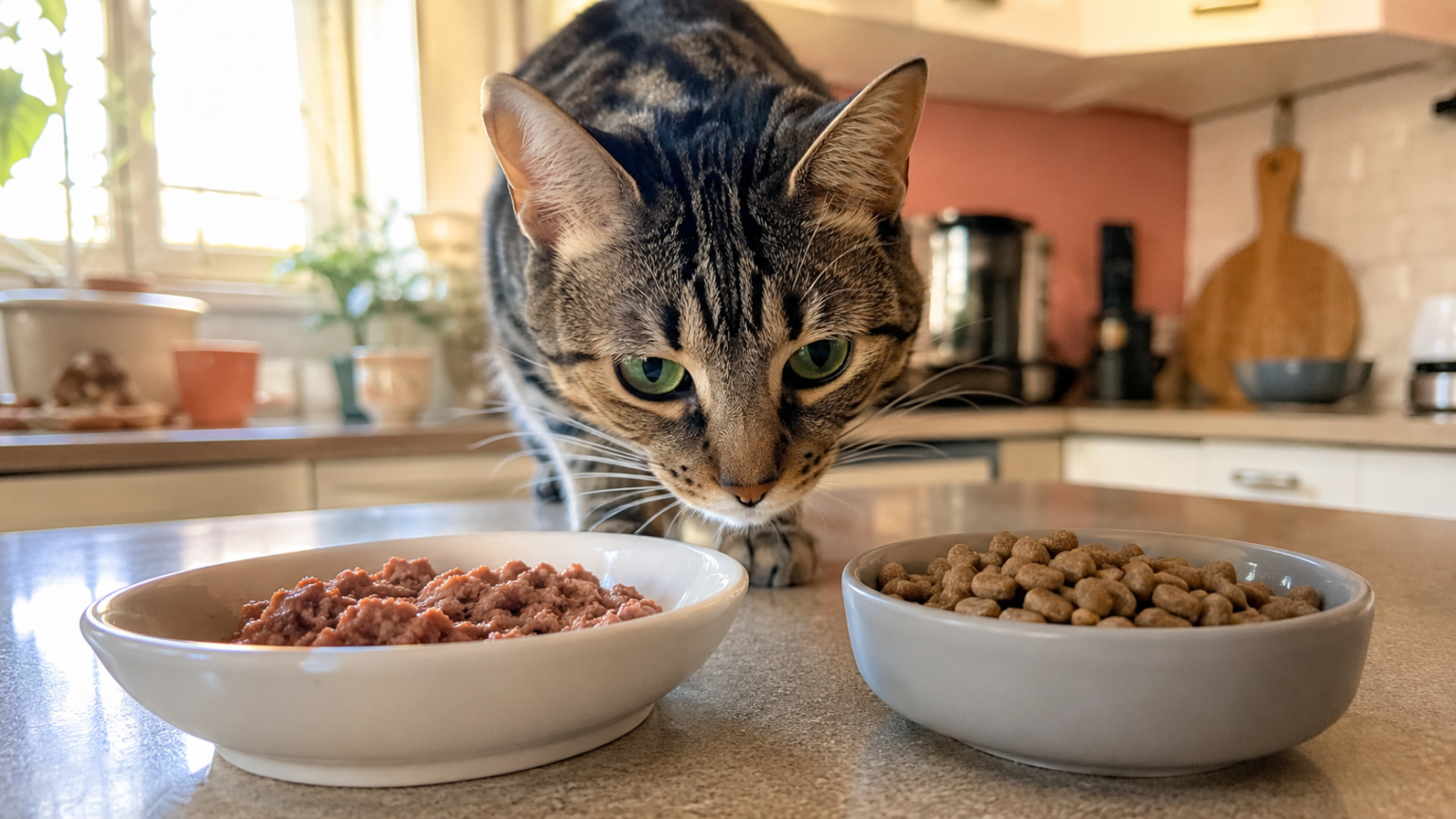
Stand in the cat food aisle long enough and you’ll hear both gospels: “wet food is the only proper diet” and “kibble is fine, stop overthinking.” Meanwhile your cat just wants dinner. This guide settles wet vs dry cat food with what veterinary sources actually say — the real differences, who each format suits, why many owners land on feeding both, and the label-reading skill that matters more than the wet-or-dry question itself.
There's a calmer way — one library that answers it all. See it for yourself.
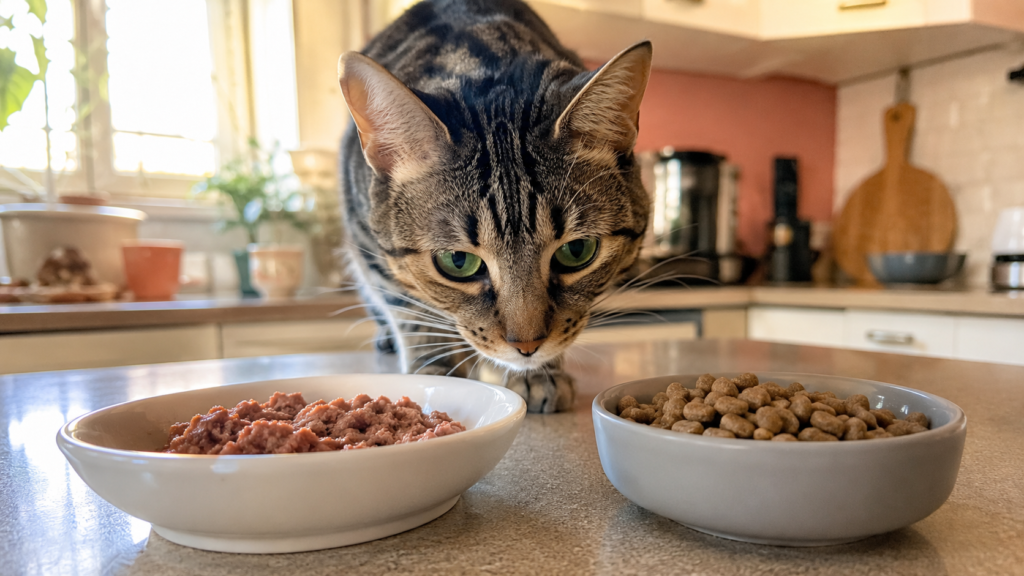
Explore the Library →Neither format is universally “better.” Wet food’s big advantage is hydration — it’s roughly 70–80% water versus about 10% in kibble, which supports urinary and kidney health, and it’s lower in calories per portion. Dry food wins on cost, convenience, and puzzle-feeder use. Both provide complete nutrition if the label says so. Many owners feed a mix, and the right balance for your cat’s age, weight, and health is a decision to make with your vet.
Key takeaways
- The main difference is water: wet food is roughly 70–80% moisture, dry food about 10% — and cats are famously bad drinkers.
- Wet food helps with hydration and weight control; dry food wins on price, shelf life, and free-feeding logistics.
- The “kibble cleans teeth” claim is mostly myth — most cats swallow kibble whole, and only specific dental diets have proven benefit.
- Any food labeled “complete and balanced” for your cat’s life stage meets nutritional standards, wet or dry.
- Mixed feeding — wet meals plus measured dry — captures most benefits of both and is what many owners settle on.
- Cats with kidney, urinary, dental, or weight issues may strongly benefit from one format — that call belongs to your vet.
Wet vs dry cat food: the real differences
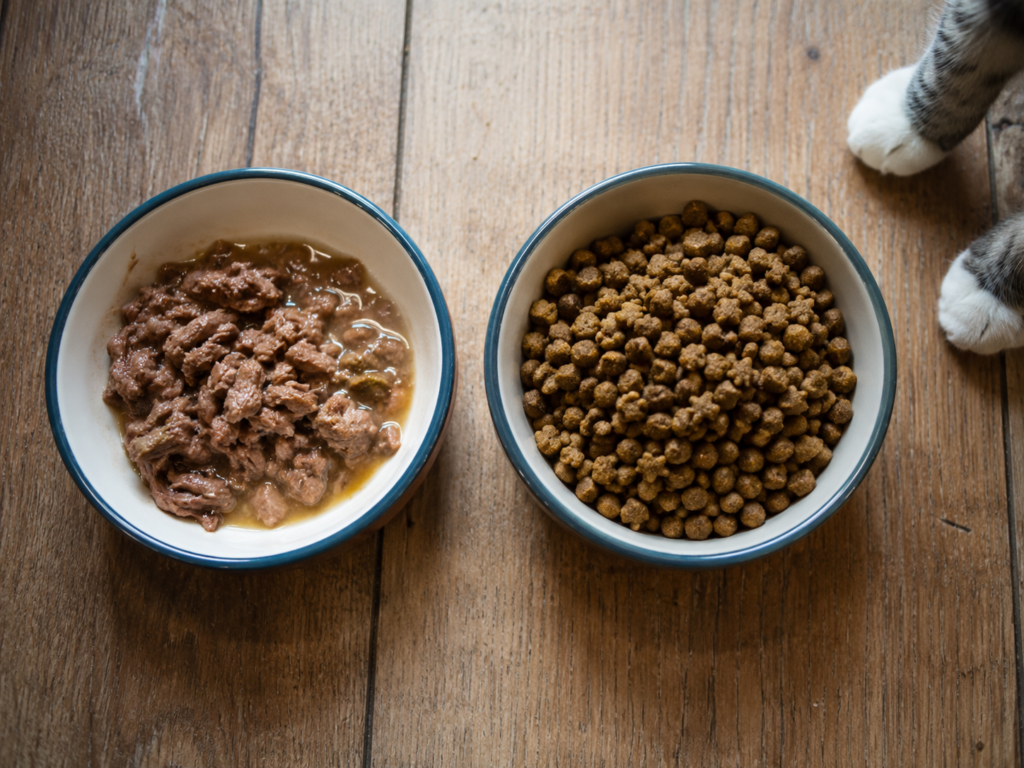
Strip away the marketing and the two formats differ on a handful of measurable things: water content, calorie density, protein-to-carb balance, price, and shelf life. Water is the headline. According to PetMD’s veterinary comparison, canned food runs around 70% water while dry food sits near 10% — and that gap matters more for cats than almost any other pet, because cats descend from desert hunters with a naturally low thirst drive. In the wild they got most of their moisture from prey; a kibble-fed housecat often simply doesn’t drink enough to compensate.
Calorie density follows from the water. Because wet food is mostly moisture, a cat eating it consumes fewer calories per stomach-filling portion — useful for the many cats carrying extra weight. Dry food flips every one of those traits into convenience: it’s cheaper per calorie, stays fresh in a bowl or hopper all day, works in puzzle feeders and automatic feeders, and stores for months. Wet food is typically more protein-forward and lower in carbohydrates; dry food needs starch to hold its shape. Neither profile is automatically “unhealthy” — but they are genuinely different products wearing the same brand names.
The case for wet food: hydration is the whole headline
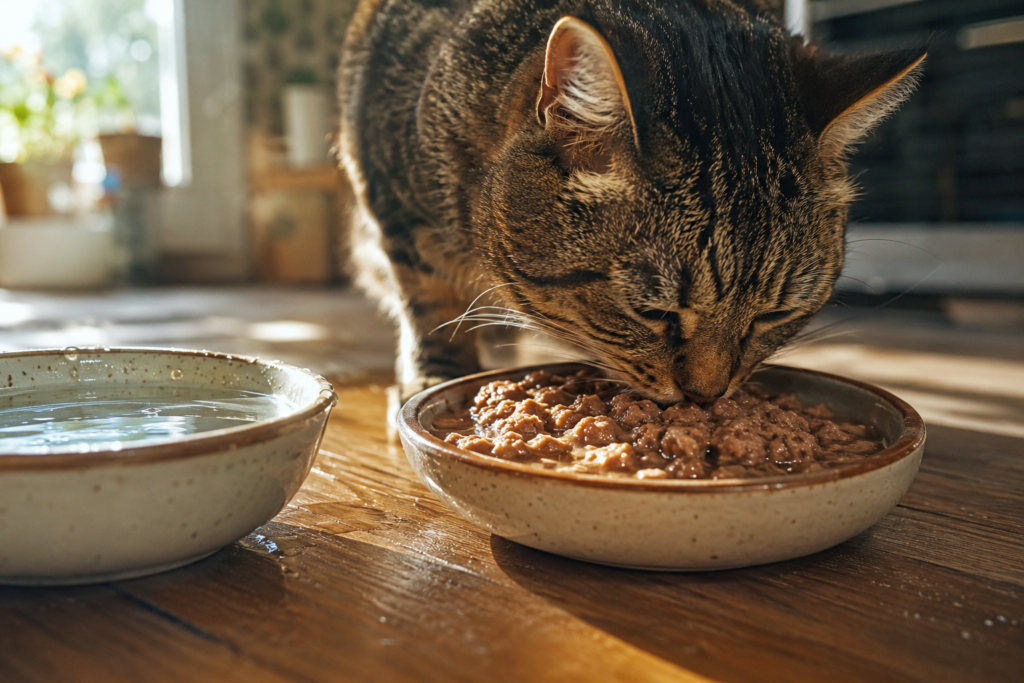
If wet food has a superpower, it’s water delivery to an animal that refuses to drink properly. Cornell’s veterinary guidance notes cats should take in roughly four ounces of water per five pounds of lean body weight daily — and cats eating wet food quietly hit most of that target through their meals alone. That matters because chronic low-grade dehydration is linked to two of the most common problems in indoor cats: urinary tract issues and, over a lifetime, kidney strain. A cat on an all-wet diet urinates more dilute urine, which is exactly what you want for urinary health.
Wet food also carries the weight-management advantage. Because a satisfying portion contains fewer calories, it lets a chubby cat feel full while eating less — no small thing when Cornell’s obesity research found overweight cats are about four and a half times more likely to develop diabetes than lean ones. Add high palatability (useful for picky eaters and seniors with dental pain) and the protein-forward profile, and you can see why many vets tilt wet. The costs are real, though: it’s pricier per calorie, it spoils within hours at room temperature, and a wet-only routine makes scheduled feeding mandatory rather than optional.
The case for dry food: convenience, cost, and enrichment
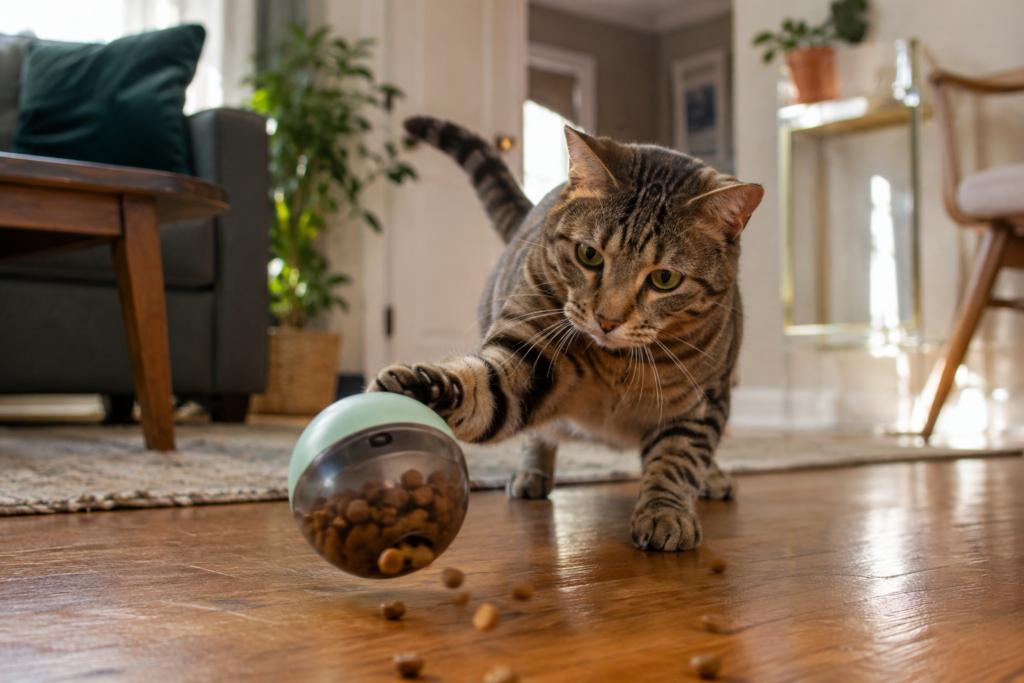
Kibble earns its market share honestly. It’s the cheapest way to feed a complete diet, it doesn’t spoil in the bowl, it ships and stores easily, and it’s the only format that works in the tools that make modern cat care easier — automatic feeders, treat balls, and puzzle feeders. That last one is underrated: food-dispensing toys are one of the best enrichment tools for indoor cats, and they’re a kibble-only game. For owners with long work hours or multiple cats on different schedules, dry food is what makes the logistics work.
Now the myth that needs retiring: “dry food cleans teeth.” Mostly, it doesn’t. Veterinary dental researchers point out that many cats swallow kibble whole, and ordinary kibble shatters too easily to scrub anything. Only specific dental diets — formulated and tested for it, with a texture that genuinely wipes the tooth — have demonstrated benefit, and those carry the Veterinary Oral Health Council’s acceptance. Regular kibble is not a toothbrush, and neither is wet food; real dental care is vet checkups and, ideally, brushing. Dry food’s honest weaknesses are the flip side of wet’s strengths: minimal moisture, higher carbohydrate load, and calorie density that makes free-feeding a quiet path to a round cat.
The mixed-feeding answer most households land on
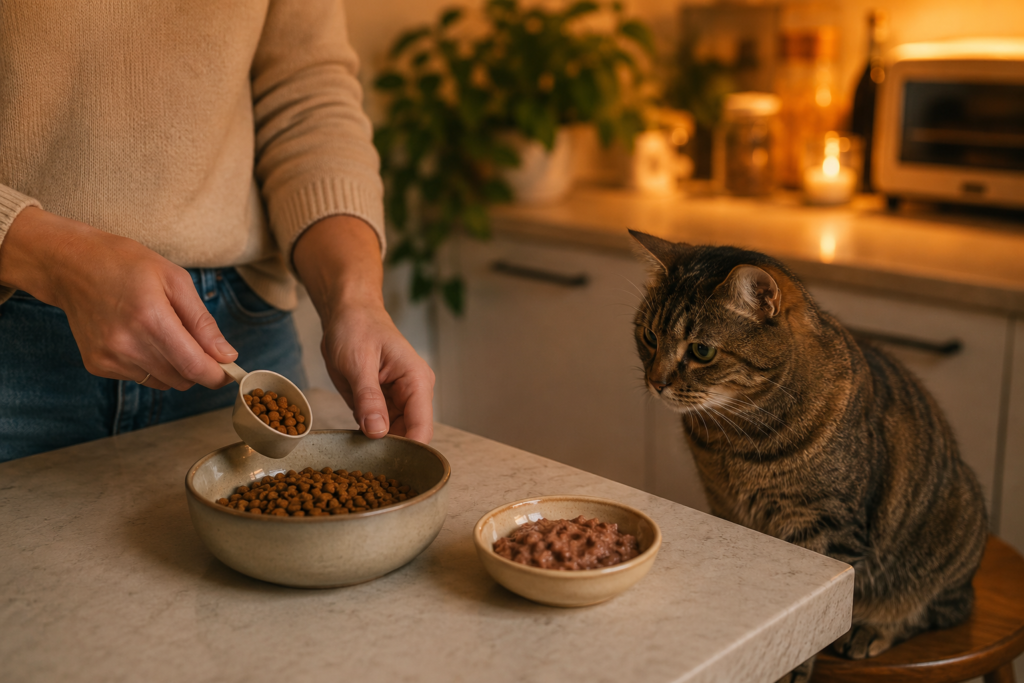
Here’s the quiet consensus hiding behind the wet-versus-dry war: you don’t have to choose. A mixed routine — measured wet meals morning and evening, with a portioned amount of dry food served through a puzzle feeder or automatic feeder — captures the hydration and satiety of wet food and the convenience and enrichment of dry. It also builds flexibility into your cat’s palate, which pays off later: a cat who accepts both formats is far easier to manage if a health condition someday demands a diet change.
Two rules make mixing work. First, portions are a single daily budget, not two separate menus — calculate total daily calories with your vet, then split them between formats, because “a can plus a full bowl of kibble” is how weight creeps on. Cornell’s feeding guidance also notes label portions assume an average cat; yours may need less. Second, transition gradually — any food change, including adding a new format, should be phased over 7–10 days by mixing increasing amounts of the new into the old, the same rule we flag in our first-time owner checklist. Cats have sensitive stomachs and firm opinions; sudden switches produce protests at both ends of the cat.
Ten focused guides, vet-reviewed, zero fluff. Loved this article? See what's inside.
See What's Inside →How to read a cat food label (this matters more than wet vs dry)
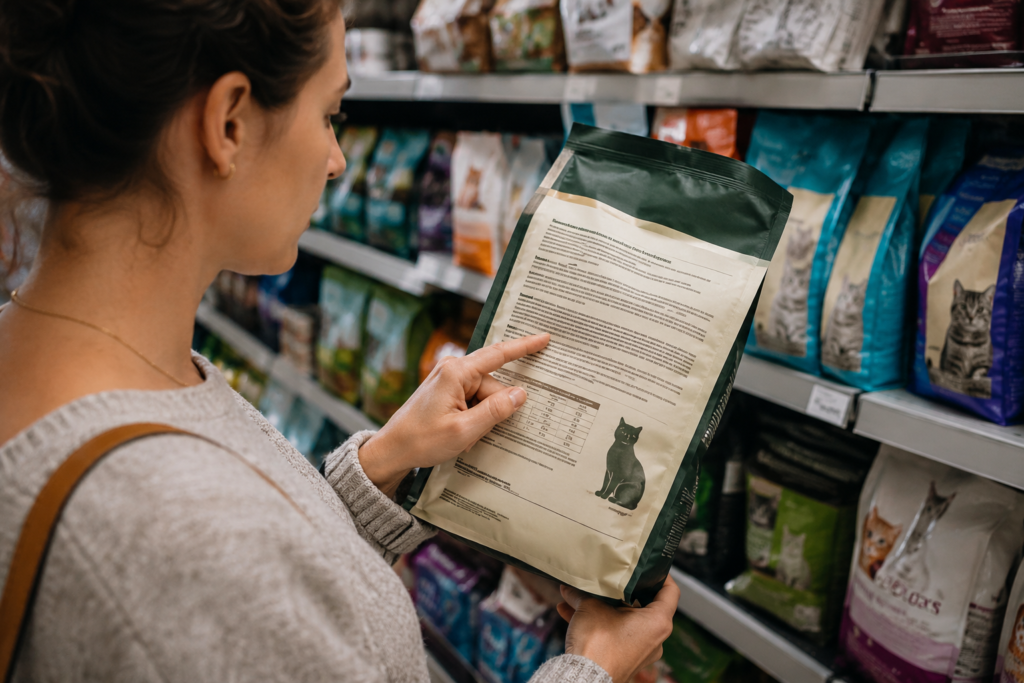
The format question gets the attention, but quality within a format varies far more than quality between formats. Three label checks do most of the work. First, find the nutritional adequacy statement — the line saying the food is “complete and balanced” for a life stage per AAFCO standards (kitten, adult maintenance, or all life stages). No statement, no purchase; that line is the difference between a diet and a snack. Second, match the life stage: kittens need kitten formula’s caloric density, and a senior with kidney concerns may need something specific from the vet. Third, read the first five ingredients — quality foods lead with named proteins (chicken, salmon, turkey), while cheaper foods lean on fillers and vague “meat by-products” up front.
And a word on the boutique claims: “grain-free” is a marketing category, not a medical one — cats need low carbohydrate overall more than they need the specific absence of grain, and grain-free kibble is often just as starchy via peas and potatoes. Ignore the front of the bag; the back tells the truth.
Common mistakes owners make with wet and dry food
1. Free-feeding dry food on top of wet meals
The always-full kibble bowl plus two cans a day is a calorie surplus wearing a generosity costume. Treat all food as one daily budget, measured once each morning. If the bowl empties by noon, the answer is a puzzle feeder that slows intake — not a refill.
2. Judging food by the front of the bag
“Natural,” “premium,” and forest-scene artwork are marketing. The adequacy statement, life stage, and first five ingredients on the back are the product. Two minutes of label reading beats every advertising claim in the aisle.
3. Switching foods overnight
A sudden brand or format change is the most common self-inflicted cause of cat digestive chaos. Phase every change over 7–10 days, increasing the new food’s share gradually. If stools go loose, hold the current ratio a few extra days before continuing.
4. Counting on kibble for dental care
Ordinary dry food doesn’t clean teeth — most cats swallow it whole. If dental health is the goal, ask your vet about VOHC-accepted dental diets, start a brushing habit, and book regular checkups. Choosing dry “for the teeth” while skipping those is a plan built on a myth.
5. Leaving wet food out all day
Canned food is fresh meat in an open dish — it dries, oxidizes, and grows bacteria within hours at room temperature. Serve what gets eaten in 20–30 minutes, refrigerate the rest of the can (covered, up to about 48 hours), and warm refrigerated food slightly before serving; cats dislike cold meals.
FAQ: wet vs dry cat food
Is it OK to feed my cat only dry food?
Many cats live long lives on quality dry food alone, provided it’s complete and balanced and portions are measured. The trade-off is hydration: kibble-only cats must drink much more, and many don’t. If you go dry-only, add a water fountain, place multiple water stations, and watch weight closely — and discuss it with your vet if your cat has any urinary history.
Is wet food better for cats than dry food?
Better for hydration, weight control, and picky or dental-pain eaters — yes. Better universally — no. Wet food costs more, spoils fast, and doesn’t work in feeders or food puzzles. Both formats provide complete nutrition when the label says so. The honest answer is that the best food is the complete, balanced one your specific cat eats reliably at a healthy weight.
Can I mix wet and dry cat food in the same bowl?
You can — some cats love the combination, and a spoon of wet stirred into kibble is a classic trick for picky eaters. Just remember the mixed bowl now follows wet-food rules: it spoils in hours, so serve what gets eaten promptly. Many owners prefer serving the formats as separate meals for exactly that reason.
How much wet and dry food should I feed my cat per day?
It depends on your cat’s weight, age, and activity — which is why the only reliable number comes from your vet, who can calculate daily calories and split them across formats. As a framework: treat calories as one daily budget, weigh or measure every portion, and remember label feeding guides describe an average cat, which yours may not be.
Does dry food cause kidney problems in cats?
Dry food doesn’t directly cause kidney disease, but chronic low water intake stresses the urinary system, and kibble-only cats often run mildly under-hydrated for years. That’s why vets frequently recommend wet or mixed feeding, especially for cats with any urinary or kidney history. If kidney health is a concern for your cat, the diet plan belongs with your vet.
Why does my cat eat dry food but ignore wet food?
Texture preference, usually set in kittenhood — cats imprint on the foods of their first months. Try different textures (pâté, shreds, gravy), warm the food slightly to release aroma, and add a sprinkle of crushed kibble on top as a bridge. Introduce changes patiently over weeks. Some cats never convert, and a measured dry diet plus a fountain is a workable plan B.
The bottom line on wet vs dry cat food
The wet vs dry cat food debate ends in a truce: wet wins hydration and weight control, dry wins convenience and cost, and a measured mix of both — confirmed against your vet’s calorie math — is the plan most healthy cats thrive on. Master the label, phase every change slowly, and put the evening wet meal right before bed. For the gear side of feeding, see our tested guide to the best automatic cat feeders, then browse the rest of our cat food guides.
Get Decode Your Cat — free.
20 everyday behaviors translated, so you finally know what your cat is actually saying. Pop in your name and email and it's yours instantly.