

Litter box troubleshooting
Thank you for reading this post, don't forget to subscribe!The infection’s gone. The puddles aren’t. Here’s the reset that teaches your cat the box is safe again.
Three steps, one cleanup rule, and the signals that mean you should call the vet back instead.
Your vet ran the tests, the meds are finished, and your cat is still peeing on the bathmat. If your cat won’t use litter box after UTI treatment, you’re not imagining a relapse and your cat isn’t being spiteful. You’re most likely looking at a memory: the box hurt, so the box became the problem. This guide shows you how to tell a lingering medical issue from a learned aversion, and exactly how to rebuild your cat’s trust in the box, step by step.

The complete cat-care shelf — from choosing your cat to lifelong mastery.
See What's Inside →
Cats can link the litter box with the pain they felt while urinating during a urinary problem, and that link often outlasts the infection itself. Once your vet confirms the medical issue is resolved, change the box, the litter and the location so it no longer feels like “the place that hurt,” add extra boxes, clean old accident spots with an enzyme cleaner, and reward calm visits. Go back to the vet if symptoms return.
Key takeaways
A cleared infection doesn’t erase the pain memory, so the box itself may now be what your cat is avoiding.
Straining with little or no urine is an emergency, not a behaviour problem. Call your vet the same day.
Change the box, the litter and the spot at once so the new setup shares nothing with the one that hurt.
Put a box right where your cat has been going, then move it toward your preferred spot a few inches a day.
Enzyme-clean every accident spot and skip ammonia or vinegar cleaners, which can smell like urine to a cat.
Never punish accidents. Fear makes the box feel even less safe and slows everything down.
Why “Cleared by the Vet” Doesn’t Always Mean “Ready to Use the Box”
The short version: your cat’s bladder healed faster than your cat’s opinion of the litter box did.
Think about what those days of infection or bladder inflammation felt like from your cat’s side. Every trip to the box meant stinging, urgency, maybe straining and getting only a few drops out. Cats are extremely good at learning “this place = that feeling.” After a handful of painful visits, the box isn’t neutral furniture anymore. It’s the spot where it hurts.
This isn’t a fringe theory. The Cornell Feline Health Center’s guide to house soiling explains that urinary tract inflammation can make urinating painful and more urgent, and that cats may go outside the box particularly if they associate the box with pain. It also notes something owners often miss: one cause can lead to another. A cat who couldn’t make it to the box in time during an infection may simply develop a preference for the new spot and keep using it.
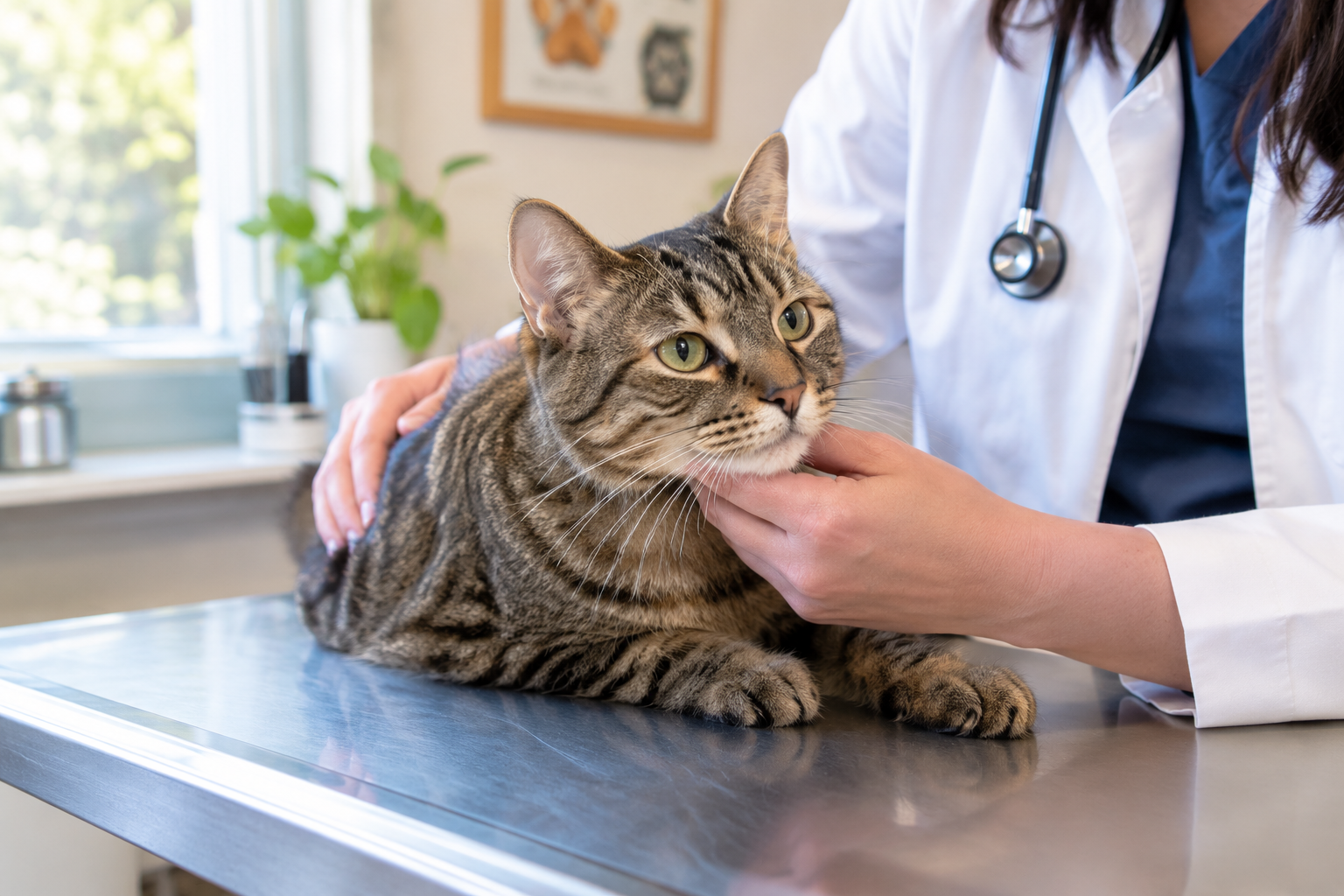
So after treatment you can end up with two overlapping problems. One is an aversion, meaning your cat actively dislikes something about the box, the litter or its location. The other is a site preference, meaning your cat has discovered that the bathmat, the laundry pile or the corner behind the sofa feels fine, and sees no reason to go back.
Here’s where most well-meaning advice goes wrong. People wait. “The infection’s gone, she’ll come round.” Sometimes she does. But Cornell is blunt that the longer house soiling continues, the more likely it is to become a habit. Every day your cat pees on the rug is a day the rug gets more established as the toilet. Waiting isn’t neutral. It’s practice.
What Your Cat Won’t Tell You
Four numbers a month, eleven early signals, and the phone script that gets you seen this week — for an animal built to hide all of it.
💡 Tip
Start the reset the same week your vet gives the all-clear. You’re not being impatient. You’re catching the habit before it sets.
Cat Won’t Use Litter Box After UTI? Run This 5-Signal Check First
Before you retrain anything, you need to be reasonably sure you’re dealing with behaviour, not a medical problem that’s still there or has come back.
You can’t diagnose your cat at home, and neither can we. What you can do is watch carefully and bring your vet good information. Cornell points out that cats with medical conditions may not always act sick, which is exactly why “she seems fine otherwise” isn’t enough to rule things out. Use the table below as an observation guide, not a verdict.
| What you notice | Leans toward | What to do |
|---|---|---|
| Straining in or out of the box with little or no urine coming out | Urgent medical | Call your vet now. This is an emergency. |
| Frequent small puddles, crying while peeing, blood-tinged urine, lots of licking down there | Medical, possibly returning | Book a recheck before any retraining |
| Normal-sized puddles in one or two favourite spots, cat otherwise relaxed | Aversion or site preference | Start the three-step reset below |
| Cat sniffs the box, perches on the edge, won’t step in, then goes nearby | Aversion to box or litter | New box and new litter first |
| Small amounts sprayed on walls or furniture backs while standing, tail quivering | Marking, a different issue | Mention it to your vet; handle as marking |
That last row matters more than people realise. Spraying and toileting look similar in a puddle, but they’re different behaviours. Cornell describes spraying as a standing cat depositing small amounts of urine on vertical surfaces, usually with the tail up and quivering, while ordinary toileting happens in a squat on flat surfaces. If what you’re cleaning is on the wall, the retraining plan in this article won’t be the whole answer.
⚠️ Warning
A cat who keeps going to the box, straining, and producing little or nothing needs a vet the same day, even if the UTI was “cleared” last week. Don’t wait to see if retraining helps. This is not a behaviour problem.
One practical trick makes that vet conversation far more useful: keep a simple log for three or four days. Where did the accident happen, roughly what size, what time, and was the cat seen using the box at all? A phone photo of each spot plus a note takes ten seconds. Vets can do a lot more with “six normal-sized puddles on the bathmat, box used for poop only” than with “she’s still doing it.”
+1
Boxes = number of cats, plus one extra (Cornell)
1–2″
Litter depth most cats prefer (Cornell)
360°
The view most cats want from the box: uncovered
Step One: Reset the Scene Completely (New Box, New Litter, New Spot)
The goal of step one is simple: build a toilet that shares nothing with the one that hurt.
Owners tend to change one thing at a time. New litter, wait a week. Then move the box, wait another week. It feels careful, but it keeps the old association half-alive. If the box looks the same, smells the same and sits in the same closet, your cat has every reason to think it’s still the painful place. Change all three and you give your cat a genuinely fresh start.
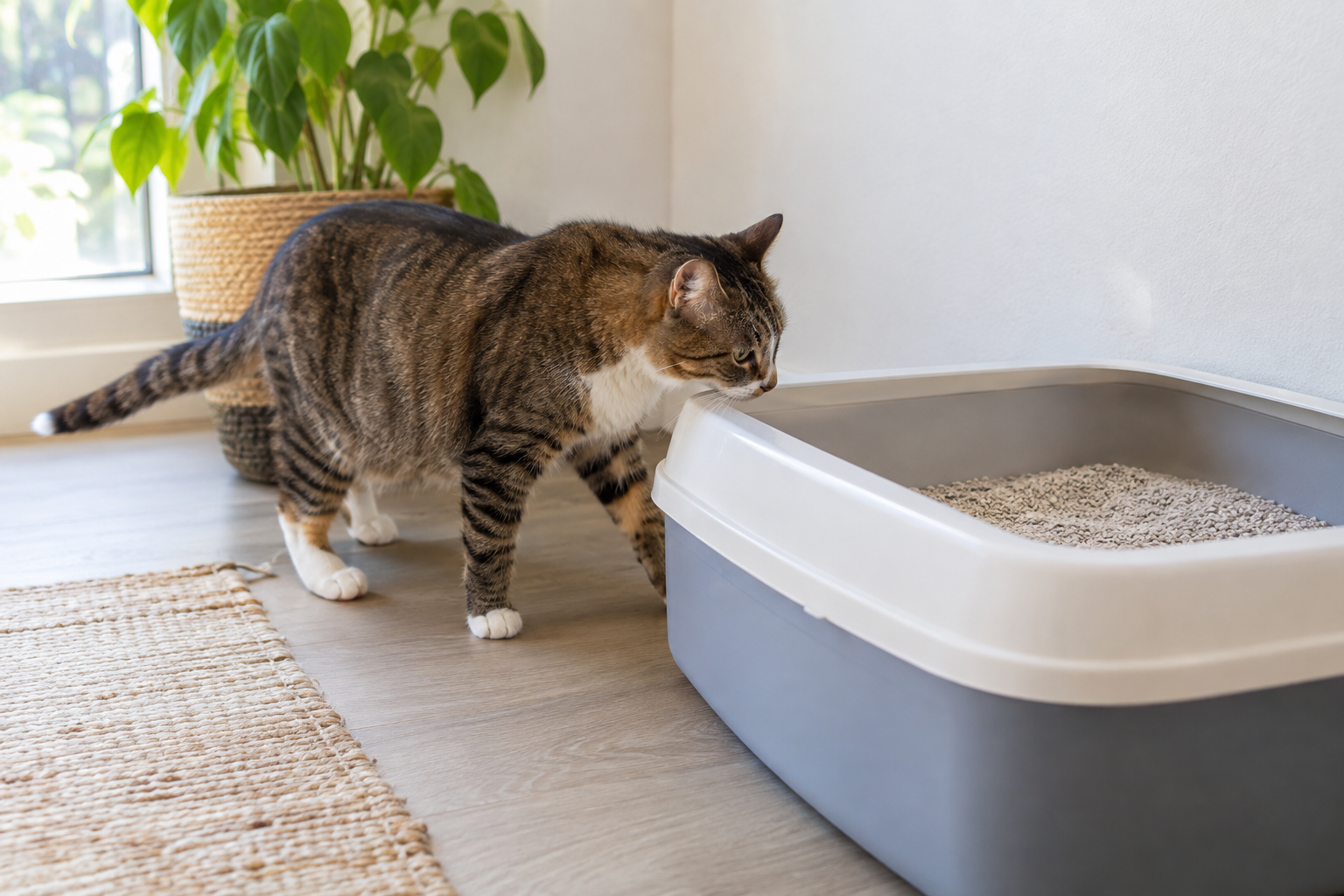
Swap the box, not just the litter
Pick a different shape or style from the old one. Go big: your cat should be able to turn around comfortably. If the old box was covered, go uncovered this time. Cornell notes covers hold odours in from the cat’s point of view.
Switch to unscented, fine-textured litter
Most cats prefer unscented, finer litter about one to two inches deep. If your cat has been choosing soft spots like rugs or towels, a soft fine litter is your best bet.
Put it where your cat is already going
Yes, really. If the accidents are on the bathmat, the new box goes on (or right next to) the bathmat spot. You’ll move it later. For now, you’re meeting your cat where they’ve decided the toilet is.
That third point feels backwards, so let’s talk about why it works. Your cat has already picked a location they feel safe in. Fighting that choice while also asking them to trust a new box is two battles at once. Put the box where they’re going, let them succeed a few times, and then relocate. Cornell’s own advice follows the same logic: once the cat is using a box in the preferred spot reliably, move it just a few inches a day toward where you want it, and if the cat stops using it, return it to the last spot where it worked and start moving again more slowly.
What about the old box? Keep it out for now, but don’t expect much from it. Some owners find their cat will use the old box for poop but not for pee, which is a strong hint that it’s specifically urination that’s tied to the pain memory. That’s useful information. Don’t take the old one away until the new setup is clearly working.
✨ Quick win
If your cat has been choosing soft surfaces, lay a small scrap of carpet or an old towel in the new box with a thin layer of litter on top. It bridges “the rug feels nice” and “the box is where I go.” Reduce it over a couple of weeks as the box gets used.
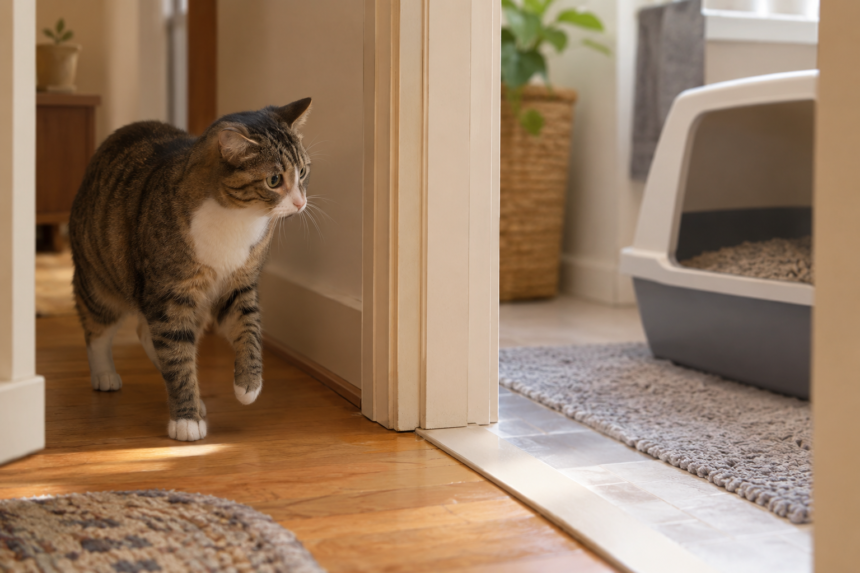
Placement details still matter inside the new spot. Most cats want somewhere quiet, private, reachable at any hour and well away from their food. They also like an escape route. A box wedged into a corner with walls on three sides can feel like a trap, especially in a home with another pet who might wait outside. Give your cat at least one open side to leave from.
Ten beautifully designed cat guides — behavior, feeding, health, the tricky days and more.
See What's Inside →Step Two: Rebuild the Box’s Good Reputation
Step two is about making the box pleasant, not just neutral, so your cat’s new memories of it start outnumbering the old painful ones.
Cats don’t use the litter box to please you, and they don’t soil the house to punish you. Cornell is clear that the “revenge” explanation doesn’t hold up, because cats probably lack the kind of reasoning that tit-for-tat would need, and they don’t find their own waste disgusting the way we do. The guidelines from the American Association of Feline Practitioners and the ISFM on house-soiling make the same point: the behaviour happens because a physical, social or medical need isn’t being met, not out of spite. That’s good news. Needs can be met.
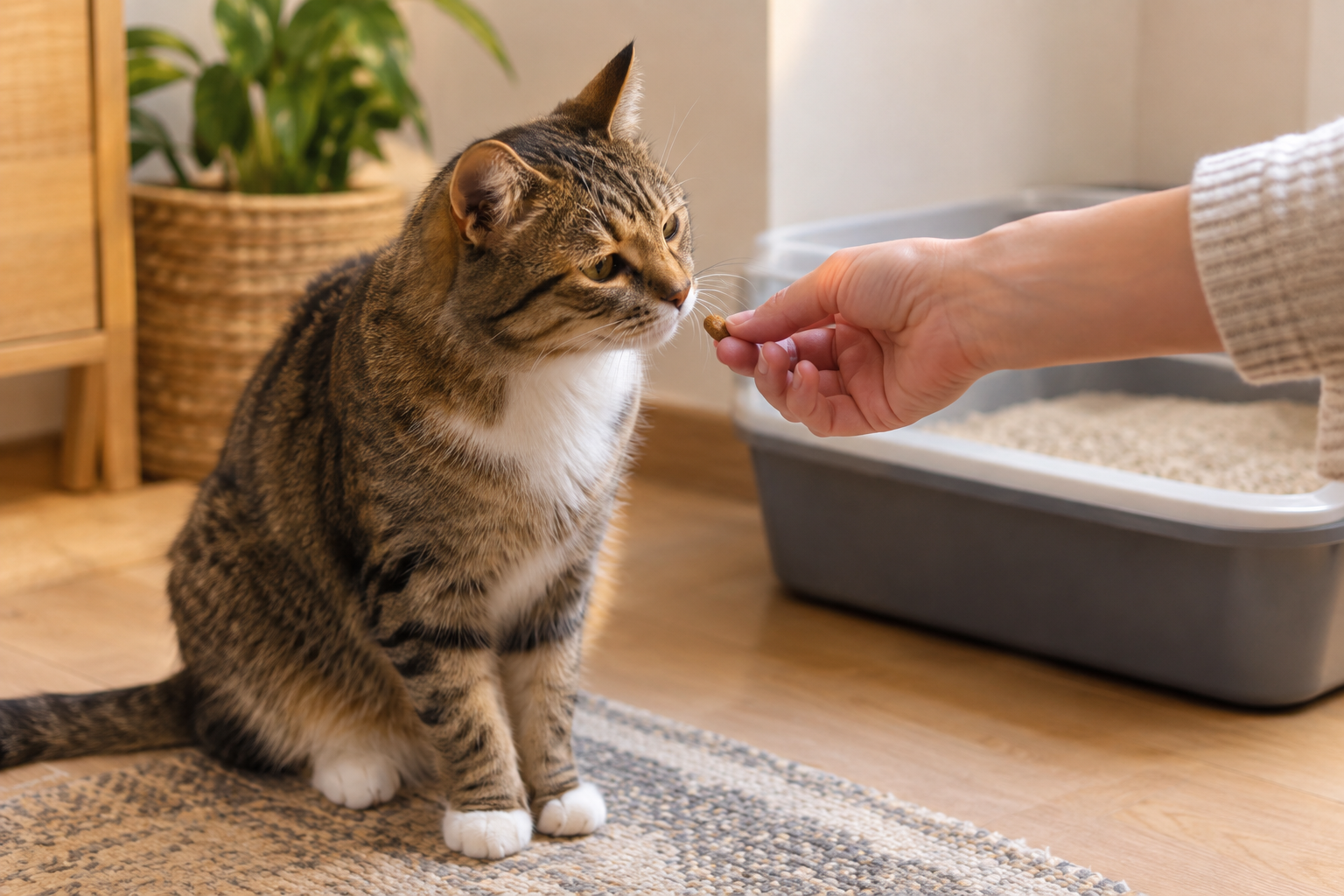
Here’s how to tilt the association back in the box’s favour without being weird about it:
- Hang out near the box, not in it. A short play session with a wand toy a metre or two from the new box, once or twice a day, makes the area feel like “fun happens here.” Don’t play inside the box itself.
- Reward quietly after a successful visit. When you catch your cat stepping out of the box after using it, a calm word and a small treat a little distance away is plenty. Don’t hover, stare or clap. Cats don’t want an audience in the bathroom any more than you do.
- Keep it spotless during the reset. Scoop at least once a day, ideally twice. Some cats refuse a box with any waste in it at all, and during retraining you want zero excuses.
- Never carry your cat to the box or place them in it. It feels helpful. To your cat, it’s being grabbed and dropped into the place that used to hurt.
Your cat isn’t refusing the box to make a point. They’re avoiding the spot where it hurt, and that’s something you can fix.
The flip side of rewarding the box is not punishing the accidents. This part is non-negotiable, and it’s where a lot of frustrated owners quietly sabotage themselves. Shouting, rubbing a nose in the puddle, squirting water, shutting the cat in a bathroom as a “timeout” — every one of these adds fear on top of the original pain. Cornell notes that the anxiety punishment causes can actually make house soiling worse. You’re trying to make the toilet feel safe. Fear is the opposite of safe.
If you find a fresh accident, clean it up without comment and move on. Honestly, the hardest part of this whole process is keeping your own frustration off your face. Your cat reads it.
From the Meowive library
The Litter-Box Protocol
✓ A day-by-day reset plan you can print and stick on the fridge
✓ Setup checklists for single- and multi-cat homes
✓ Written for the 11pm “why is she doing this” moment
See the Litter-Box ProtocolStep Three: Widen the Options Before You Narrow Them
Step three is about giving your cat more good choices, temporarily, so it’s easier to succeed than to fail.
The standard guidance, repeated by Cornell and most feline vets, is one box per cat plus one extra. During a post-UTI reset, it’s worth going a step further for a few weeks: one box in the spot your cat has been using, one in the new location you’re steering toward, and one somewhere else your cat spends a lot of time. The aim isn’t to live with three boxes forever. It’s to make sure that whenever the urge hits, a clean, non-scary box is closer than the rug.
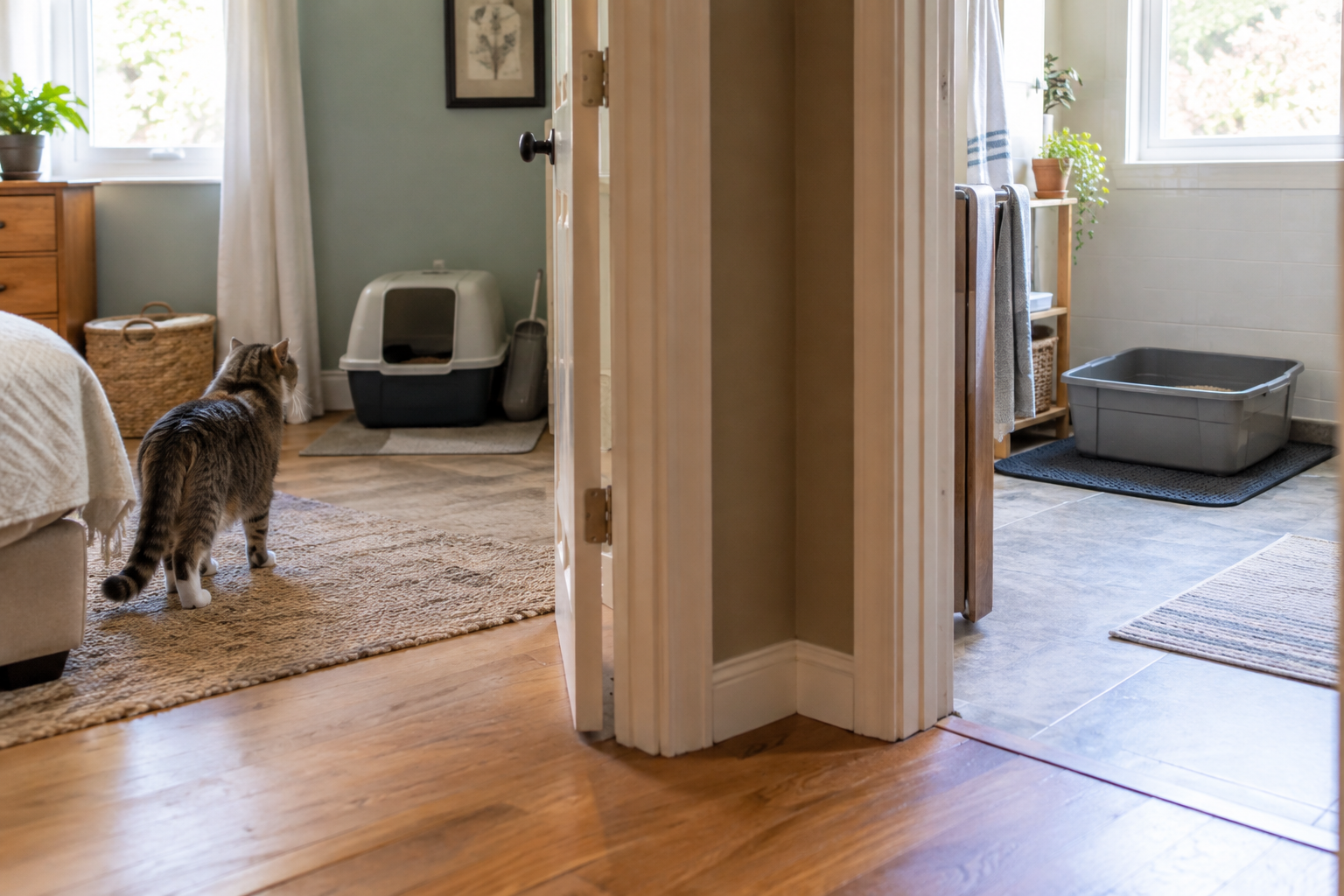
Spread them out. Two boxes side by side often count as one big box to a cat, and in a multi-cat home, a single well-placed cat can guard the whole row. Different rooms, and on different floors if you have stairs, is the rule of thumb. If your cat is older or stiff, check the height of every box edge. A tall rim they have to hop over can be enough to put them off.
If you have more than one cat, look for a box bully
In multi-cat homes, a post-UTI cat may be dealing with a second problem nobody noticed: another cat making the box stressful. Watch for a cat who sits near the box, stares at it, or pounces as the other cat leaves. Cornell recommends an uncovered box with a full view of the room and more than one way out in exactly this situation, plus multiple boxes in multiple locations. A cat recovering from a painful bladder doesn’t need an ambush on top of it.
You’ll also want to be sure which cat is actually having the accidents. It’s surprisingly easy to blame the cat who was sick when the real culprit is the stressed one. A cheap pet camera pointed at the problem spot for a few nights often settles the question fast. Your vet can also suggest ways to identify which cat is responsible.
📝 Note
Some vets treat stress as part of managing bladder inflammation in cats, so a calmer home with fewer box conflicts isn’t just about behaviour. Ask your vet whether reducing household stress is part of your cat’s recovery plan.
The Cleanup Rule That Stops the Old Spot From Calling Your Cat Back
Your cleaning method decides whether the bathmat stays “the toilet” in your cat’s nose, long after it smells fine to you.
Cats return to places that smell like their urine. Cornell’s advice is that odours must be neutralised, not just deodorised, because a cat’s sense of smell is far better than ours. In practice that means an enzyme-based cleaner, which breaks down the compounds in urine rather than covering them with perfume. Regular household sprays can leave the spot smelling clean to you and like a signpost to your cat.
Blot, don’t scrub
Soak up as much urine as possible with paper towels. Scrubbing pushes it deeper into carpet and padding.
Saturate with an enzyme cleaner
Use enough to reach as deep as the urine did, and follow the label’s contact time. A quick spritz only treats the surface.
Skip ammonia and vinegar
Cornell warns that both can smell like urine to a cat, which can undo all your work.
Change what the spot means
Once it’s dry, put a food bowl, a treat station or a favourite bed there. Cats generally prefer not to eat and toilet in the same place.
A UV torch (a small blacklight) is worth the few dollars it costs. Old dried urine often glows under it, and you’ll almost certainly find spots you didn’t know about. Clean every one of them, because each untreated spot is an alternative toilet your cat can still smell.
If a particular spot keeps getting used despite cleaning, you can also make it temporarily unappealing or unavailable: close the door to that room, put a piece of furniture over the corner, or cover the area with a plastic sheet or a carpet runner turned nubby side up. Just make sure there’s a lovely clean box nearby at the same time. Blocking a spot without offering a better one just moves the problem.
How Long Retraining Actually Takes (And When to Worry)
There’s no fixed timeline, but there is a sensible rhythm for judging progress, and clear signs that mean you should stop retraining and call the vet.
Every cat is different. A confident young cat with one bad week of cystitis may bounce back almost immediately once the setup changes. A nervous older cat who had repeated episodes may need a lot longer. So instead of a deadline, use a working rule: give each change you make roughly a week before deciding whether it’s helping. Changing something new every day or two makes it impossible to tell what’s working, and it keeps your cat’s world unpredictable.
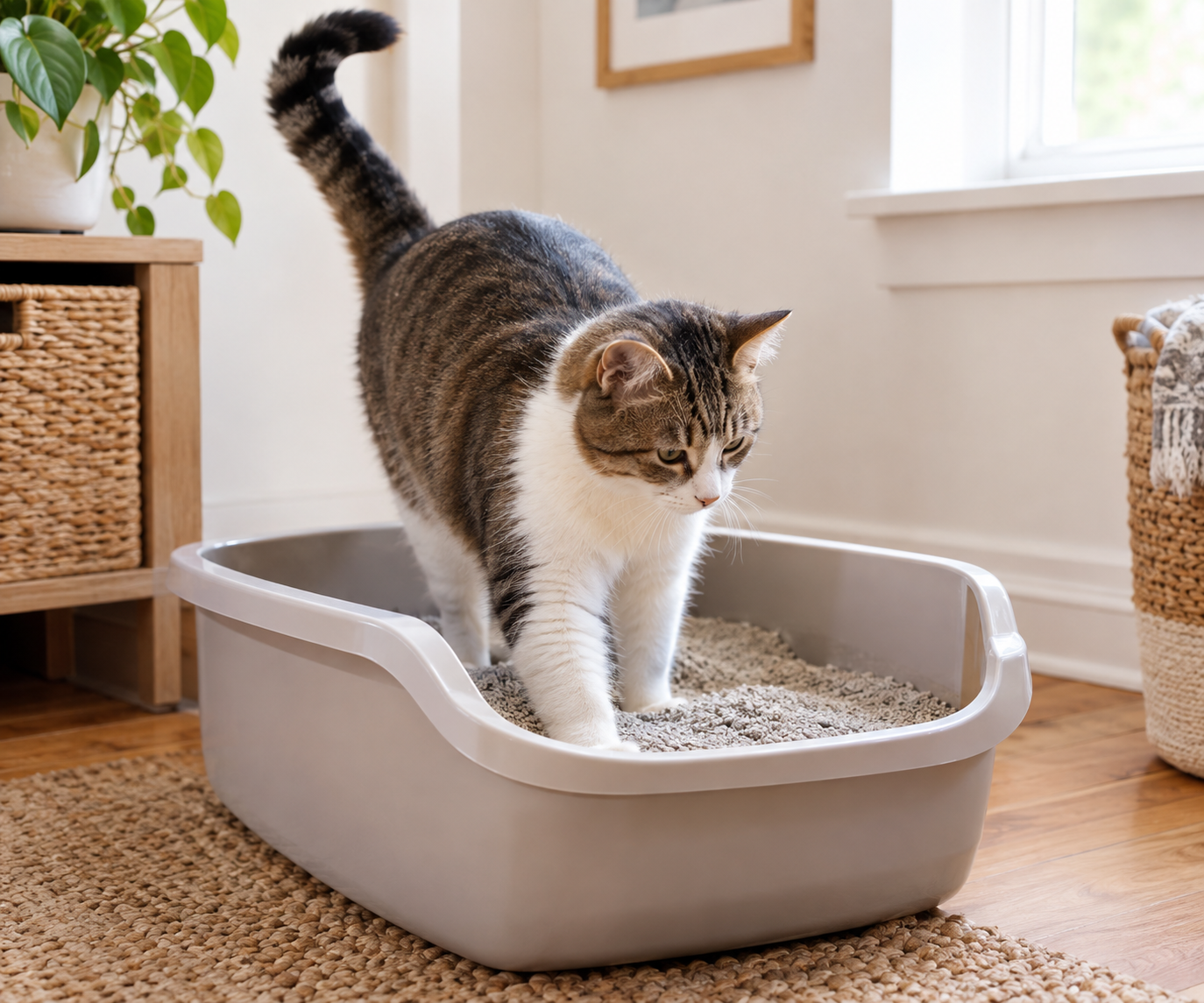
Progress usually isn’t a clean switch from “never” to “always.” It looks more like this: fewer accidents, then accidents only in one spot, then the occasional slip on a stressful day, then nothing. Keep that daily log going and you’ll see the trend even when a single bad day makes it feel like you’re back at square one.
Watch the box visits too, not just the accidents. Signs your cat is getting comfortable again:
- Steps fully into the box instead of perching on the rim
- Digs and covers again, rather than going and fleeing
- Uses the box for urine, not just for poop
- Walks away at a normal pace instead of bolting
❗ Important — go back to the vet if
you see straining, crying while urinating, blood-tinged urine, very frequent small puddles, a change in how much your cat drinks, or accidents that get worse instead of better despite a clean, well-placed new setup. Behaviour and medical problems can overlap, and only your vet can sort out which is which.
If a couple of weeks of a genuine reset haven’t moved the needle and your vet has confirmed there’s nothing medical going on, it’s reasonable to ask about a referral to a veterinary behaviourist. That’s not failure. Cornell suggests it too, and a specialist can often spot the one detail (a noise near the box, a view of an outdoor cat, a household change you’d filed as trivial) that’s been driving things.
5 Mistakes That Keep the “Cat Won’t Use Litter Box After UTI” Cycle Going
These are the errors that even experienced cat owners make, usually with the best intentions.
1. Cleaning the old box really well and calling it a fresh start
A scrubbed box still looks, feels and sits exactly where the painful visits happened. Your cat’s association is with the whole setup, not with a bit of residue. Old plastic boxes can also hold odours in scratches you can’t see. Cornell suggests replacing boxes that smell or are cracked. For a post-UTI reset, replace it regardless.
2. Switching to a “nicer” scented or premium litter
It’s tempting to reward your recovering cat with the fancy lavender stuff. But most cats prefer unscented litter, and a strong new smell right now is one more thing that feels unfamiliar. Pick unscented and fine-textured. Save the upgrades for humans.
3. Moving the box to the spot you prefer on day one
Putting the new box back in the laundry closet because “that’s where it goes” skips the step where your cat actually starts succeeding. Start where the cat is going, then walk it back a few inches a day. It’s slower, and it works.
4. Confining the cat to a small room with only the box
Some owners shut the cat in a bathroom “until they learn.” For a cat whose problem is fear of the box, forced proximity to it can feel like a trap rather than a lesson. If you do use a smaller space, make it comfortable, with a bed, toys and food well away from the box, and treat it as a short, calm base rather than a punishment.
5. Assuming every accident is behavioural once the UTI is “done”
Urinary problems in cats can come back, and some cats with bladder inflammation have repeat episodes. If the pattern changes — more frequent trips, smaller puddles, crying, straining — don’t push harder with retraining. Stop and call your vet. Retraining a cat who’s actually in pain again just builds a fresh bad memory.
Frequently Asked Questions
Keep the plan in one place
Get the Litter-Box Protocol
Everything in this article, turned into a printable step-by-step plan with setup checklists and a simple accident log you can take to your vet. Built for owners who want the puddles gone without guessing.
Get the Litter-Box ProtocolWhen your cat won’t use litter box after UTI treatment, the fix isn’t patience alone — it’s giving your cat a toilet that has nothing to do with the one that hurt, and making it the easiest, calmest choice in the house. Start the reset this week, keep the log going, and let your vet be your backup the moment anything looks medical again. Most cats come back to the box once the box stops reminding them of the worst week of their year.
Please note: This article is general cat care guidance, not veterinary advice. It can’t diagnose or treat any condition. If your cat is straining to urinate, producing little or no urine, crying in the box, or showing blood in their urine, contact your veterinarian or an emergency clinic right away. Always follow your own vet’s instructions for your cat.

Get Decode Your Cat — free.
20 everyday behaviors translated, so you finally know what your cat is actually saying. Pop in your name and email and it's yours instantly.