
The Litter Box Protocol
House-soiling, solved in the correct sequence — medical causes first, then the tray, the territory, and the cat.
70 pp · $24
See the book →



Cats hide illness by instinct — hardest from the people who love them most. Your vet gets twenty minutes a year, at peak adrenaline. You get three thousand hours. This book turns those hours into something you can act on.
Thank you for reading this post, don't forget to subscribe!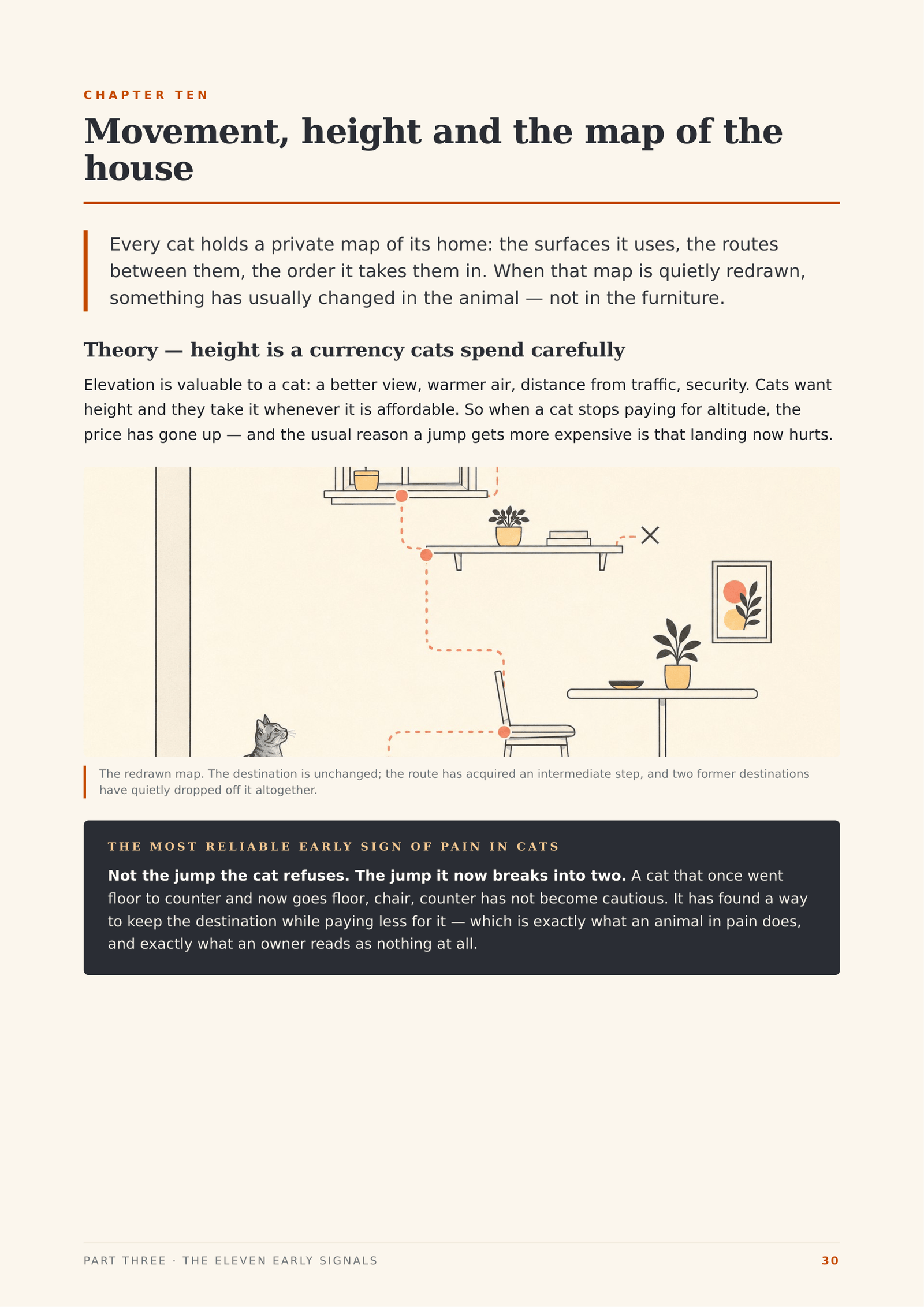
The fear this book is for
Most people who love a cat carry a quiet, specific worry: that one day they’ll look back and find the moment they should have noticed, sitting there in an ordinary week they lived through without a second thought.
That fear is reasonable, and it is fixable — not by watching harder, but by knowing exactly what to watch and writing it down.
Read this before anything else
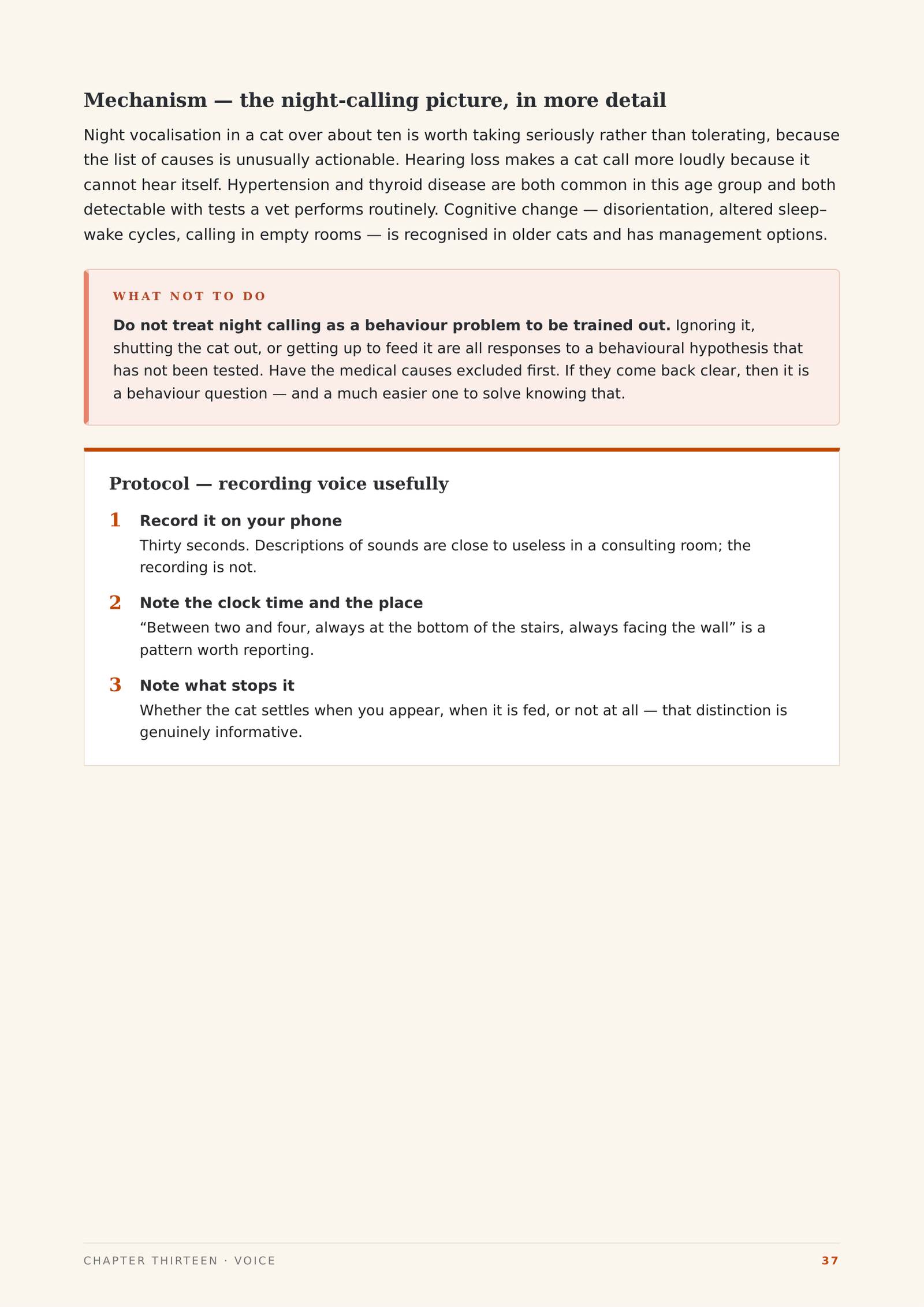
It will not tell you what your cat has. It teaches something rarer: how to know your own cat well enough to notice when it changes — then routes that observation to a veterinarian. Every time, without exception.
You are not looking for symptoms. You are looking for departures.
What’s inside
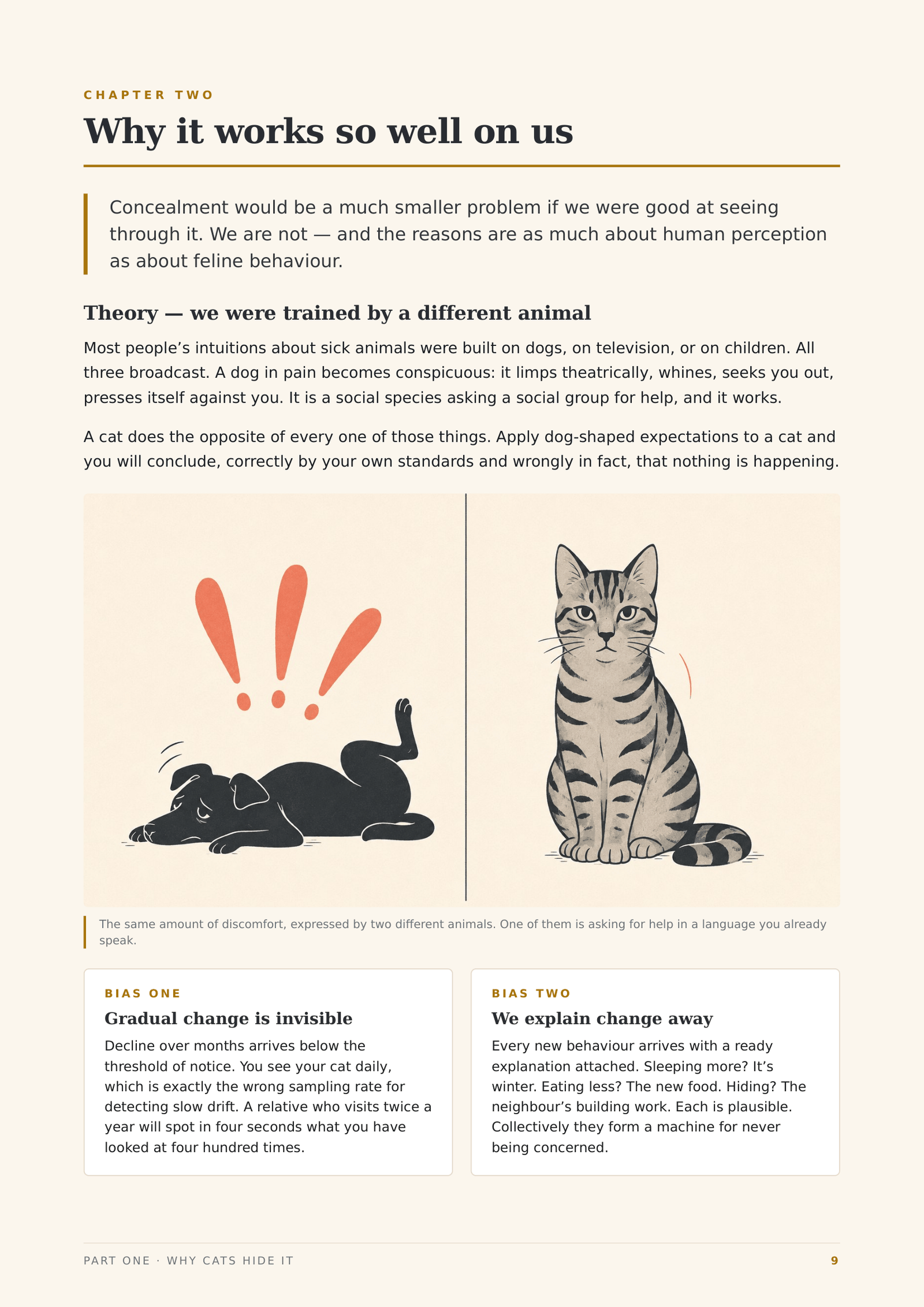
The concealment instinct from the mechanism up — and why “he’s just getting old” is the most expensive sentence in cat ownership.
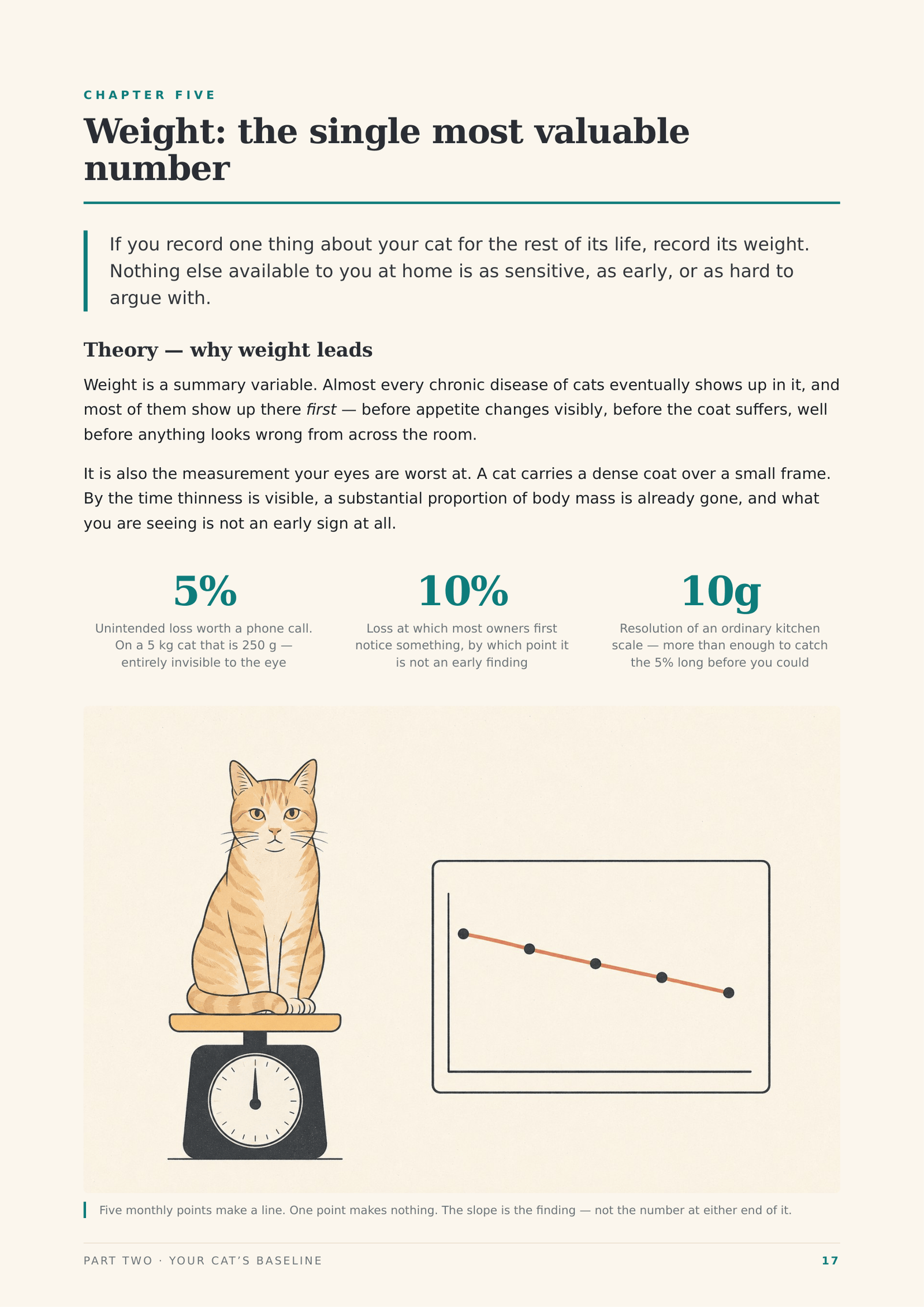
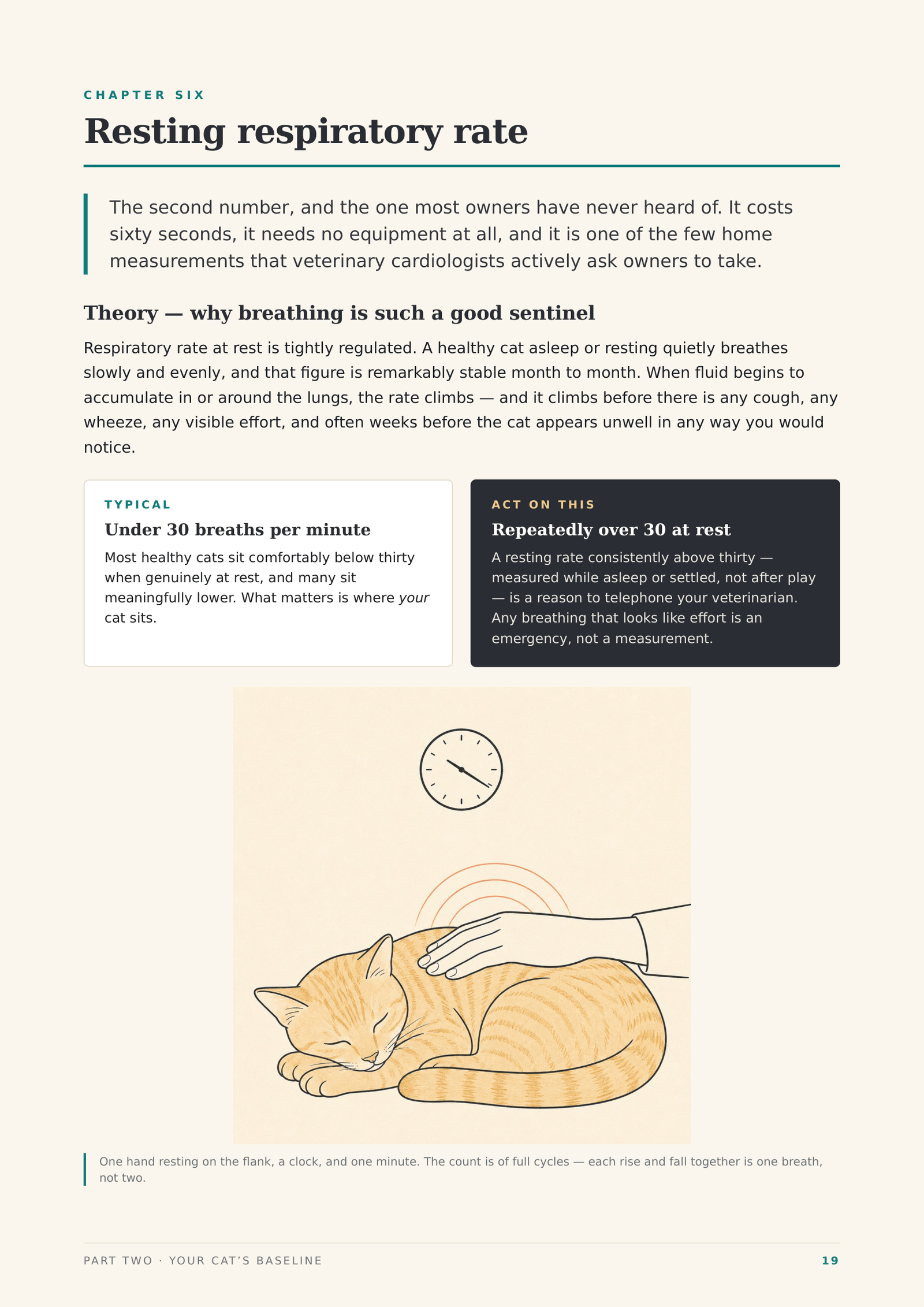
Four numbers worth ten minutes a month: weight, breathing rate, water, litter. Your cat is its own control group.
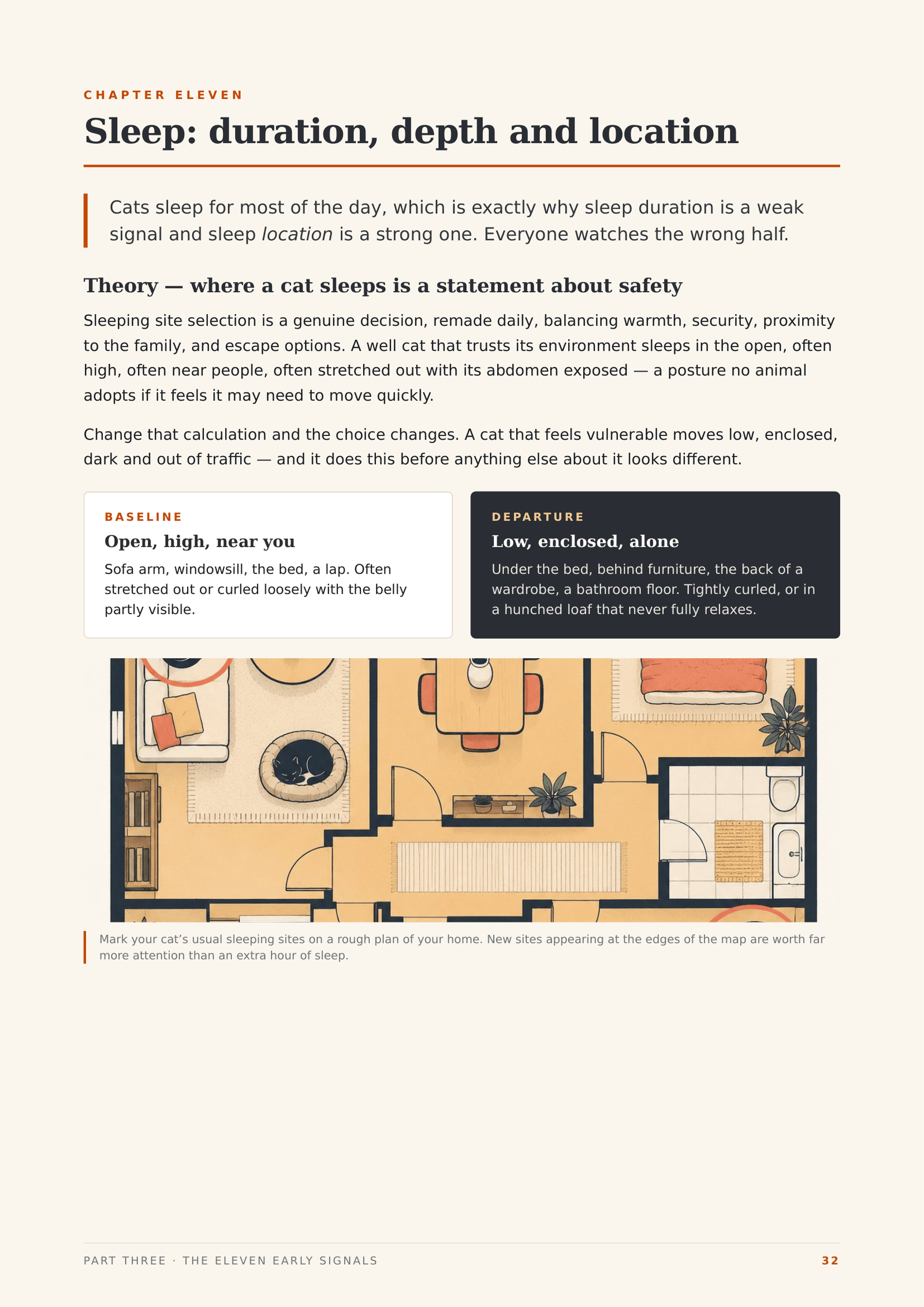
Appetite, grooming, movement, sleep, voice and more — with a one-page reference plate for your phone.
Why purring isn’t evidence of comfort, and how to read the face and body using the validated Feline Grimace Scale.
What genuinely changes with age, four conditions that hide behind it, and a full chapter on the most missed condition in cats.
A three-tier triage page and the phone script that gets you seen this week rather than next.
Monthly and annual templates that make the whole system sustainable for years, not a fortnight.
Look inside
How this book was made
Every medical passage points toward a veterinarian, never around one. Sources are the American Association of Feline Practitioners, the International Society of Feline Medicine, and the Cornell Feline Health Center — named at the back, not just implied.
Where the evidence is thin, the book says so on the page instead of rounding the uncertainty away. We are not veterinarians and the book doesn’t pretend to be. It teaches observation.
Get the book
Instant PDF download, readable on any device. One payment, lifetime access. Because it’s an instant digital download, all sales are final — which is exactly why this page shows you so much first.
Get the book — $29Before you buy
The rest of the library
House-soiling, solved in the correct sequence — medical causes first, then the tray, the territory, and the cat.
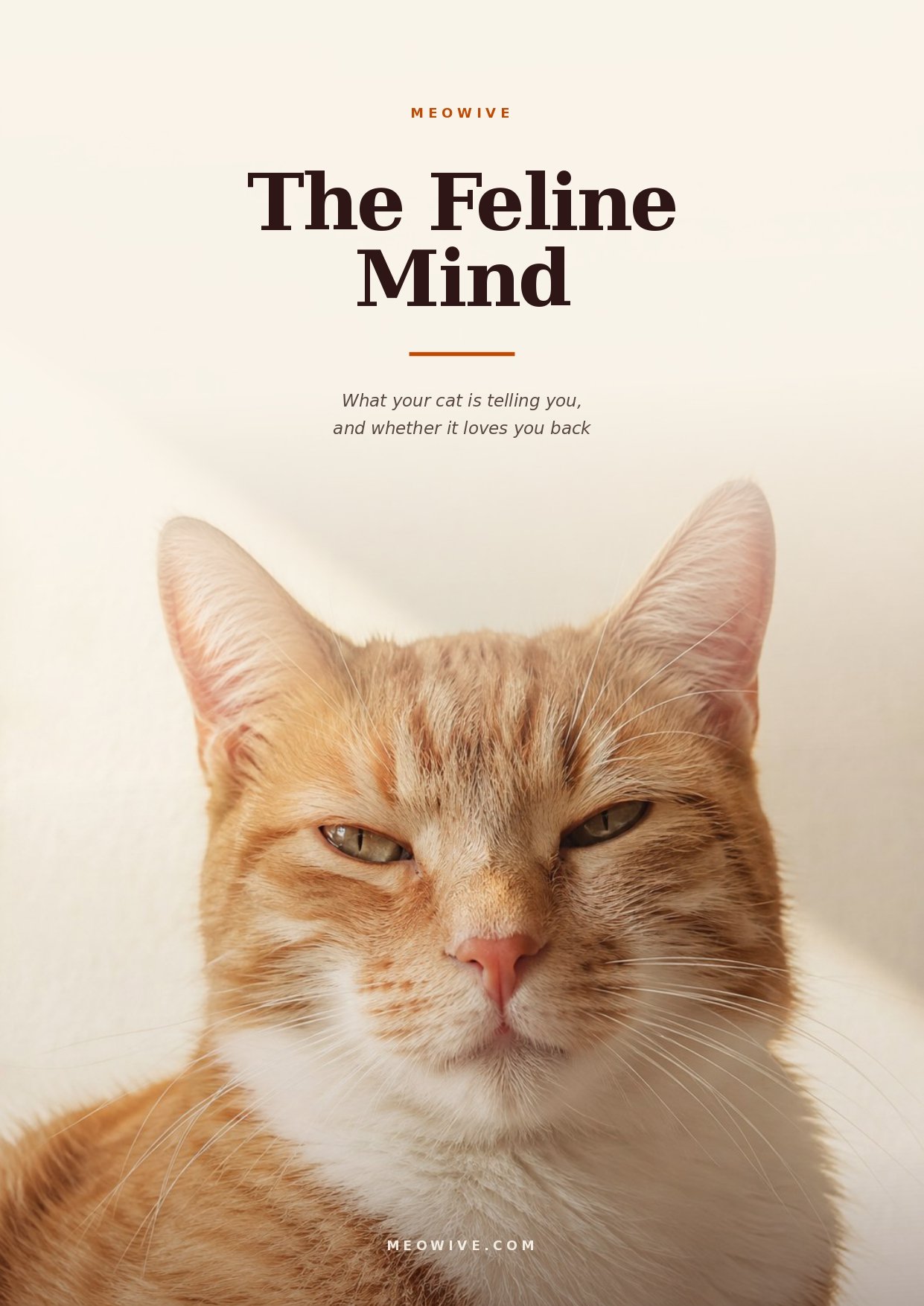
Reading cat behaviour and communication — tail, ears, pupils, whiskers and posture, read together instead of one at a time.
That’s the whole commitment. The book does the rest.
Get the book — $29