


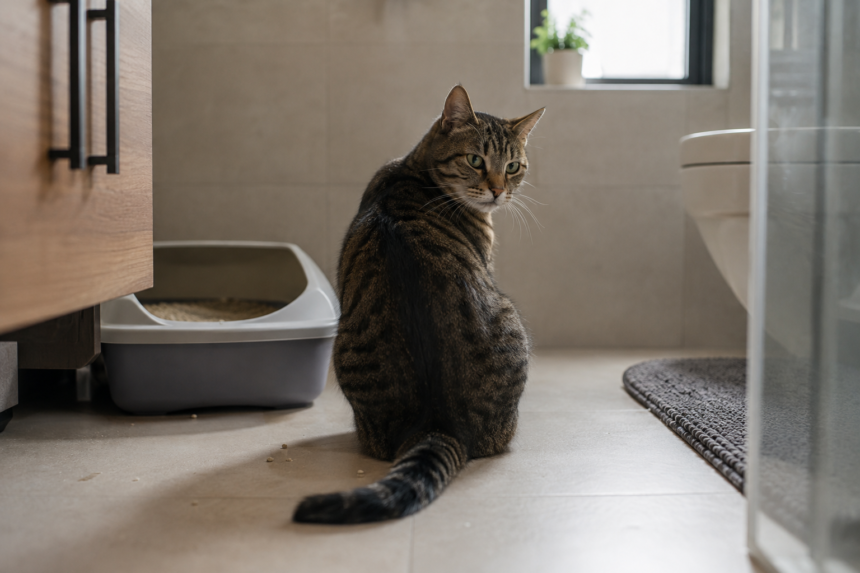
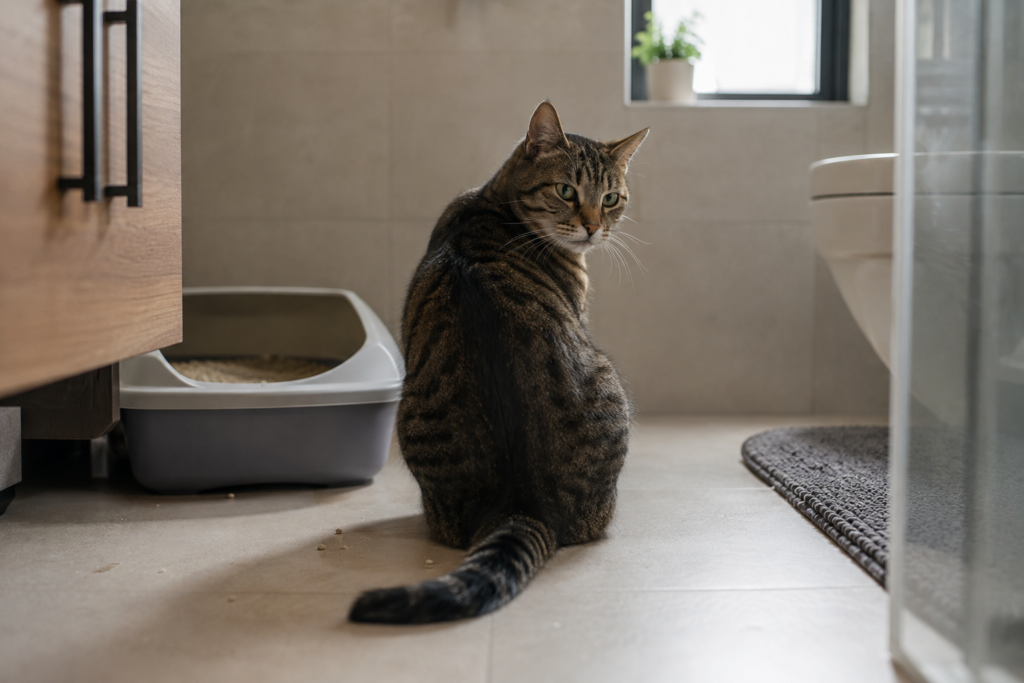
Your cat used the litter box like clockwork for years. Then a new cat moved in, and within days you’re finding puddles behind the couch or a small protest pile by the back door. If your cat won’t use the litter box after a new cat arrived and you’ve already ruled out a bladder infection with your vet, you’re not dealing with spite or a fluke — you’re dealing with one of the most common, most fixable side effects of a second-cat household. This guide walks through exactly why it happens and how to reverse it.

Ten focused guides, vet-reviewed, zero fluff. Loved this article? See what's inside.
See What's Inside →Quick Answer
When a cat won’t use the litter box after a new cat joins the household, the cause is almost always territorial stress, not spite or forgetfulness. A second cat changes who "owns" the box, how safe it feels to use, and how often it gets soiled between cleanings. The fix has three parts: rule out a medical cause with your vet, add at least one litter box per cat plus one extra, and give your resident cat a calm, low-traffic setup while stress settles.
Key Takeaways
- ✓A resident cat avoiding the litter box right after a new cat arrives is reacting to territory and stress, not holding a grudge.
- ✓The "one litter box per cat, plus one" rule stops being optional the moment a second cat moves in — two cats need three boxes, not two.
- ✓Box placement matters as much as box count — one crammed next to a loud appliance gets avoided no matter how clean it is.
- ✓A short, structured reset in one quiet room works faster than scattering extra boxes around the house and hoping.
- ✓Most cats return to full-time litter box use within one to three weeks once setup and stress triggers are actually addressed.
- ✓Straining, crying, or blood alongside the accidents means a same-day vet visit — this can be a urinary emergency, especially in male cats.
Why One New Cat Can Wreck a Litter Box Routine That Worked for Years
A litter box was never just a bathroom to your cat. It’s a resource, and in a cat’s mind, resources come with rules about who gets to use them, when, and how safely. Before the new cat arrived, your resident cat had the box entirely to themselves — no competition, no unfamiliar scent, no risk of being caught off guard mid-squat by another animal.
That changes fast. According to intercat tension data compiled by the American Association of Feline Practitioners, between 62.2% and 87.7% of multi-cat households experience some degree of tension between their cats, and 73.3% of those cases begin with the introduction of a new cat. Litter box avoidance is one of the most visible symptoms, because elimination is a genuinely vulnerable moment for a cat — they can’t watch their surroundings while they’re doing it, which is exactly why a contested box feels riskier than it did a month ago.
Cats sharing a household don’t necessarily share resources peacefully just because they tolerate each other. Behaviorists sometimes call this “time-sharing” — cats using the same box or feeding spot but at different times, specifically to avoid overlap. When that informal system breaks down, usually because there aren’t enough separate options to go around, one cat (often the original resident) starts avoiding the box entirely rather than risk a confrontation. That’s resource guarding in its quieter form: not a fight over the box, just one cat deciding it isn’t worth the risk anymore.
Picture it from the resident cat’s side: the box that always smelled like just them now carries a second, unfamiliar scent every time they approach — sometimes literally, if the new cat has used it, and sometimes just from proximity to where the new cat sleeps or spends time nearby. That single change in scent profile is often enough on its own to make a previously reliable cat start hesitating.
This is also why the timing lines up so precisely. Owners often notice the problem started the exact week the new cat came home, which feels like too clean a coincidence to be a coincidence — and it usually isn’t. Your home wasn’t fully set up for two cats yet when the stress started, and the litter box is often the first resource to show it, because it’s the one thing that can’t be used defensively or from a distance.
Knowing which one you’re looking at is the whole skill.
- Call now — six signs that mean tonight, not tomorrow.
- Call today — two or more of the eleven signals, together.
- Record and watch — one change, with an ordinary explanation.
Stress, Spite, or Sickness? How to Tell What’s Really Going On
Before you change a single thing about your litter box setup, rule out the possibility that this isn’t behavioral at all. Urinary tract infections, bladder stones, and arthritis that makes climbing into a box painful can all cause a cat to suddenly avoid the litter box, and the timing can genuinely coincide with a new cat’s arrival by pure chance. This matters most for male cats, where a blocked urethra is a true emergency, not a wait-and-see situation.
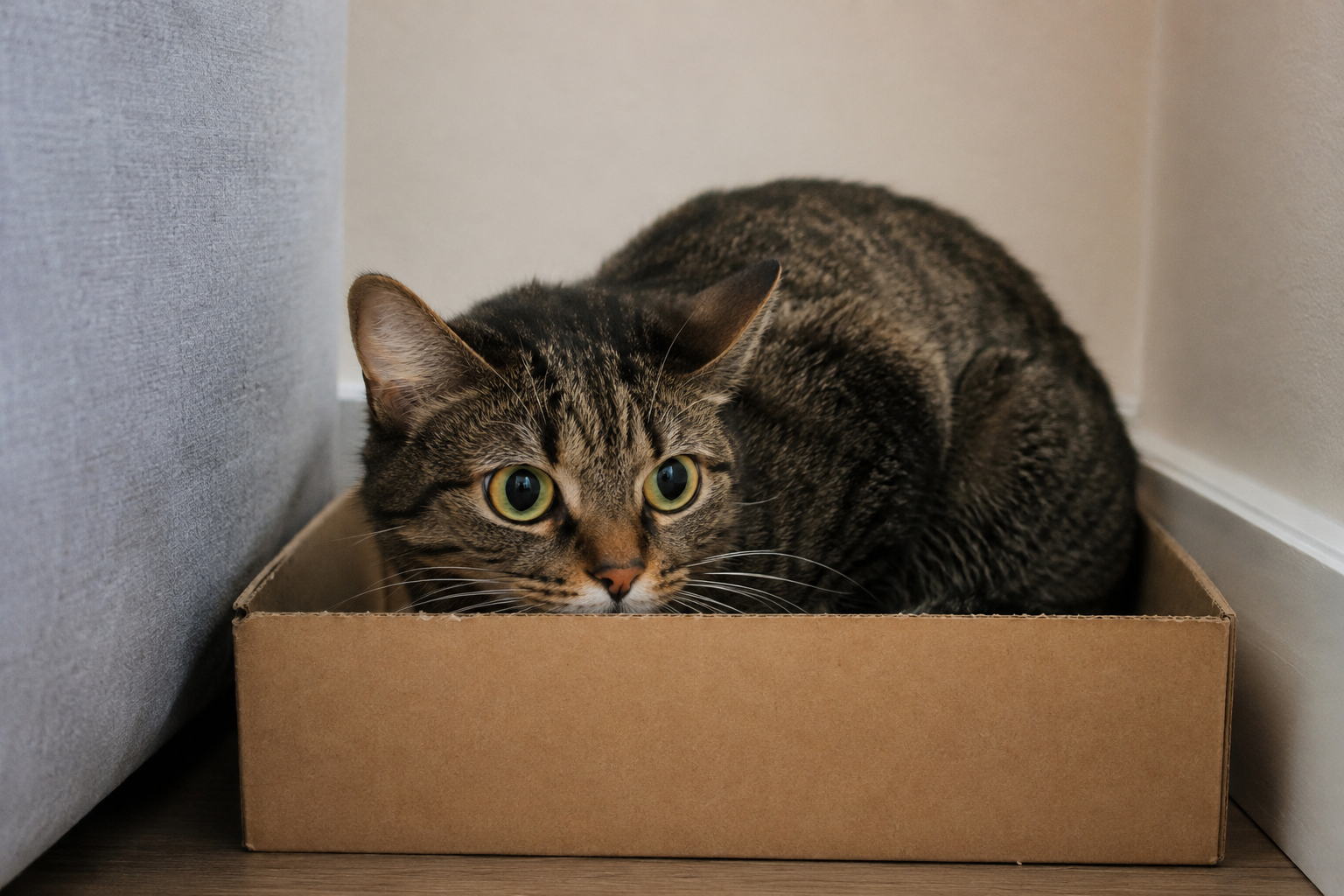
Signs that point toward stress rather than a medical issue: your cat is still eating and drinking normally, using the box inconsistently rather than never, and choosing specific spots to avoid — like a corner near where the new cat sleeps — rather than going anywhere at random. Stress during this window can also show up as extra vocalizing at night, so don’t be surprised if the litter box issue isn’t the only change you notice. Signs that point toward something medical: straining without producing urine, crying out while trying to go, blood in the urine, or a sudden, total refusal to use any box anywhere in the house. When in doubt, a same-day vet visit rules it out fast and costs far less than guessing wrong.
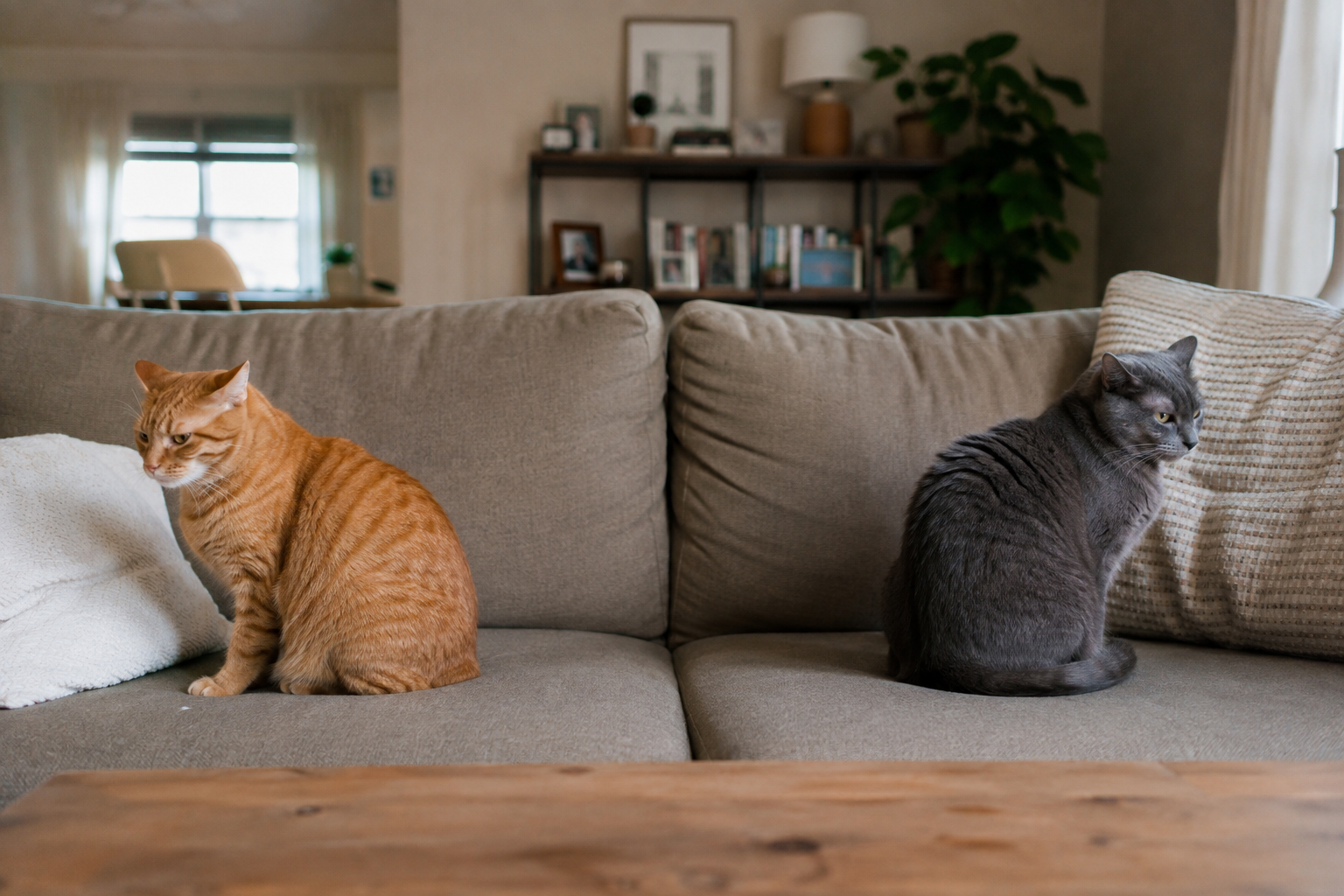
Spite genuinely isn’t a factor here, whatever it looks like from the outside. Cats can form real social bonds, but their behavior is reactive, not calculated — a cat processes what’s happening moment to moment, not as a grudge held for days. When it looks like revenge, what’s actually happening is a stressed animal choosing the safest available spot to go, and that spot increasingly isn’t a box a new cat might be watching, guarding, or has simply made feel unfamiliar.
⚠ Warning — See a Vet Same-Day If
Your cat is straining to urinate, crying out, passing blood, or hasn’t urinated in over 24 hours. This can signal a urinary blockage, which is life-threatening in male cats within as little as 24–48 hours. This is never a “wait and see if the reset works” situation — it’s an emergency room call.
The Litter Box Math Nobody Tells You Before You Adopt a Second Cat
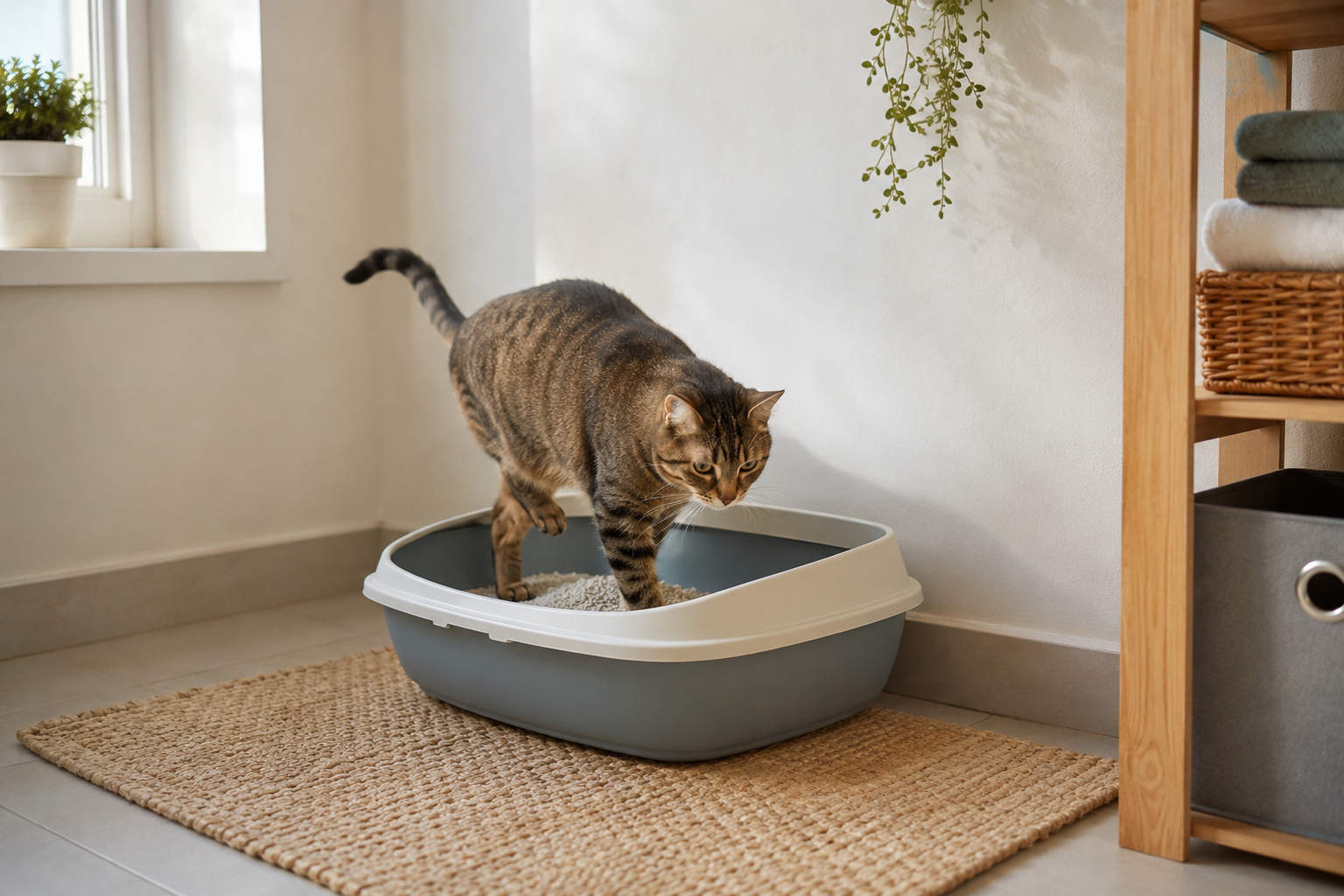
Here’s the number that catches almost every two-cat household off guard: one litter box, shared between two cats, was never actually enough — even before either cat showed a problem. The standard veterinary guidance, sometimes called the “N+1 rule,” is one litter box per cat, plus one extra, with the boxes physically separated rather than lined up side by side. Two cats means three boxes. Three cats means four. It sounds like overkill until you remember that a shared box is a shared bathroom with no locking door, and most of us wouldn’t love that arrangement either.
Side-by-side boxes don’t count as two separate options in a cat’s mind — adjacent boxes tend to get treated as a single shared resource, which defeats the purpose entirely. The boxes need to be in genuinely different locations: different rooms, or at minimum, opposite ends of the same room, so your resident cat never has to walk past the new arrival’s favorite spot to reach a clean box.
Box size matters here too, and it’s an easy thing to overlook while you’re focused on count. A box that was perfectly fine for one relaxed cat can feel cramped once a second cat’s scent has been near it, since cats generally want enough room to turn fully around and dig without their body brushing the sides. As a rough guide, the box should be at least one and a half times your cat’s length from nose to base of tail — bigger is rarely a mistake in a two-cat household, and a new box doesn’t need to match either cat’s old one.
If you’ve only got one box down for two cats right now, this is very likely your single highest-leverage fix. Add a second and third box in different rooms before you troubleshoot anything else — a lot of “he just won’t use the box anymore” cases improve substantially once there’s actually a clean box available that doesn’t require walking past a rival to reach it. If odor control is part of what’s pushing you to reconsider your setup anyway, our tested picks for litter that actually controls odor are worth a look once things settle down.
Box Placement Mistakes That Undo Everything Else You’re Doing Right
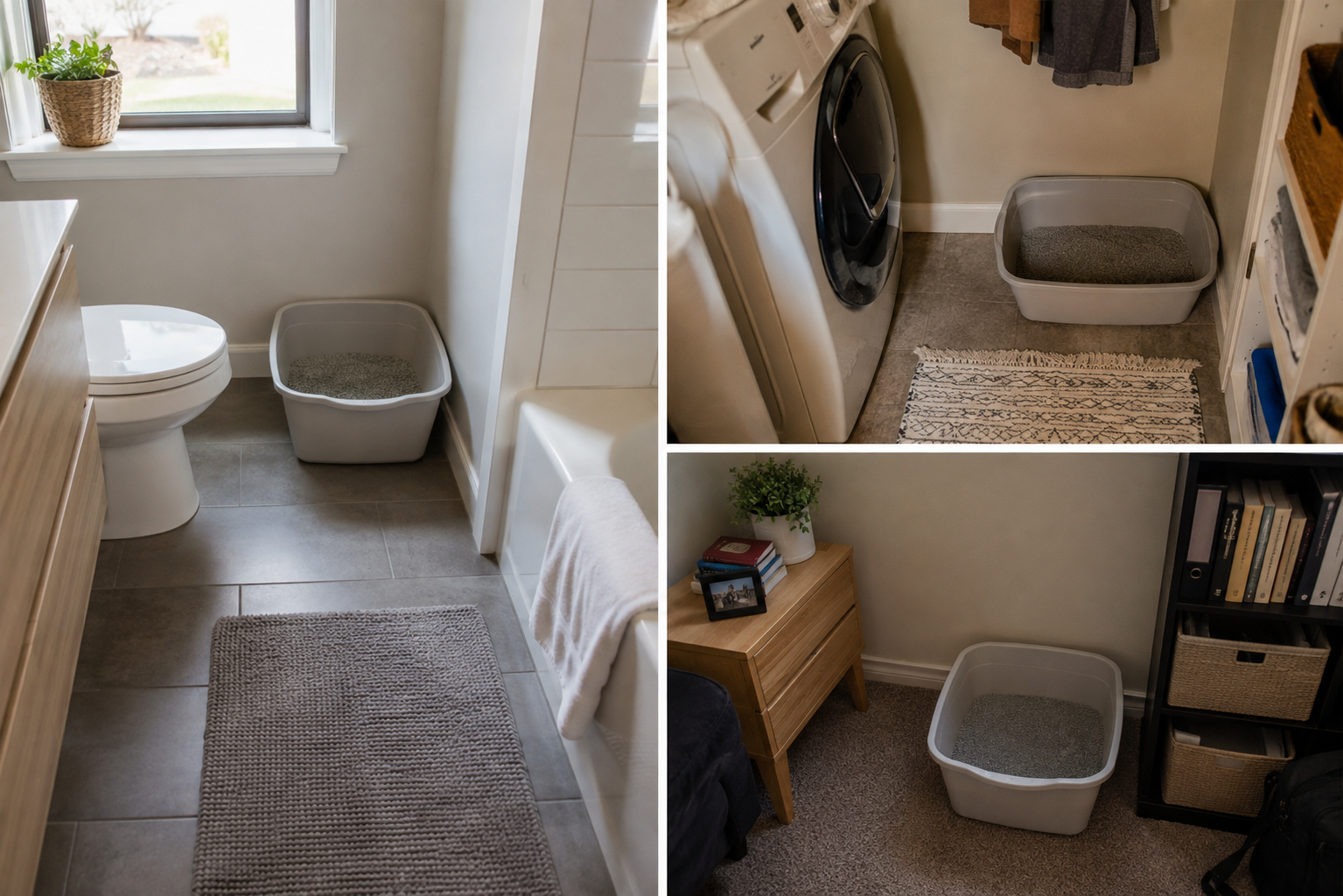
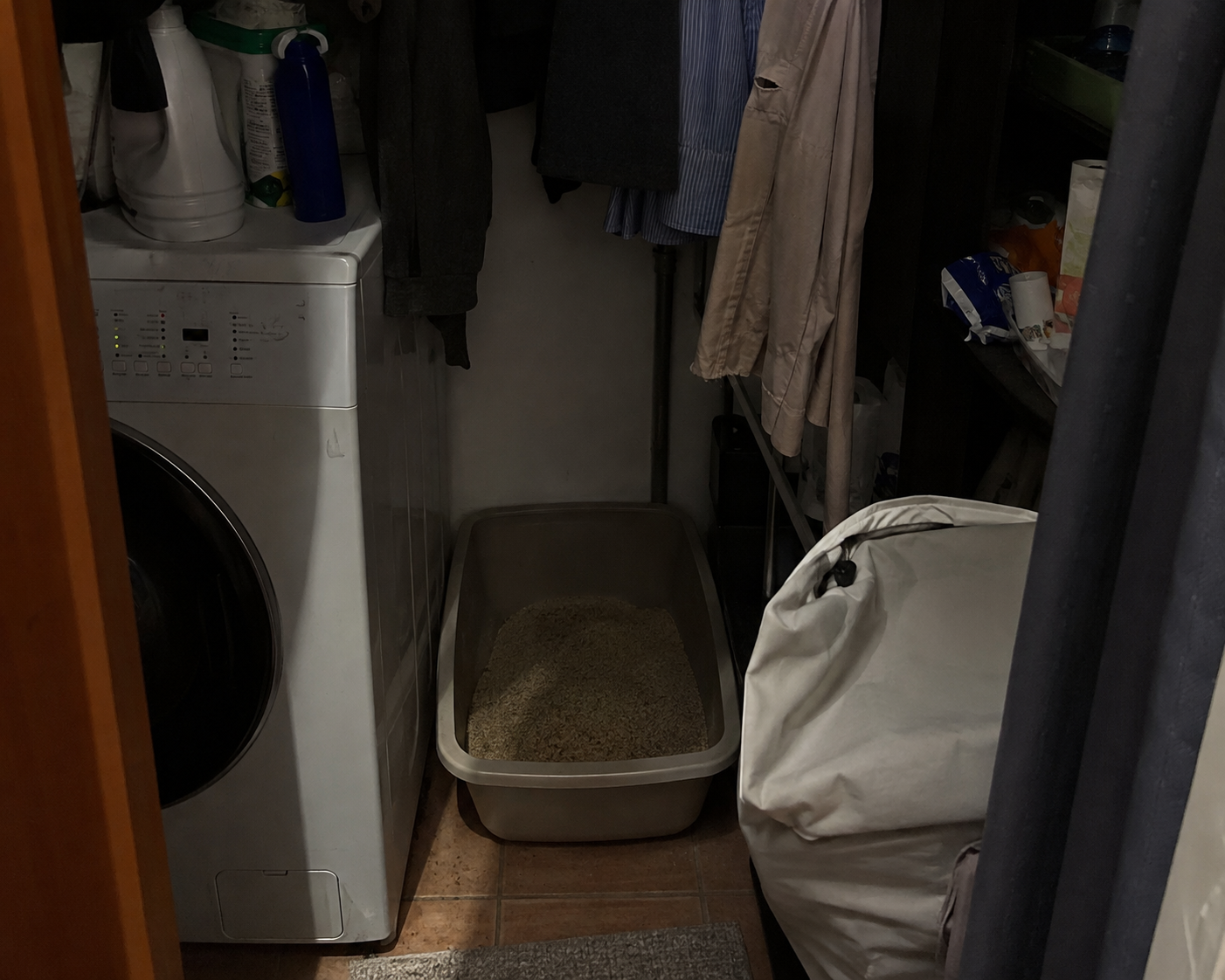
You can buy three brand-new boxes and still lose this fight if you put them in the wrong spots. The two mistakes that come up constantly: boxes crammed next to loud appliances — washing machines, furnaces, anything that can startle a cat mid-use — and boxes your resident cat now has to pass directly by the new cat’s favorite spot to reach.
Both turn a “safe” resource into a gamble. A cat startled by a washing machine kicking on mid-squat associates that fear with the box itself, not the appliance, and it can take surprisingly few bad experiences to build a lasting aversion. A cat that has to walk past a new, unfamiliar animal to reach the only clean box available will often just… not, and find somewhere else instead.
There's a calmer way — one library that answers it all. See it for yourself.
Explore the Library →💡 Tip
Give every box at least two possible exit routes. A box wedged into a closet corner with only one way out reads as a trap to an anxious cat, even if nothing has ever actually blocked their exit. Open sightlines matter more than privacy here.
The fix is straightforward even if it takes some furniture-shuffling: put boxes in low-traffic, quiet corners with clear sightlines, never inside a closet with the new cat’s bed on the other side of the door, and never within earshot of anything that switches on unexpectedly. If your home genuinely doesn’t have three quiet locations, a spare bathroom, a corner of a guest room, and a covered spot in a hallway usually cover it without a renovation. This is also a good moment to double-check the rest of your life-stage care basics, since stress from a new arrival can ripple into grooming, appetite, and sleep too.
From the Meowive Library
Make It Stop
A full guide to the most common problem behaviors — including litter box avoidance, marking, and multi-cat tension — with the same reset-first approach used in this article.
The 5-Day Reset That Gets Most Cats Back in the Box
When a cat has fully stopped using the box — not just occasionally missing, but avoiding it completely — the fastest fix is usually a short, structured reset rather than more troubleshooting scattered around the house. This mirrors the shrink-the-world-then-expand-slowly approach veterinary behaviorists use for house-soiling cases generally: control the environment first, then reintroduce it piece by piece.
Days 1–2: Set Up the Reset Room
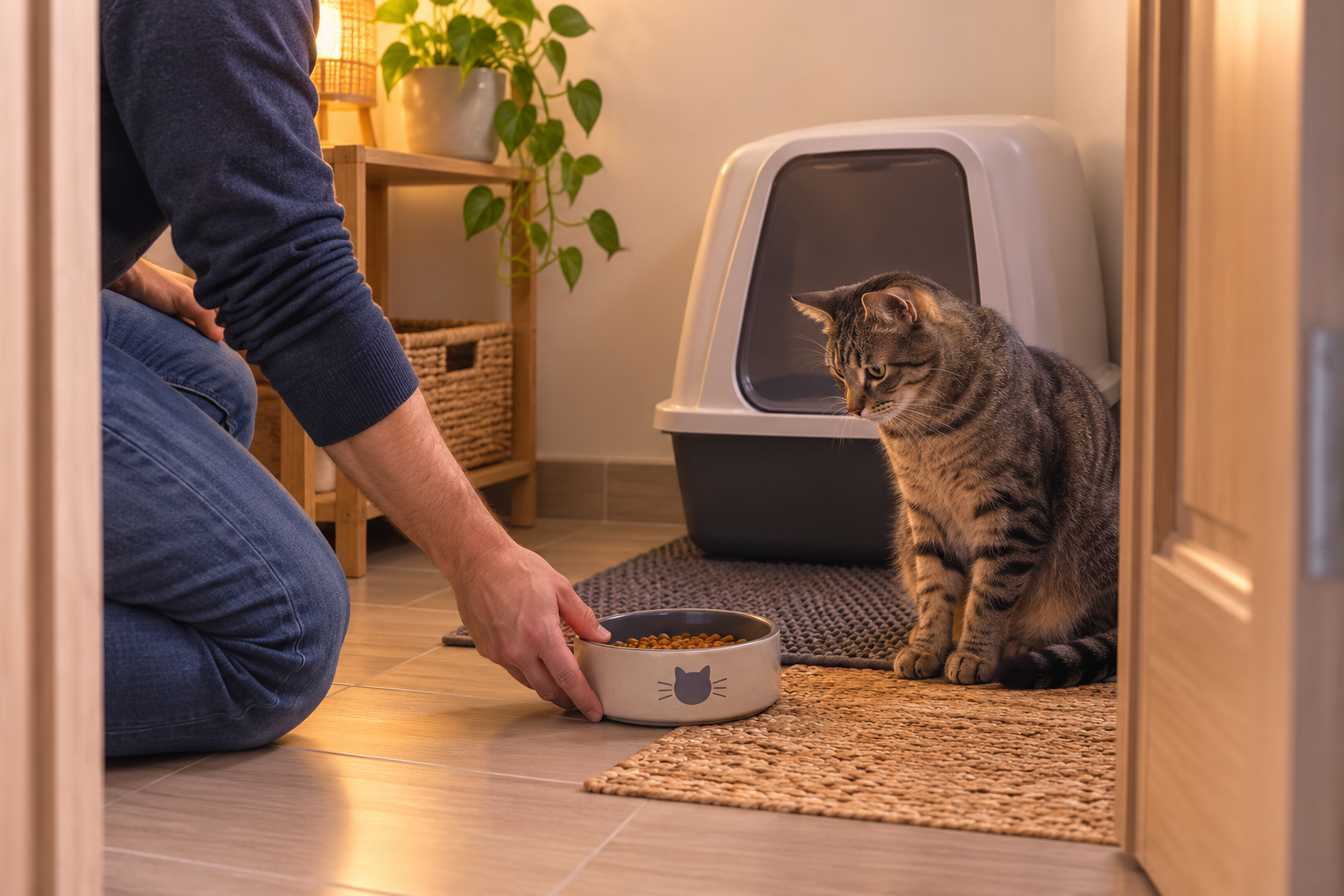
One quiet room, your cat’s own box with their usual litter (don’t switch types mid-reset), food, water, and a bed. Keep the new cat out entirely. Let your resident cat have the space to themselves, door closed.
Days 2–3: Supervised Time Out
Once you’ve seen consistent box use for a full 24 hours, allow brief supervised time outside the room without the new cat present, so your cat can re-explore shared spaces without added pressure.
Days 3–5: Slow Reintroduction
Bring the cats back into brief, supervised contact using a cracked door or gate — the same slow scent-and-sight process used for a first introduction — while keeping the reset room and its box available as a retreat.
Ongoing: Fold Boxes Back In
Once litter box use is fully consistent again, reintroduce the extra boxes into your permanent multi-cat layout, always keeping at least the N+1 count in play across the whole home.
Clean the reset-room box more often than you normally would during this window, too — twice a day if you can manage it. A cat working through litter box stress is more sensitive to a dirty box than usual, and removing that variable entirely means any remaining hesitation you see is genuinely about the bigger situation, not just a box that needed scooping.
The room doesn’t need to be fancy. A spare bathroom or a guest room with the door closed works fine. What matters is that it’s small enough to feel controllable and free of anything that reminds your cat of the specific stress that started this — including, for now, the new cat.
62–88%
of multi-cat homes experience some intercat tension
73%
of those cases start with a new cat’s arrival
1–3 wks
typical time to resolve once the setup is corrected
How Long This Actually Takes (and When to Worry)
Most cats going through new-cat-triggered litter box regression are back to reliable use within one to three weeks once the setup and stress triggers are genuinely addressed — not just once you’ve tried one fix and waited. The timeline depends heavily on how long the problem ran before you intervened; a habit that’s been building for two months takes longer to unwind than one caught in the first week.
Signs you’re on track: fewer accidents each week, even if not perfect yet, and your cat choosing the reset-room box over other spots when given a choice. Signs something’s off: zero improvement after two full weeks of a genuinely correct setup — right box count, right placement, calm reset room — or new symptoms alongside the litter box issue, like a drop in appetite or hiding all day.
“This behavior is not due to spite or anger toward the caregiver, but because the cat’s physical, social, or medical needs are not being met.”
— American Association of Feline Practitioners & International Society of Feline Medicine, house-soiling guidelines
If you’ve followed this guide correctly and you’re still stuck past that two-week mark, that’s the point to loop your vet back in — not necessarily for a medical cause this time, but because a persistent case like this sometimes benefits from short-term anti-anxiety support or a referral to a certified veterinary behaviorist. There’s no reason to white-knuckle it alone for months. You can read more directly from the source in the AAFP/ISFM house-soiling guidelines.
Common Mistakes That Slow Down the Fix
1. Punishing the Cat for Accidents
Rubbing a cat’s nose in an accident or raising your voice when you find one doesn’t teach cause and effect the way it might with some other animals — it just adds more stress to an already stressed cat, which makes avoidance worse, not better. Veterinary guidance on house-soiling is explicit that punishment has no productive role here and typically backfires.
2. Switching Litter Type During the Reset
It’s tempting to try a “better” litter at the same time you’re fixing everything else, but changing texture or scent mid-reset adds a second variable right when you’re trying to isolate the actual cause. Keep the litter exactly the same during the reset window, then experiment later if you still want to.
3. Adding Boxes Without Separating Them
Buying two more boxes and lining them up next to the original doesn’t solve the resource problem — cats often read a row of boxes as one contested spot, not several safe options. Spread them out, or the N+1 math doesn’t actually help.
4. Rushing the Cats Back Together
Ending the reset-room phase the moment accidents stop, then giving both cats full run of the house together, often undoes a week of progress in a single bad encounter. Fold reintroduction in gradually — the same slow way you’d handle a first meeting.
5. Assuming It’s Permanent
A lot of owners give up on the second cat, or resign themselves to permanent accidents, well before the timeline in this guide has actually played out. Two to three weeks of a correctly run reset resolves the large majority of new-cat-triggered cases — it’s rarely a life sentence for either cat. If you’re still deciding on the right second cat for your household in the future, our guide to choosing a cat that fits your home and lifestyle covers the compatibility factors that make this whole process easier from the start.
FAQ: Cat Won’t Use the Litter Box After a New Cat
📝 Note
This article covers general behavioral guidance and isn’t a substitute for veterinary care. If you’re ever unsure whether what you’re seeing is behavioral or medical, treat it as medical until a vet tells you otherwise — litter box changes are one of the more reliable early signs cats give us that something’s wrong.
The Complete Cat Owner Library
10 Guides. One Shelf. $39.
From behavior fixes like this one to feeding, enrichment, and multi-cat harmony — the whole journey from your first day together to becoming the person your cat trusts completely.
A cat won’t use the litter box after a new cat arrives for reasons that are almost always fixable — territory, stress, and a resource count that hasn’t caught up with your new two-cat household yet. Fix the math, fix the placement, give your cat a short reset, and most litter box habits come back within a few weeks. For more behavior fixes like this one, browse the rest of our Training section — this is a bump most multi-cat households hit, and get past.

Get Decode Your Cat — free.
20 everyday behaviors translated, so you finally know what your cat is actually saying. Pop in your name and email and it's yours instantly.