


Most cats with lymphoma were quietly sick for months before their owners had any idea. The signs were there the whole time — a little less energy here, a slightly smaller appetite there — but easy to explain away as aging, stress, or just being a finicky eater. If you’re reading this because something feels off with your cat but you can’t quite name it, this article is for you. We’re going to walk through the cat lymphoma early signs that get missed most often, why they’re so deceptively easy to misread, and exactly what patterns to watch for so you’re not caught off guard.

Ten beautifully designed cat guides — behavior, feeding, health, the tricky days and more.
See What's Inside →Cat lymphoma early signs are rarely dramatic, and that’s precisely what makes them so dangerous. In the first six months, a sick cat will often lose weight gradually, vomit or have loose stools now and then, seem a little less interested in food, and pull back from the activities they used to enjoy. On their own, each of these things looks like something minor — a sensitive stomach, a bad week, normal aging. But when more than one of these signs shows up together, persists over weeks, and doesn’t fully clear up with basic treatment, that pattern is telling you something worth taking seriously.
Important Points
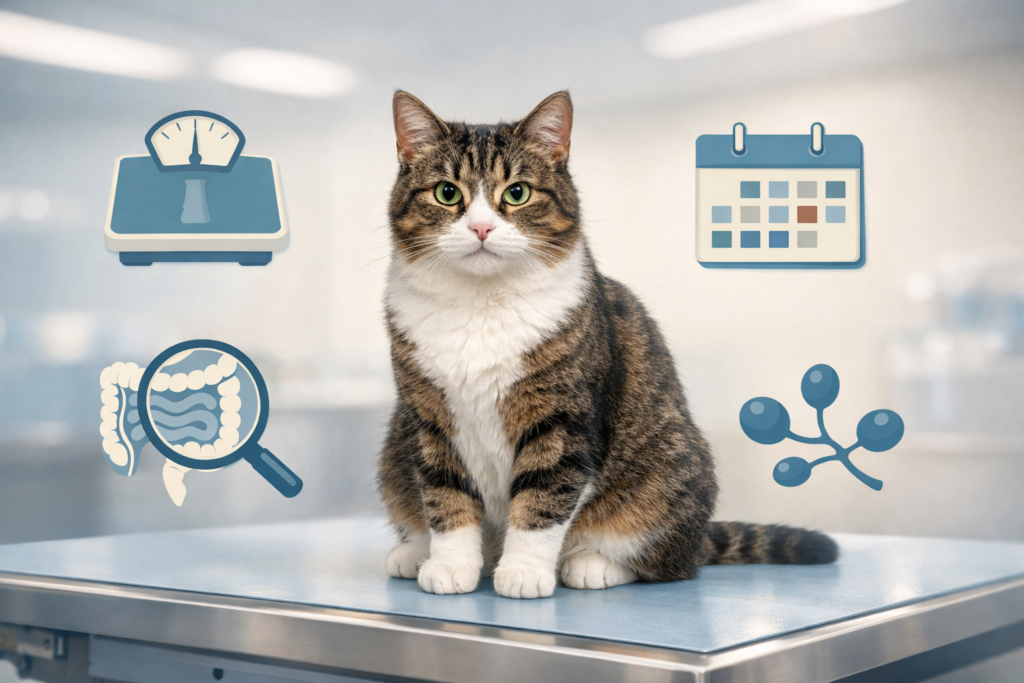
- One of the most common signs of gastrointestinal lymphoma that people miss is when a cat loses weight but still eats.
- Lymphoma is the most common type of cancer in cats, making up about 30% of all feline tumors. It can affect the GI tract, chest, kidneys, and nasal passages.
- The average age at which a cat is diagnosed is 10 to 12 years old, but younger cats, especially those with feline leukemia virus (FeLV), can get it much earlier.
- Owners may think that their pets are throwing up because of hairballs, but this can actually be a sign of lymphoma in the small intestine. The frequency of the vomiting is less important than how long it lasts.
- Early detection greatly improves outcomes: cats with low-grade small cell lymphoma who are given chlorambucil and prednisolone live an average of 20 to 24 months longer.
- A single visit to the vet with blood work and an abdominal exam is often enough to find something that needs more attention. Don’t wait until the symptoms get “bad enough.”
Why Cat Lymphoma Is Not Found in the First Six Months
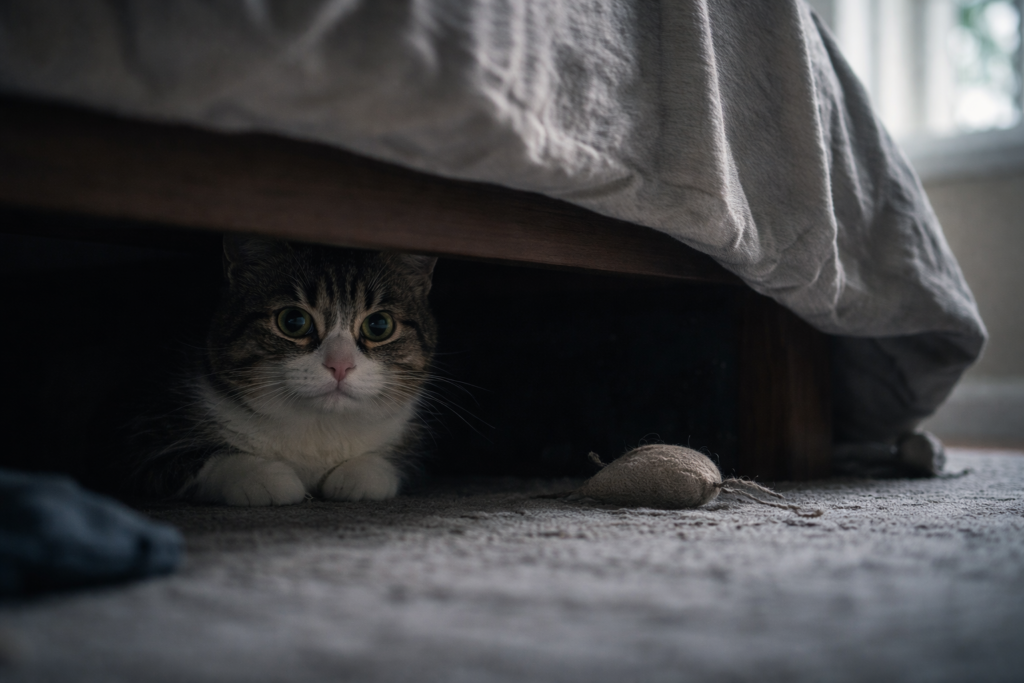
Cats with lymphoma are very good at hiding it behind something boring. Feline lymphoma usually starts inside, in the gastrointestinal tract, where you can’t see it. The early symptoms are vague enough to be explained away. In dogs, a lump under the skin is often the first sign.
The Most Common Form: Alimentary (GI) Lymphoma
About 50% to 70% of all feline lymphoma cases are the GI form, which is also known as alimentary lymphoma. Most of the time, it affects the small intestine. In its low-grade form (small cell or lymphocytic lymphoma), the disease slowly gets worse over months or years. This is both a blessing and a curse. The cat makes up for the slow progress. They still come to the bowl, but they eat a little less. They lose weight, but not all at once. Over the course of six months, they lose a quarter pound here and a half pound there. A cat owner who sees their pet every day might not notice until the vet weighs it and tells them something different.
Mediastinal (Chest) Lymphoma
Mediastinal lymphoma, which affects the chest, is less common but more dramatic. It causes fluid to build up around the lungs, making it hard to breathe. This one is usually diagnosed faster because it’s hard to ignore a cat that can’t breathe.
Nasal Lymphoma
Nasal lymphoma is even less common, but its early signs, like sneezing, runny nose, and swelling on one side of the face, are often mistaken for a respiratory infection. Before anyone thinks about imaging the nasal cavity, a cat can go through two or three rounds of antibiotics.
The one thing they all have in common is that these signs don’t mean you have cancer. They say things like, “My cat has been acting strange lately.”
The Specific Early Signs That Most Owners Miss
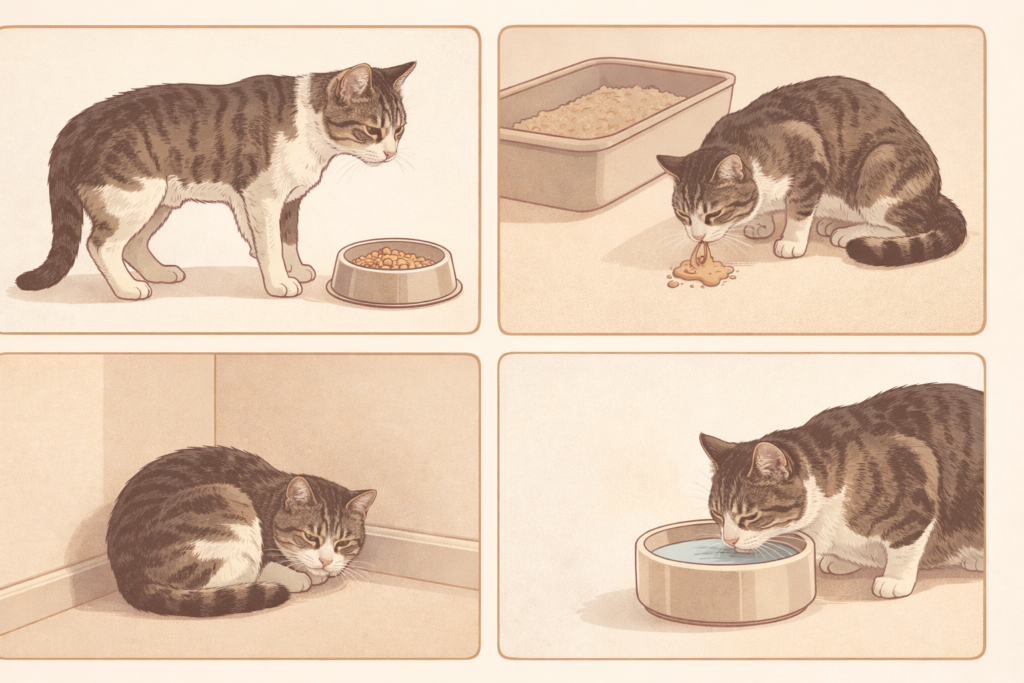
This is where things get specific. The general lists of symptoms you find online aren’t wrong; they just aren’t set up for early detection.
Weight Loss While Still Feeling Hungry
This is the number one sign that people don’t pay enough attention to. It’s clear that a cat that has stopped eating is sick. A cat that is losing weight even though it is eating? That takes longer to notice as a problem. Protein-losing enteropathy is a condition that makes the gut unable to absorb nutrients properly in small cell lymphoma. The cat eats, but the food isn’t going to waste. People often say things like “she’s always been thin” or “he’s just a lean cat.” But if you haven’t weighed your cat in a while, you don’t know.
The complete cat-care shelf — from choosing your cat to lifelong mastery.
See What's Inside →Vomiting “Sometimes”
A lot of cats throw up from time to time. Hairballs are real. There is a difference, though, between a cat that throws up once a month and one that throws up once or twice a week for several months. Chronic, low-grade, and intermittent vomiting is a common sign of GI lymphoma and inflammatory bowel disease (IBD). A lot of cats are treated for IBD first because IBD and low-grade lymphoma look almost the same without a biopsy. That’s not always wrong, but you should be more suspicious if you have a steroid-responsive GI disease that keeps coming back even after treatment.
Changes in Stool Consistency
Stools that are soft and poorly formed, or diarrhea that comes and goes without a clear reason related to diet. It may seem like a small problem when cats with GI lymphoma have soft stools and normal stools at different times. If you’re cleaning out the box and something seems to be wrong all the time, even if it’s not full-blown diarrhea, you should tell your vet.
Behavioral Withdrawal
This one is really hard to see. A cat that used to sleep on the bed but now likes to sleep in the closet. A cat that used to greet you at the door. A cat that doesn’t want to play as much but doesn’t seem to be in pain. Cats naturally hide when they are sick, so what seems like a change in personality is often just a response to pain or mild nausea. People often say that this is the cat “getting older” or “just being more independent.” Sometimes that’s true. But when you look at other signs, behavioral retreat is important.
Increased Thirst and Urination
This is more common with renal lymphoma, which affects the kidneys, than GI lymphoma. Cats with kidney lymphoma may exhibit symptoms that significantly overlap with chronic kidney disease (CKD), including increased water consumption, weight loss, diminished appetite, and ultimately vomiting. Cats can have both conditions at the same time, and CKD can even make them more likely to get renal lymphoma. If your cat is already getting treatment for CKD and seems to be getting worse faster than expected, it’s a good idea to ask if lymphoma has been ruled out.
Early Signs of Cat Lymphoma Compared to Other Common Diagnoses
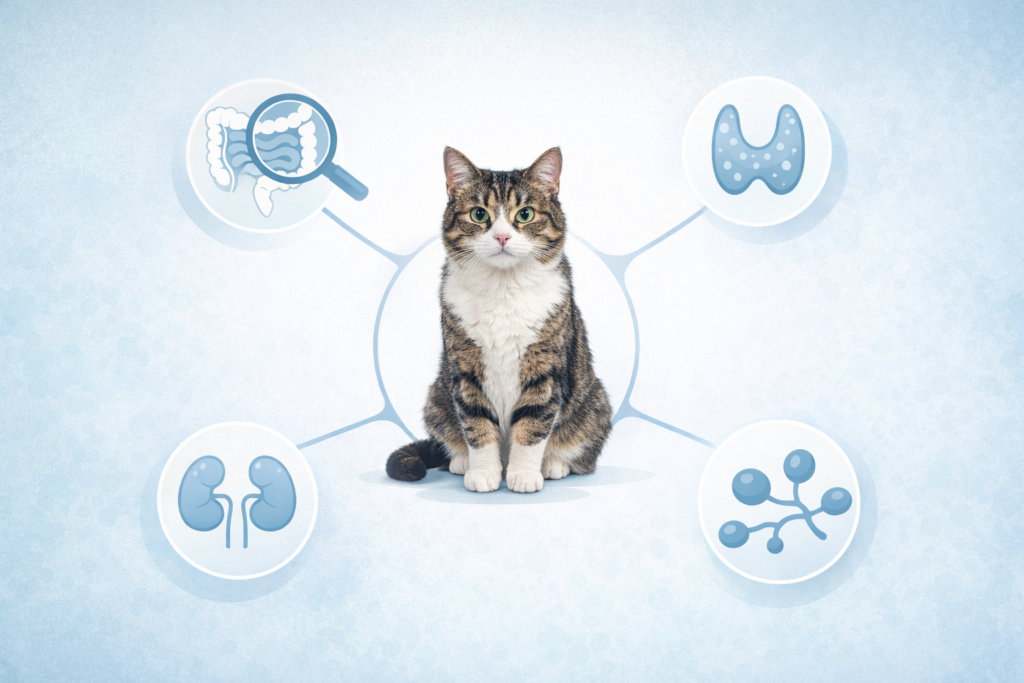
Here is a direct comparison of what makes lymphoma different from other diseases, since many early symptoms are the same:
| Symptom | Lymphoma | IBD | Hyperthyroidism | CKD |
|---|---|---|---|---|
| Weight loss | Common; can be severe | Mild to moderate | Common; often with increased appetite | Moderate; progressive |
| Vomiting | Intermittent, chronic | Chronic, often food-related | Frequent, sometimes projectile | Intermittent |
| Diarrhea | Soft or long-lasting | Common | Less common | Rare |
| More thirsty | In renal form | No | Sometimes | Yes |
| Change in appetite | Went down to normal | Changed | Went up | Went down |
| Age of onset | Usually 10 years or older | Any age | Usually 10 years or older | Usually 10 years or older |
The main difference in diagnosis is that lymphoma can only be confirmed with a biopsy or fine needle aspirate, not just blood work. A thyroxine (T4) level excludes hyperthyroidism. A chemistry panel and a urinalysis can help show that someone has CKD. But an ultrasound followed by an endoscopic biopsy or a full-thickness intestinal biopsy is often needed to tell IBD from lymphoma. If the standard treatments aren’t working, you should talk to your vet about this.
What the First Visit to the Vet Should Really Be About
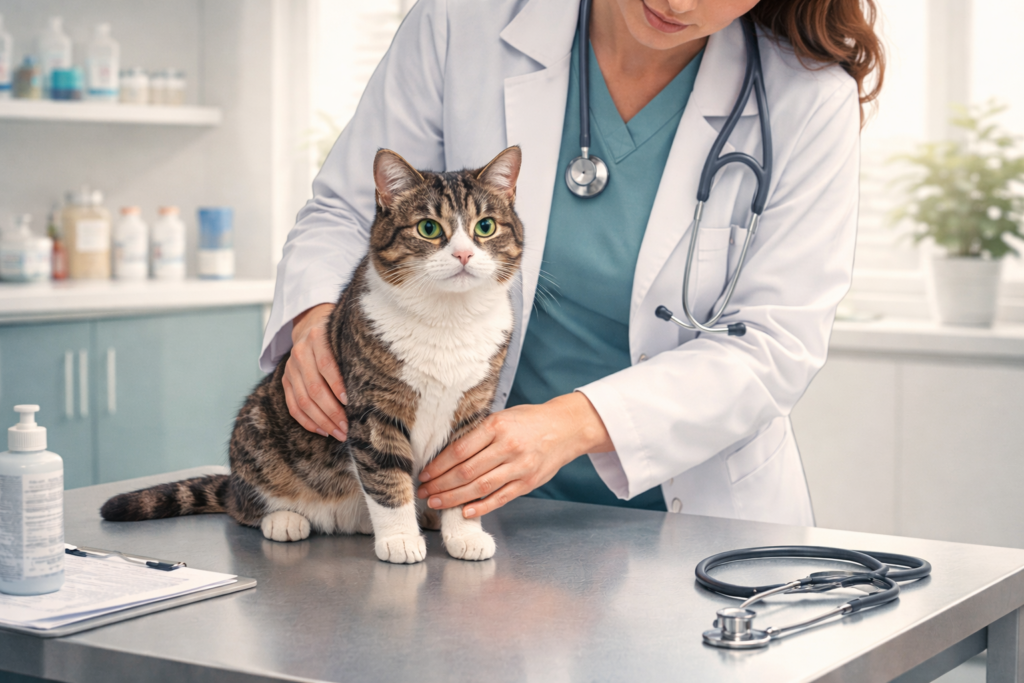
The quality of the workup is important when you bring your cat in with vague symptoms. A lot.
Physical Exam
A basic physical exam is important but not enough. Your vet should carefully feel your dog’s stomach. Sometimes, they can feel thickened intestinal loops, enlarged lymph nodes (especially the mesenteric nodes), or a mass. For cats with mediastinal lymphoma, the chest may feel less compressible than usual. This is an important manual finding.
Bloodwork
A complete blood count (CBC) and chemistry panel can show anemia, high white blood cell counts, changes in liver values, or changes in the kidneys. These won’t tell you if you have lymphoma, but they will help you figure out what to do next. A low albumin level, weight loss, and GI signs should all be cause for concern right away.
Abdominal Ultrasound
Things become clearer with an abdominal ultrasound. Ultrasound can find enlarged lymph nodes, changes in the thickness and layering of the intestinal wall, and masses. An ultrasound that looks normal doesn’t mean you don’t have lymphoma, but one that looks strange does. If your vet suggests an ultrasound but you’re not sure if you can afford it, keep in mind that it’s the best non-invasive way to find feline GI lymphoma.
Fine Needle Aspirate and Biopsy
Sometimes, a fine needle aspirate (FNA) of lymph nodes or masses can help make a diagnosis, especially for large-cell lymphoma. You usually need a proper biopsy for small cell lymphoma because the cells look a lot like normal intestinal lymphocytes. Only histopathology (looking at tissue architecture under a microscope) can tell the two apart with any degree of reliability.
Early Signs of Cat Lymphoma: What the Future Looks Like

Feline small cell lymphoma is one of the easiest cancers to treat in veterinary medicine, but people are too scared to talk about it. Cats that get treatment often live for one to three years and have a good quality of life. Some people live longer.
Treatment for Low-Grade Alimentary Lymphoma
The treatment for low-grade alimentary lymphoma is given at home and doesn’t cause hair loss or severe nausea like human chemotherapy does. Most cats handle it very well. It consists of oral chlorambucil (an alkylating chemotherapy agent) and prednisolone. In studies that have been published, like a landmark paper from 2006 by Fondacaro et al. and later work by Stein et al. (2010), the response rates show that 60–70% of cats go into remission. The median survival times for responders are between 17 and 29 months.
High-Grade (Large-Cell) Lymphoma
High-grade or large-cell lymphoma is a whole different story. It is more aggressive, does not respond to treatment as predictably, and has a median survival time of 2 to 4 months even with multi-agent chemotherapy (like the CHOP protocol, which includes cyclophosphamide, doxorubicin, vincristine, and prednisolone). This is why the difference between small cell and large cell lymphoma isn’t just a matter of academic interest; it makes a big difference in what you’re dealing with.
The main point is that finding early signs of cat lymphoma doesn’t just give you time to get ready. It gives you access to treatment options that can significantly improve your quality of life.
Mistakes That Even Careful Owners Make

1. Waiting for a Clear Sign Before Taking the Pet to the Vet
A lot of people wait until their cat stops eating completely, throws up every day, or loses a lot of weight. By that time, you may have missed out on months of early treatment. It’s better to go in when you see a pattern, even if it’s a small one. A cat that throws up every week for six weeks is not having trouble with hairballs. That’s a pattern that needs to be looked into.
2. Accepting “She’s Just Getting Older” Without Any Numbers
Aging explains a lot of things. It doesn’t explain why a cat would lose 15% of her body weight in six months. Weigh your cat every time you go to the vet and keep track of the weight yourself in between visits. A food scale in the kitchen works fine. A 15% loss over six months, from 10 lbs to 8.5 lbs, is something that needs to be looked into, no matter how old you are.
3. Treating IBD Indefinitely Without Excluding Lymphoma
In the beginning, inflammatory bowel disease and small cell lymphoma are treated in the same way (both often respond to steroids), but they are not the same disease and the way they are treated over time is different. Cats that only partially respond to IBD treatment or keep getting worse should have a biopsy instead of getting more anti-inflammatory drugs for an indefinite period of time.
4. Understanding “Normal Bloodwork” to Mean “No Cancer”
Lymphoma cannot be found in standard blood tests. A cat can have a lot of GI lymphoma and have CBC and chemistry results that are completely normal. Normal blood work is a good sign that your organs are working well, but it doesn’t mean you don’t have cancer. Normal blood work doesn’t mean you can stop looking if your symptoms don’t go away. It means you need to keep looking.
5. Not Getting the Ultrasound Because the Cat Seems “Okay”
A cat with compensated lymphoma usually seems fine—they eat, move around, and purr. A cat that has been losing weight slowly for five months doesn’t mean “okay” and “healthy.” Ultrasound isn’t only for cats that look sick. It’s the right tool when your gut and the data both say something is wrong.
Questions and Answers

What Are the First Signs of Lymphoma in Cats?
The first signs are usually losing weight even though you have a normal appetite, throwing up from time to time, or having soft stools. You may also notice small changes in behavior, like being less playful or hiding more. These signs can show up months before the disease gets worse. It’s easy to ignore them because they’re not specific, but the fact that they last for weeks is what makes them important.
Is It Possible to Confuse Cat Lymphoma With Something Else?
Yes, a lot. People often mistake gastrointestinal lymphoma for inflammatory bowel disease, food sensitivity, or hyperthyroidism because the symptoms are very similar. A biopsy is the only way to tell for sure that small cell lymphoma is not IBD. People often mix up renal lymphoma with chronic kidney disease. Not just blood tests, but also ultrasounds and tissue samples are often needed to make a diagnosis.
What Age Do Cats Usually Get Lymphoma?
Most cats are diagnosed between the ages of 10 and 13, but there is a lot of variation. Cats with feline leukemia virus (FeLV) can get lymphoma much earlier, sometimes even before they turn five. Younger cats are more likely to get the mediastinal (chest) form, which is strongly linked to FeLV. The GI form is the most common for cats over 10 years old.

Is Lymphoma in Cats Painful?
It depends on the kind and stage. People with low-grade GI lymphoma in the early stages often feel sick and can’t absorb nutrients well, but they don’t always have pain. Instead of being in a lot of pain all at once, cats may only feel bad for short periods of time. Abdominal pain, trouble breathing (in chest forms), or nasal discomfort can happen as the disease gets worse or in more severe forms. Pain management is a part of a full treatment plan.
How Do You Find Out If Your Cat Has Lymphoma?
Imaging, usually an abdominal or chest ultrasound, is usually needed for diagnosis, followed by taking a sample of tissue. Fine needle aspiration can confirm large cell lymphoma, but it is often not definitive for small cell lymphoma, which necessitates histopathological examination through either an endoscopic biopsy or a full-thickness surgical biopsy of the intestine. Blood tests and urine tests can help rule out other diseases and check your overall health, but they can’t tell if you have lymphoma on their own.
How Long Do Cats With Lymphoma Live?
It depends a lot on the kind. The median survival time for cats with low-grade small cell lymphoma who are given chlorambucil and prednisolone is 20 to 29 months, but some live for three years or more. Cats with high-grade large cell lymphoma have a much worse prognosis; even with aggressive chemotherapy, they usually only live for 2 to 4 months. This is why it’s so important to find things early and accurately.
The single most important thing to hold onto is this: cat lymphoma early signs are designed by nature to be quiet, and catching them means training yourself to notice trends rather than waiting for a crisis. A cat that’s a little thinner than last month, a little more withdrawn than usual, throwing up just often enough to seem like a pattern — that cat is communicating something. You just have to know how to listen. Book the vet visit before the symptoms become impossible to ignore, push for an ultrasound if your gut tells you something still isn’t right after the first appointment, and remember that early intervention isn’t just helpful here — it’s the only real advantage you have, and it’s a significant one.

Get Decode Your Cat — free.
20 everyday behaviors translated, so you finally know what your cat is actually saying. Pop in your name and email and it's yours instantly.