

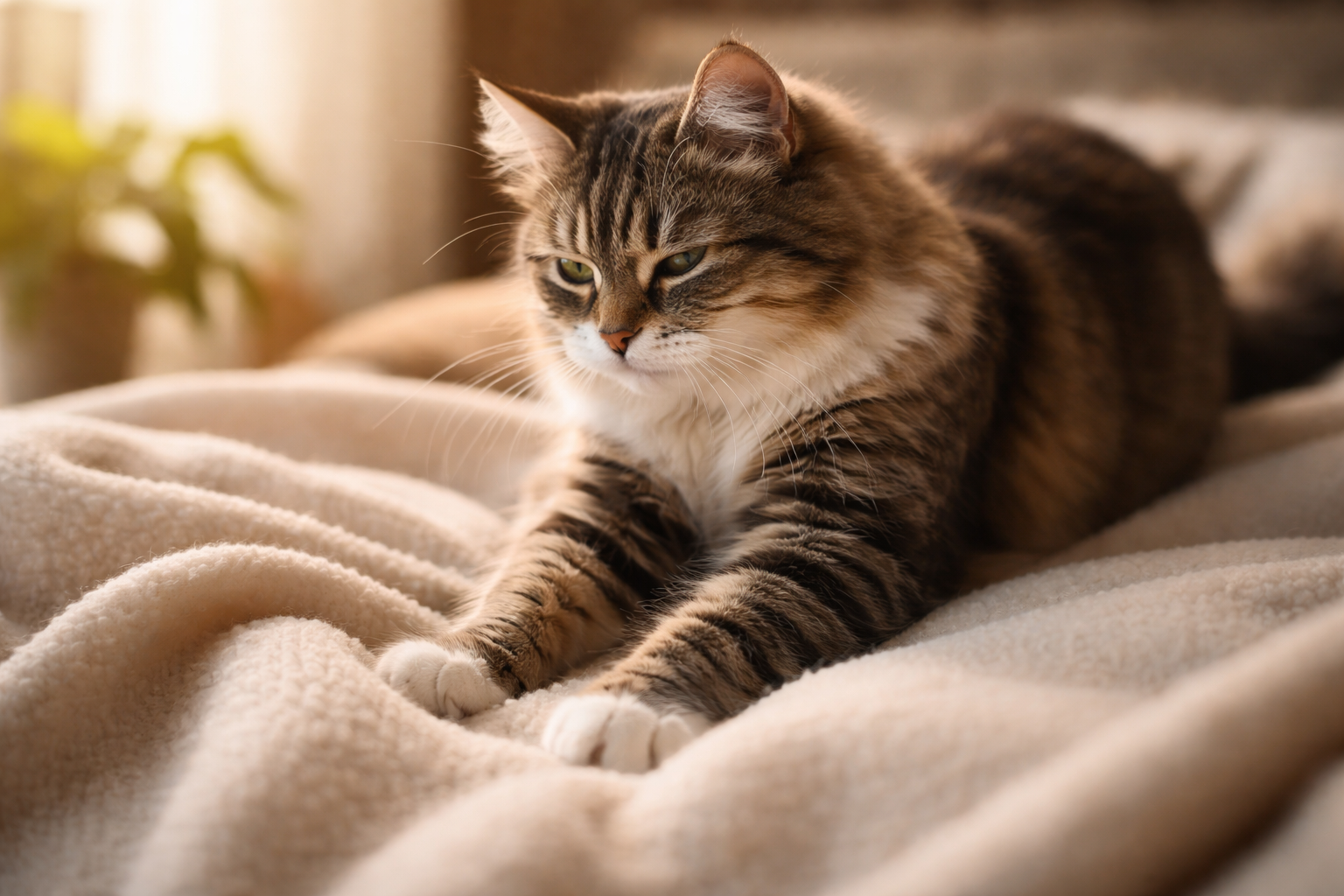
Cats have a lot of cute and sometimes strange habits, but kneading is one that everyone knows about. You might see your cat rhythmically pressing its paws into a soft surface, like a blanket, pillow, or even your lap. This behavior can seem comforting, strange, or even funny, but it has deep biological and emotional roots. Cat owners can better understand their pets’ feelings, needs, and instincts if they know why cats knead blankets.
The complete cat-care shelf — from choosing your cat to lifelong mastery.
See What's Inside →Kneading is not something that happens by chance or that you learn to do. It is an old behavior that has changed over time because of evolution, experiences as a kitten, and emotional comfort. This article talks about why cats knead, how it affects their physical and mental health, why they like to knead blankets, and what it means when they knead and then bite, purr, or drool. By the end, you will have a clear, expert-level understanding of this classic cat behavior and how to deal with it as a responsible and knowledgeable cat owner.
What Kneading Looks Like and Why It Matters
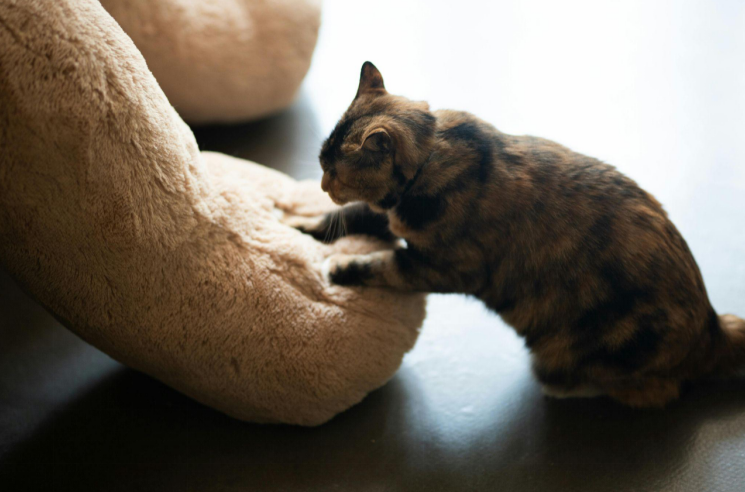
Kneading is when you push the front paws into a soft surface over and over again. Some cats knead with their claws out, while others keep them in. Many cats purr loudly while they knead, close their eyes, or even drool a little. Kneading may look gentle, but it serves many purposes that go beyond comfort.
This behavior is important because it shows how a cat is feeling. Cats don’t show love or stress in obvious ways like people do. Kneading gives us a glimpse into their inner world, showing feelings of safety, attachment, relaxation, or even heightened arousal.
To answer the question “Why do cats knead blankets?” it’s helpful to know that blankets mimic a few important sensory things that cats naturally look for: warmth, softness, and resistance under their paws.
Instincts That Never Go Away in Kittens
One of the most widely accepted reasons for kneading is that it comes from how kittens grow up. While they nurse, newborn kittens knead their mother’s belly. This action makes the milk flow and makes you feel safe and connected.
Adult cats don’t need milk anymore, but the nerve pathways that were built when they were kittens stay active for the rest of their lives. When a cat kneads a blanket, they are often unconsciously trying to get back to the comfort they felt with their mother. Blankets have a soft texture that is very similar to fur and warm skin, which makes them perfect for triggering this instinct.
Veterinary behaviorists generally concur that kneading originating from kittenhood indicates emotional wellness. Cats that knead a lot are usually well-adjusted and happy where they are. Kneading is usually a sign of trust and happiness, not something to avoid.
Safety, Comfort, and Controlling Your Emotions
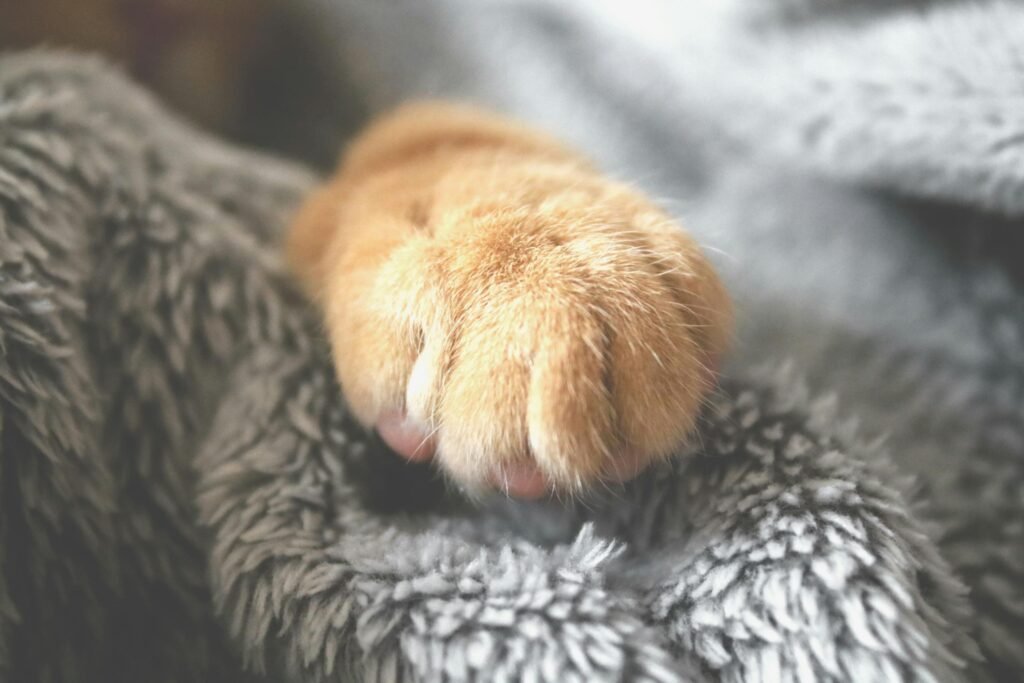
Another important reason for kneading is to calm your emotions. When cats feel safe, calm, and emotionally stable, they knead. The rhythmic motion releases endorphins in the brain, which helps lower stress and make you feel calm.
There's a calmer way — one library that answers it all. See it for yourself.
Explore the Library →Blankets are important here. They are usually linked to sleep, warmth, and smells that are familiar. When a cat kneads your blanket, they are doing something that makes them feel good, like a person hugging a pillow or wrapping up in a favorite throw.
Kneading can help cats control their emotions when they are going through changes, like when they are getting ready to sleep, getting used to a new place, or looking for comfort from their owner. This is why cats often knead before they curl up to sleep.
Marking Scent and Behaving in a Certain Way
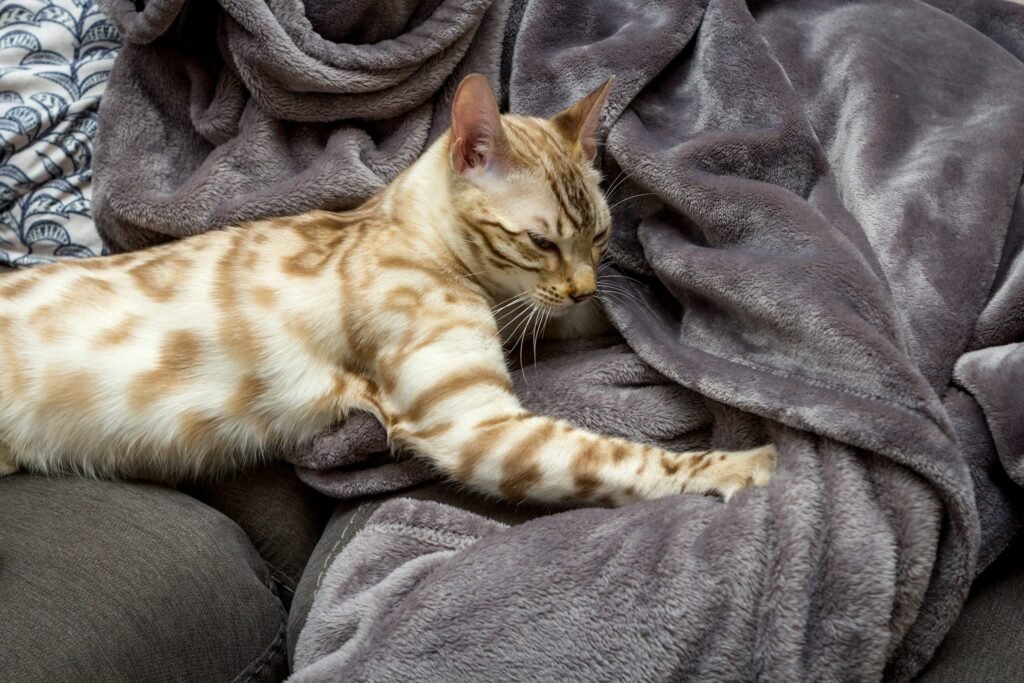
Even though people don’t notice it very often, cats use scent a lot to talk to each other. When you press their paw pads against something, the scent glands in them release pheromones. Kneading makes these glands work, which subtly marks the area as safe and familiar.
This territorial aspect answers another question about why cats knead blankets. When a cat kneads a blanket, especially one that belongs to you, they are putting their smell on it. This makes them feel more like they own something and more connected to it emotionally.
Kneading is a gentle way to mark something, unlike spraying or scratching. It doesn’t mean dominance or aggression; it means comfort and belonging. Your cat is basically saying, “This is part of my safe world.”
Why Blankets Are a Popular Target
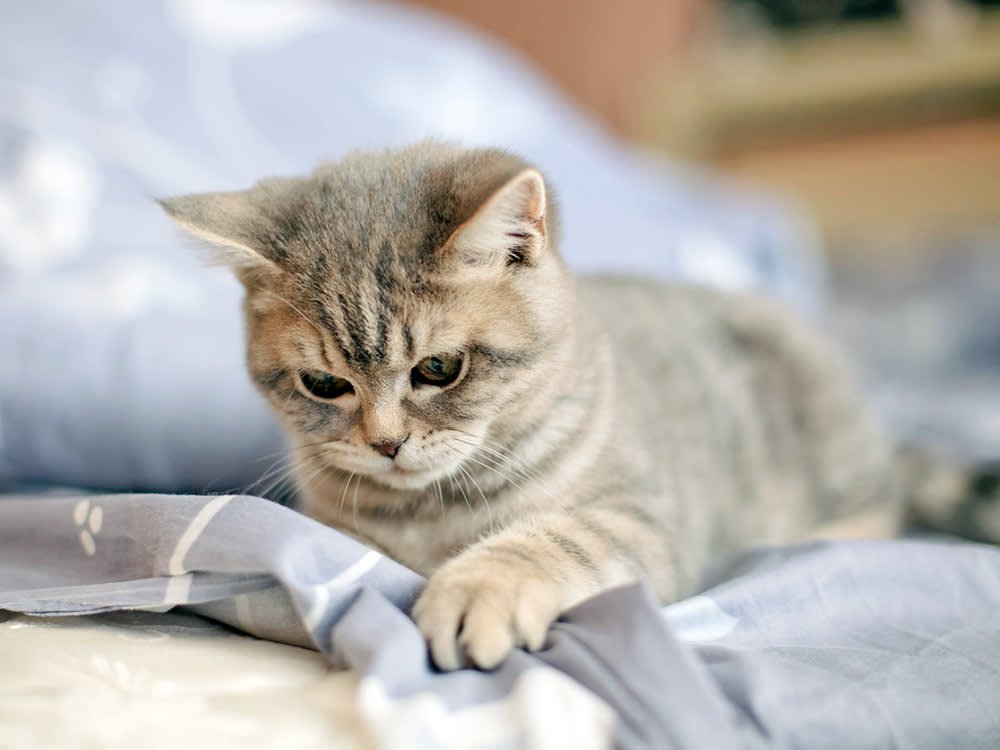
Cats can knead a lot of things, but blankets are special for a few reasons:
- Soft resistance that feels good under the paws
- Warmth, which feels like body heat
- Familiar smells, especially if the blanket is yours
- Flexibility, which lets claws sink in without hurting them
Blankets are great for the senses because they have the right texture and temperature. Hard surfaces don’t give the same feedback, and materials that are too loose might not keep their shape when you knead them.
This is why a lot of cat owners notice that their cats knead blankets more than carpets or furniture. The experience is just better for both your body and mind.
How Kneading, Purring, and Relaxing Are Related
Kneading often happens with purring, slow blinking, and a relaxed body position. All of these actions show that someone is happy. A cat is usually very relaxed when it kneads a blanket and purrs.
Repetitive motions like kneading can make the brain work in a calming way. Kneading becomes part of a self-regulation system when you combine it with purring, which has been shown to help cats heal and lower their stress levels.
This is why cats often knead before they go to sleep. It helps them go from being awake to sleeping, making a routine that lets them know they are safe.
Why Some Cats Knead and Chew on Blankets
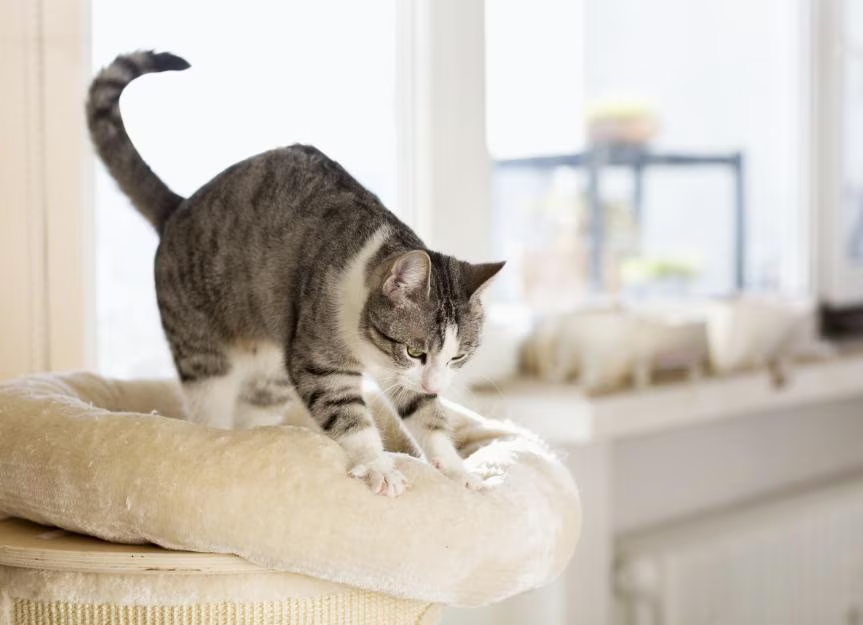
A lot of owners want to know why kneading sometimes goes along with biting or chewing. This behavior may seem strange or even scary, but it usually has natural explanations.
When cats bite blankets and knead at the same time, it could be because of:
- Strong desire to be comforted
- Leftover nursing instincts
- Increased emotional arousal
- Playful behavior in younger cats
In some cases, this combination looks like the way kittens move when they are nursing. The biting isn’t aggressive; it’s either exploratory or calming. Adult cats may also lightly bite blankets when they are too excited or too relaxed.
It’s usually normal as long as the behavior isn’t harmful or compulsive. But if the intensity or frequency changes suddenly, you might want to talk to a vet or a cat behaviorist.
Does Kneading Mean You Love People?
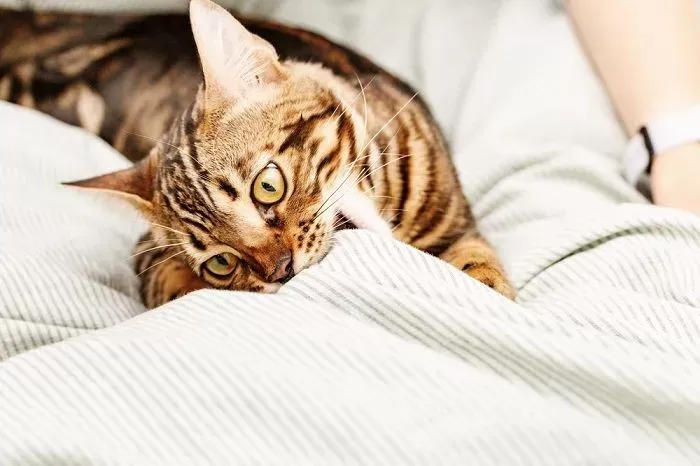
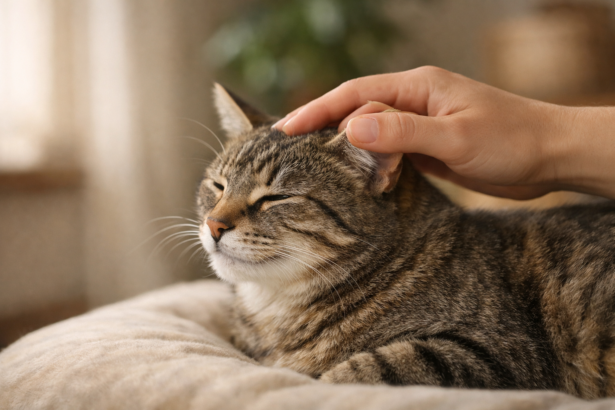
When a cat kneads your lap or blanket, it usually means they trust you and care about you. Cats only act vulnerable when they feel safe. Your cat is including you in their comfort zone by kneading near you or on things that smell like you.
This doesn’t mean that kneading is the same as human affection, but it does show that the person is feeling good about it. Many experts say that when a cat kneads, it means that they see you as part of their safe space.
This can help owners stay calm, even when their pets’ claws are involved. Gentle redirection, trimming nails, or putting a thicker blanket on the bed can make the experience more comfortable without stopping the behavior.
When Kneading Could Mean Stress or Anxiety
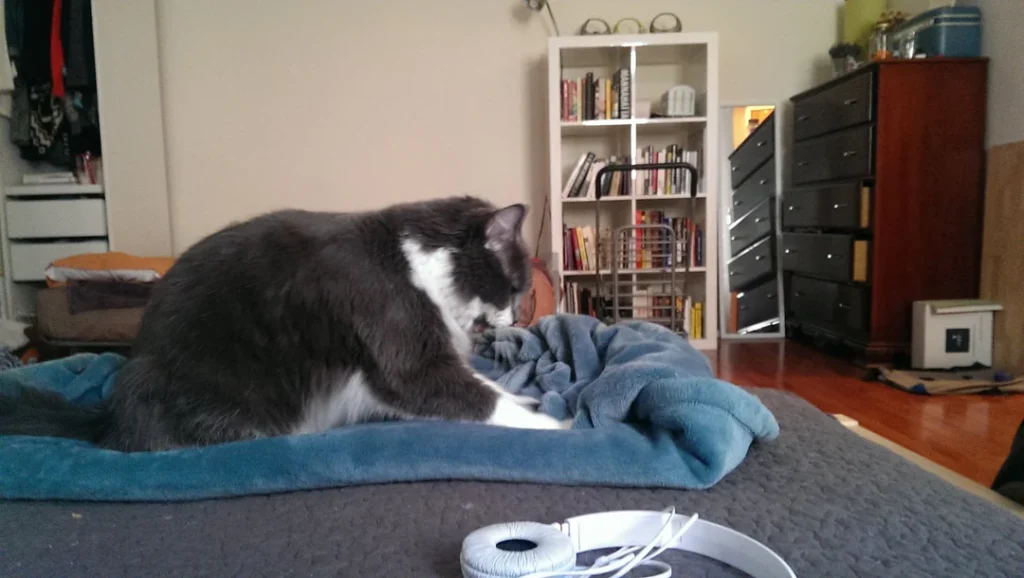
Kneading is usually a good thing, but it depends on the situation. Kneading too much or too quickly, especially when combined with restlessness or vocalization, can sometimes mean that you are stressed.
Changes in the environment, breaks in routine, or a lack of stimulation can all cause more kneading as a way to cope. In these situations, kneading serves as a method of self-soothing rather than mere satisfaction.
If kneading becomes obsessive or gets in the way of normal behavior, it might be a good idea to look at environmental enrichment, playtime, and overall emotional health. A visit to the vet can rule out any medical or behavioral problems that might be going on.
What to Do as a Cat Owner
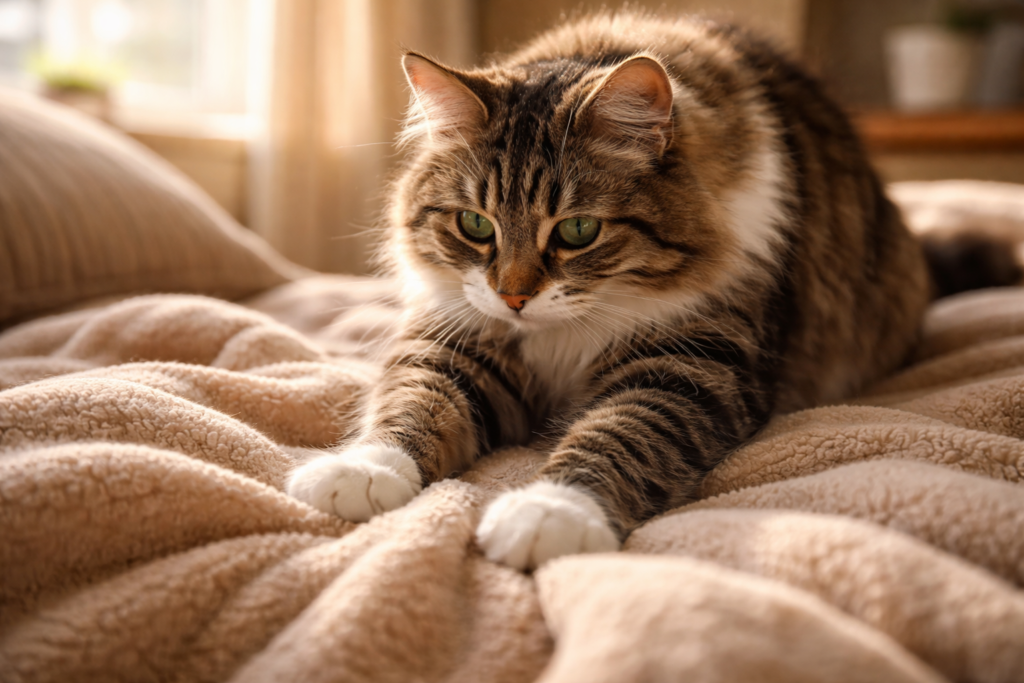
Understanding, not correcting, is the first step in helping your cat knead in a healthy way. Kneading is a natural behavior that has emotional meaning, so punishing or discouraging it can make things more confusing or stressful.
Some helpful tips are:
- Keeping nails short to avoid scratches
- Giving them soft blankets to knead on
- Not making sudden movements during kneading sessions
- Gently redirecting if biting becomes too painful
You can make your cat feel safer and more trusting by respecting this behavior. Your cat will learn over time which surfaces are best for kneading without losing the comfort it gives.
Scientific and Expert Views on Kneading
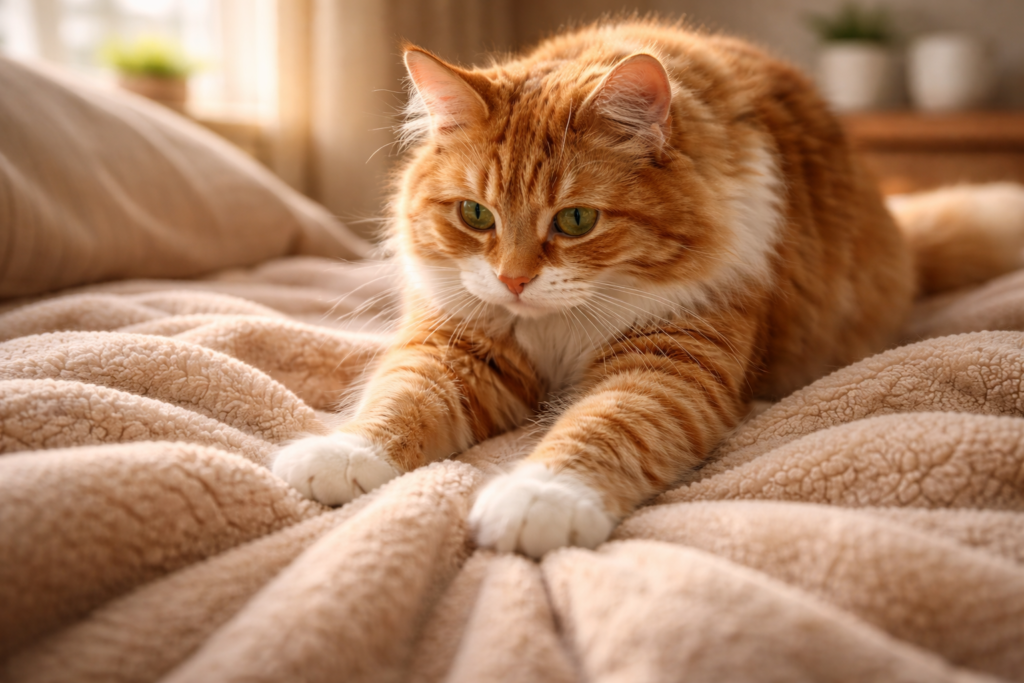
Veterinarians and animal behaviorists always say that kneading is a normal cat behavior that comes from early development and controlling emotions. Research on cat behavior shows that doing the same thing over and over again is a key way for cats to deal with stress and stay mentally healthy.
The American Veterinary Medical Association and International Cat Care both say that kneading is fine as long as it doesn’t become a habit. Their advice is in line with the idea that kneading is a sign that a cat feels safe and happy.
Cultural and Historical Perspectives on Kneading
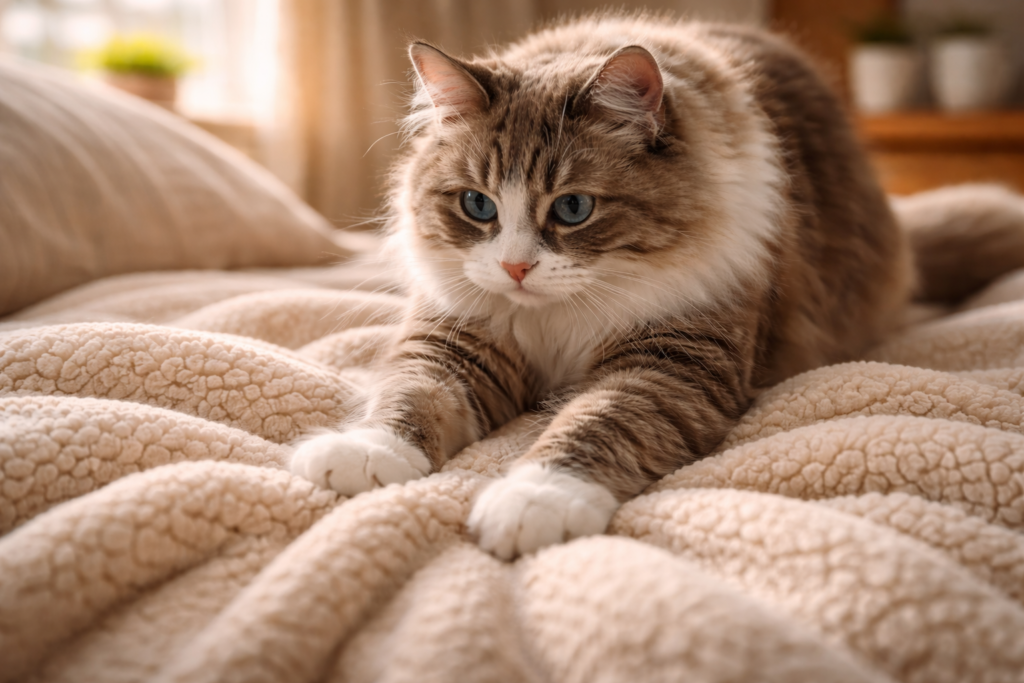
People have seen cats kneading soft things in homes for a long time. Old pictures of cats in homes often show them lying on bedding or fabrics, which suggests that this behavior has been around for thousands of years.
A lot of cultures think that kneading is a sign that a cat is happy. Folklore often linked a kneading cat to happiness, wealth, or a peaceful home life. Even though these interpretations are symbolic, they are based on what people have seen for a long time: cats being happy.
Why Cats Keep Kneading for Their Whole Lives
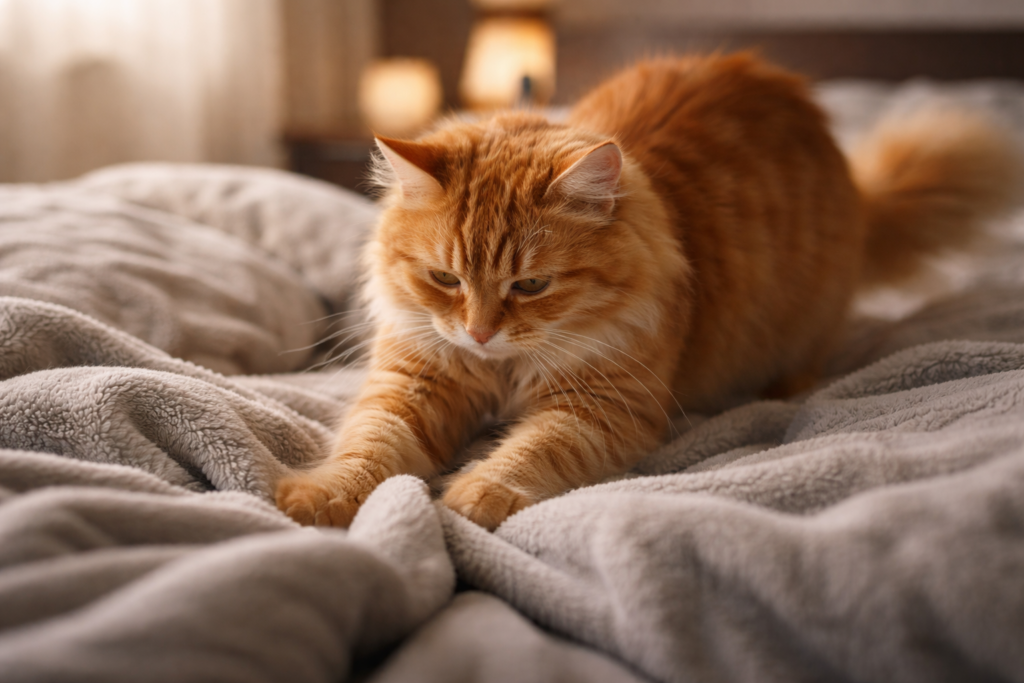
Some kitten behaviors go away as they get older, but kneading often stays with them for life. This persistence shows how deeply rooted the behavior is in cat brains.
Even older cats knead, but they do it more slowly and on purpose. As cats get older, kneading may be even more important for emotional comfort, especially if they can’t play or explore as much because of physical limitations.
This timeless quality is another reason why kneading is still important to understand, no matter what age, breed, or lifestyle a cat has.
Myths About Kneading That Are Common
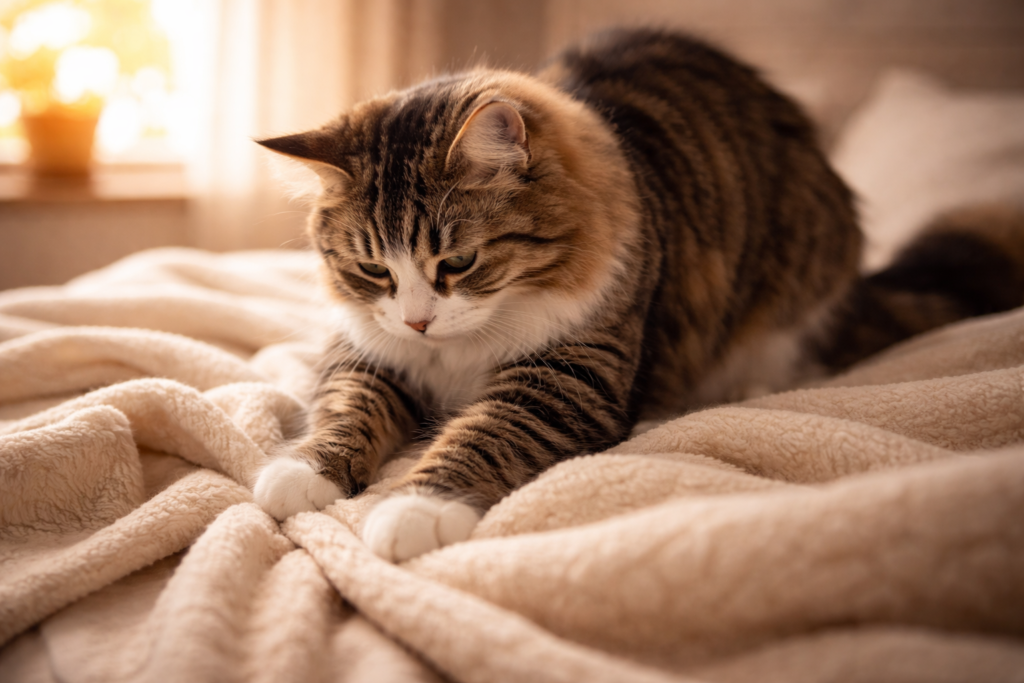
There are a lot of wrong ideas about kneading. A common myth is that a cat kneads to get your attention or food. Kneading can happen when the cat is about to eat or play with other cats, but it’s not a direct request.
Another myth says that kneading means you’re in charge. In fact, kneading is a sign of weakness, not control. When cats feel safe enough to let their guard down, they knead.
When owners know the truth about these myths, they can better understand and care for their cat’s behavior.
How Kneading Affects Your Cat’s Overall Health
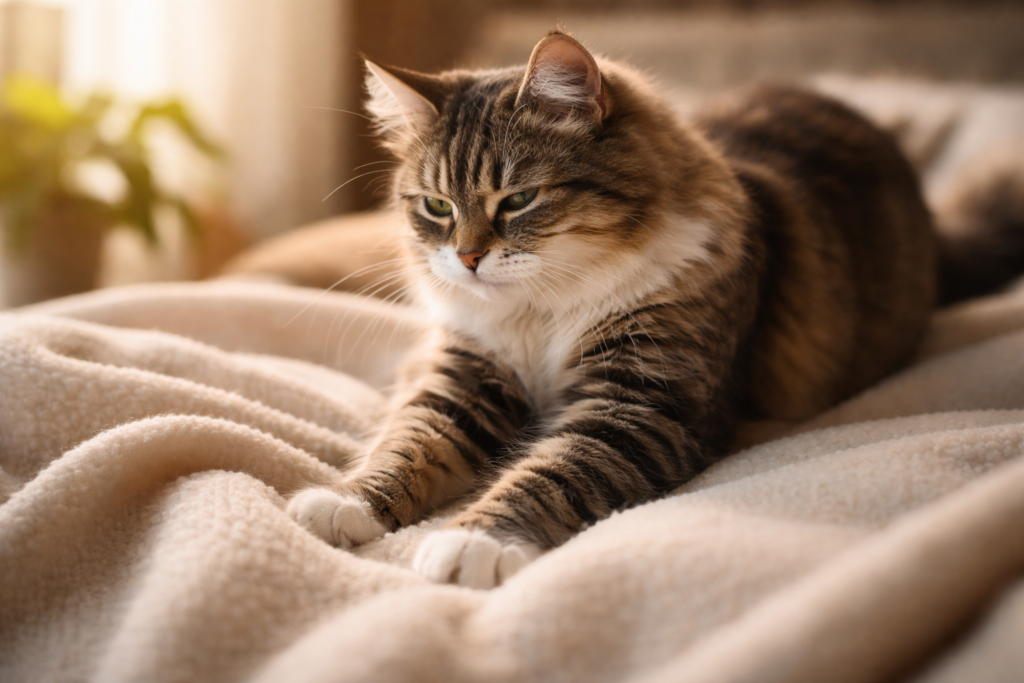
Kneading shows a balance between instinct, comfort, and the environment. Cats are more likely to knead in calm, steady ways when they feel safe, happy, and emotionally stable.
A regular schedule, safe places to rest, and emotional connection all help keep kneading healthy. When cats knead a lot and don’t show any signs of pain, it usually means they have a good quality of life.
Conclusion
To understand “why do cats knead blankets?” you need to know how deeply instinct, emotion, and comfort are a part of cat behavior. Kneading is not a random habit; it has a purpose that comes from being a kitten, feeling safe, marking your territory, and calming yourself down. Blankets are the perfect place for this instinctive behavior because they are soft, warm, and familiar.
Instead of trying to stop your cat from kneading, you should see it as a sign of trust and happiness. You can help your cat’s emotional health and strengthen your bond by being patient and giving them gentle guidance. This behavior has brought cats and people together for generations, and knowing why it happens can help that connection grow in a respectful and informed way.
Get Decode Your Cat — free.
20 everyday behaviors translated, so you finally know what your cat is actually saying. Pop in your name and email and it's yours instantly.